Projects - AI Hardware Buildathon
Here is the list of projects built during the AI Hardware Buildathon.
Team DARQLords
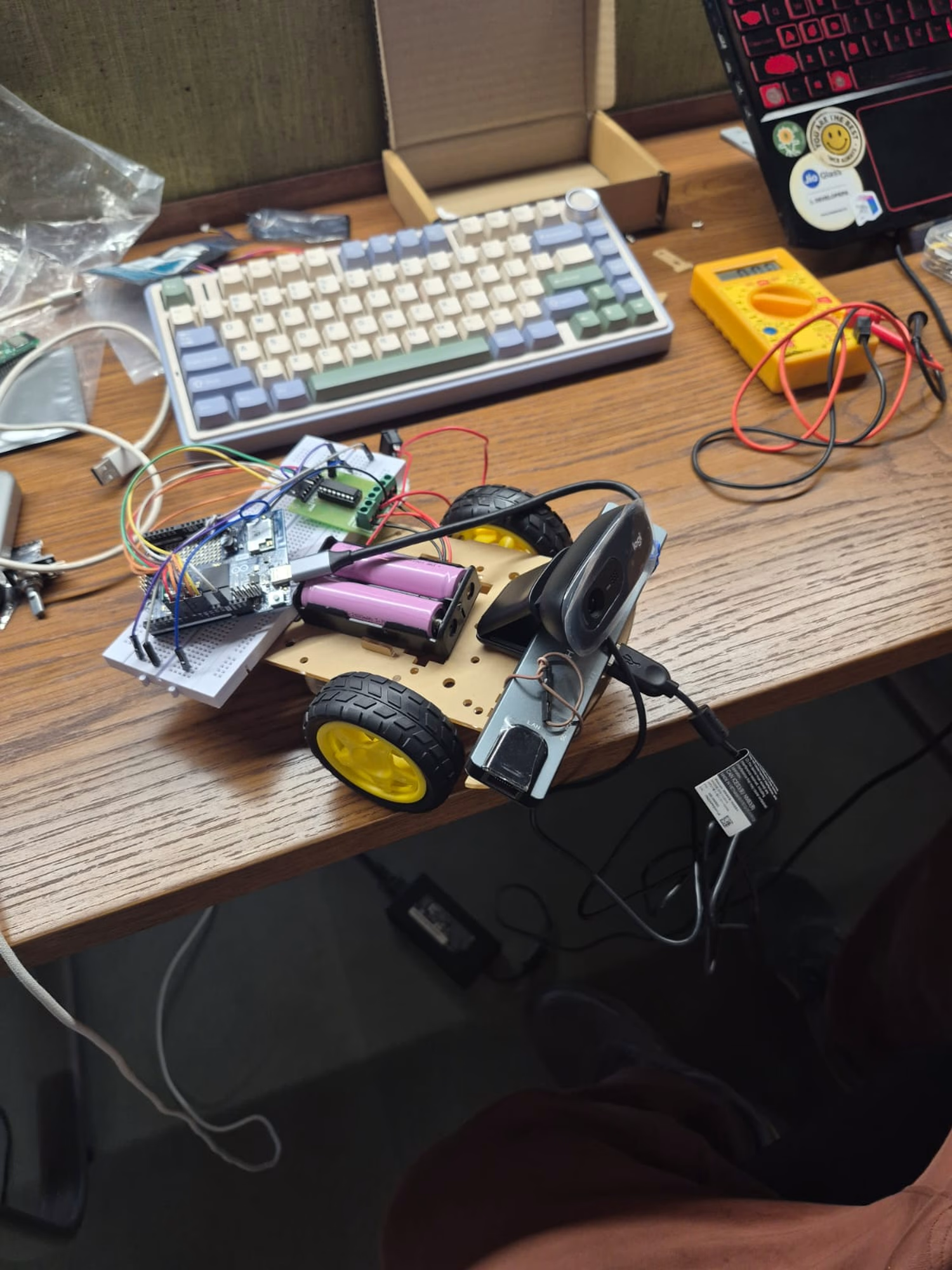
Summary
What they built: Saathi Guardian is an AI-powered safety and memory-assistance system for elderly people. It detects falls and unusual activity, recognizes loved ones, provides gentle reminders, and alerts caregivers during emergencies.
What it solves: It helps seniors—especially those living with Alzheimer’s or dementia—stay safe and independent at home. It also gives families and caregivers peace of mind through automatic, real-time alerts.
Demo
Project Resources
- Source Code: Source Code
- Social Post: Social Post
- Circuit Design: Circuit Link
Team Alfred
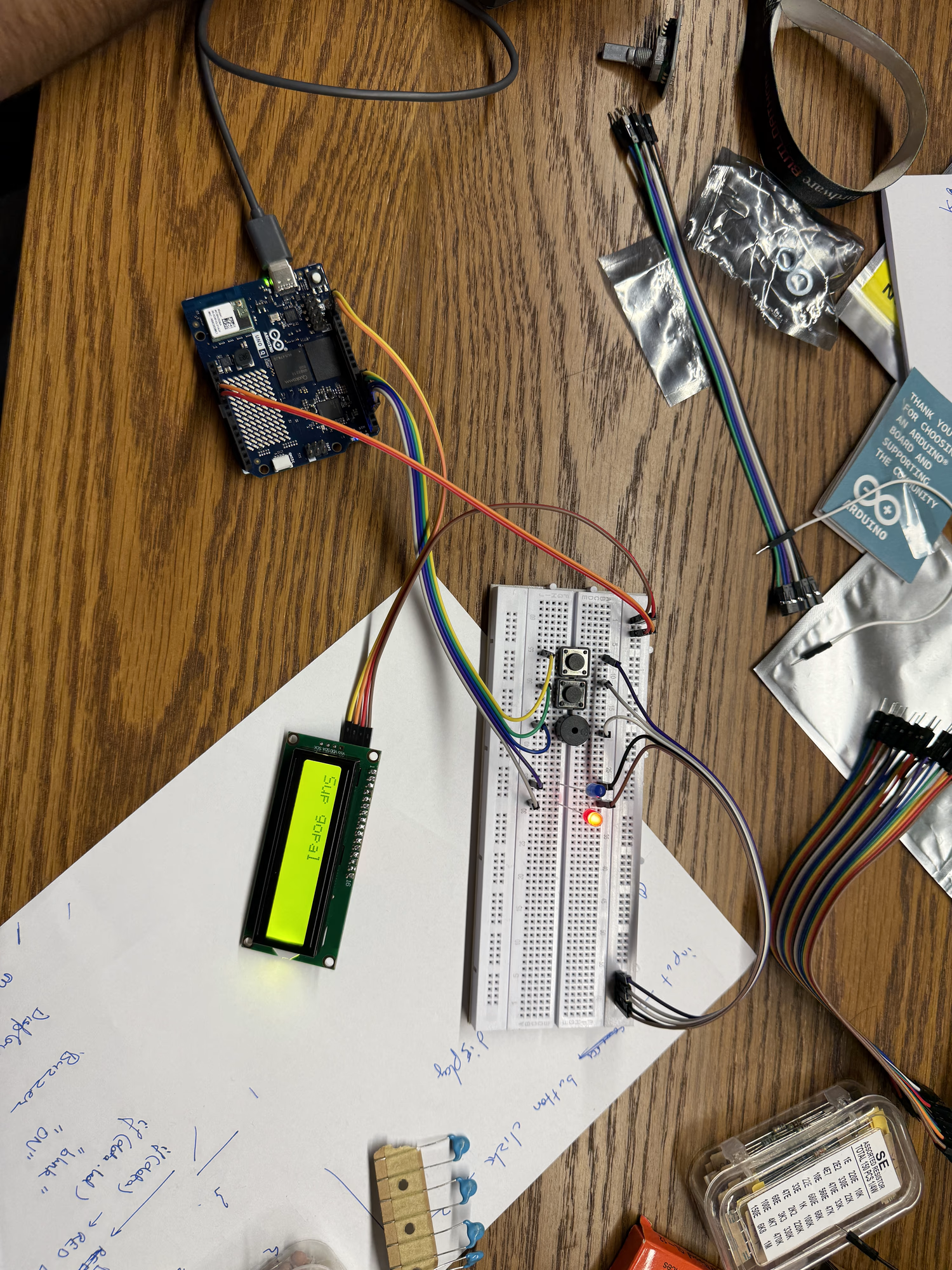
Summary
What they built: Alfred: a physical chief-of-staff device for people with ADHD. It pulls context from your meetings, Slack, email, and calendar, builds a prioritized day plan, and actively nudges you through it with voice check-ins and physical feedback (buzzer, LED, display) instead of just passively logging like a notetaker or pendant.
What it solves: For people with ADHD who struggle with executive dysfunction - knowing what to do but not being able to start, prioritize, or stay on track across a busy day. Existing tools capture context but never push back or nudge. Alfred is a dedicated physical device (not another laptop tab, which just becomes a distraction) that acts as a proactive chief of staff: it plans your day, checks in every 1-2 hours, reprioritizes as things change, and delegates tasks to agents. Extensible to any neurodivergent profile.
Demo
Project Resources
- Source Code: Source Code
- Social Post: Social Post
- Circuit Design: Circuit Link
Team Mithilesh
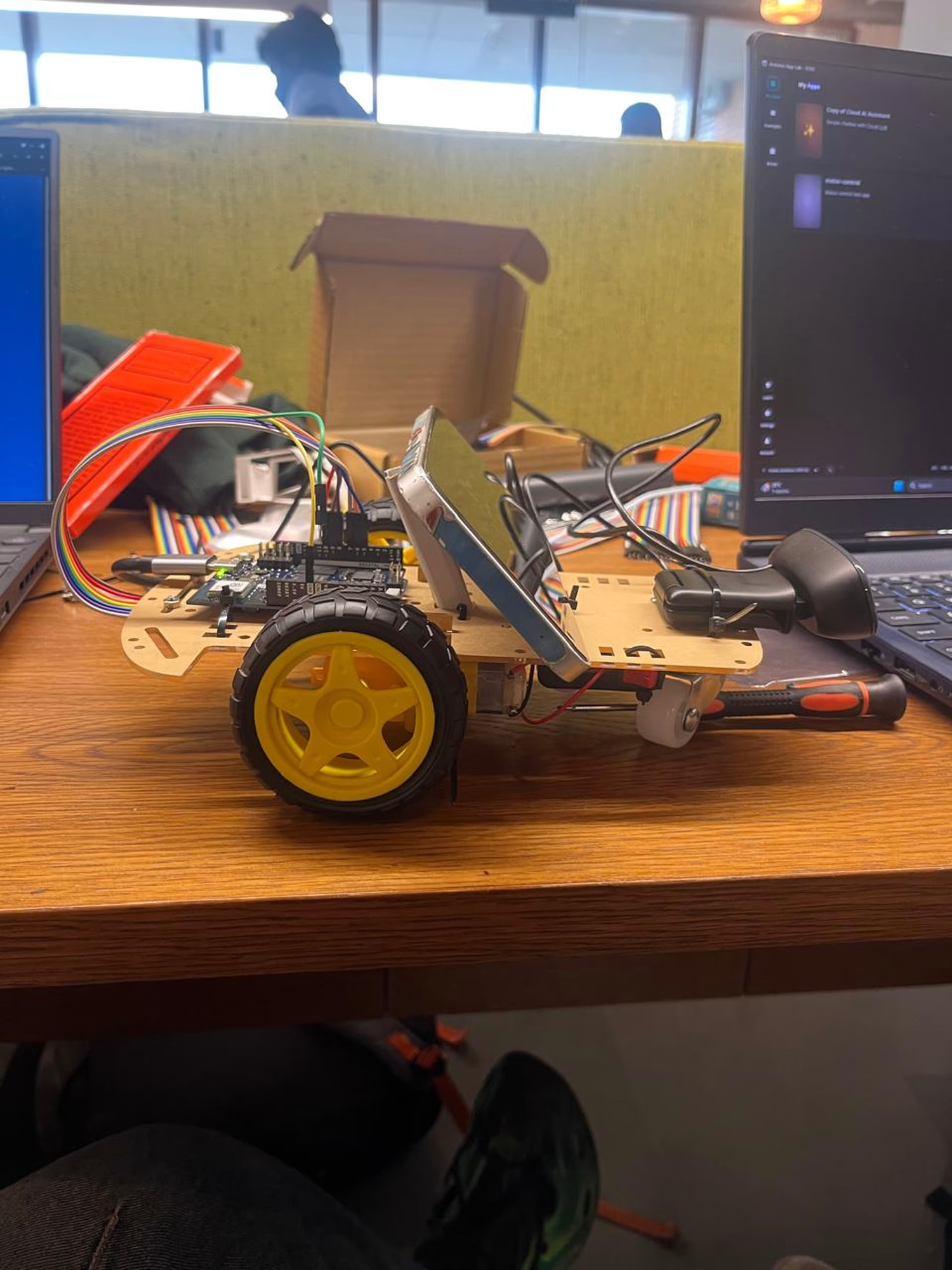
Summary
What they built: What they built: Echo Q, a local-first AI assistant that recognizes who is speaking and creates personalized reminders using voice and face recognition.
What it solves: It solves the problem of shared assistants forgetting which person made a request. Designed for families, shared homes, elderly users, caregivers, and small teams sharing one device, Echo Q also includes an emotion-aware kindness feature that responds best when users speak calmly and politely, encouraging respectful interaction. Running on the Arduino UNO Q, it keeps identity processing local for a more private and personal experience.
Demo
Project Resources
- Source Code: Source Code
- Social Post: Social Post
- Circuit Design: Circuit Link
Team Prince
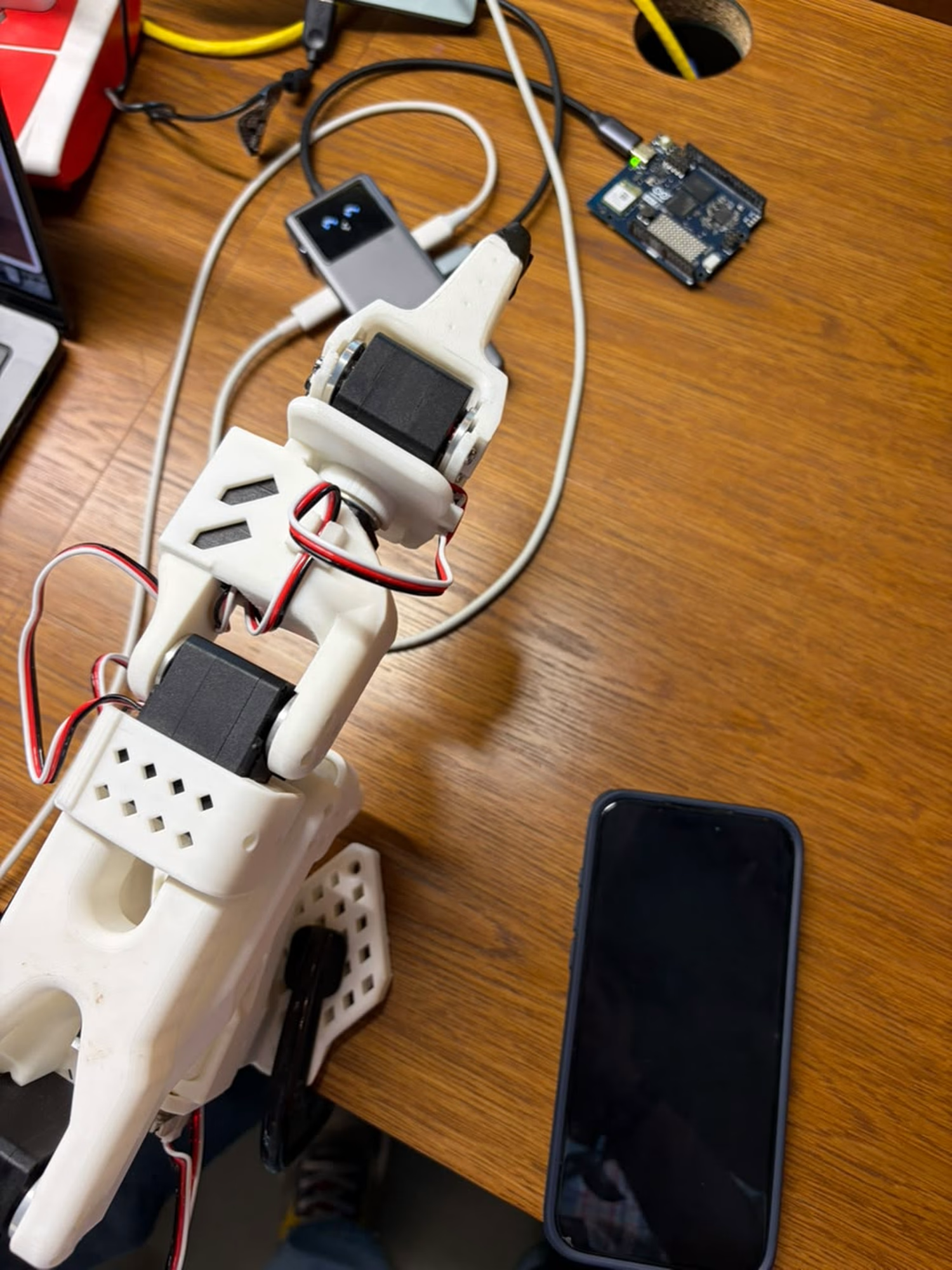
Summary
What they built: Mirror Maxxing: a daily webcam check-in system where AI scores looksmaxxing features and provides an Aurameter, allowing users to track their glow-up and earn Maxing Points.
What it solves: A webcam-based MVP running on the provided kit. A detection trigger fires when a single confident face is detected, captures the frame, and sends it to an OpenAI vision coach that returns structured JSON data containing age, six looksmaxxing feature scores (jawline, cheekbones, eyes, skin, symmetry, harmony), an overall Aurameter, and a one-line vibe. It also provides historical tracking, Maxing Points rewards, and shareable result cards.
Demo
Project Resources
- Source Code: Source Code
- Social Post: Social Post
- Circuit Design: Circuit Link
Team Gracey
Summary
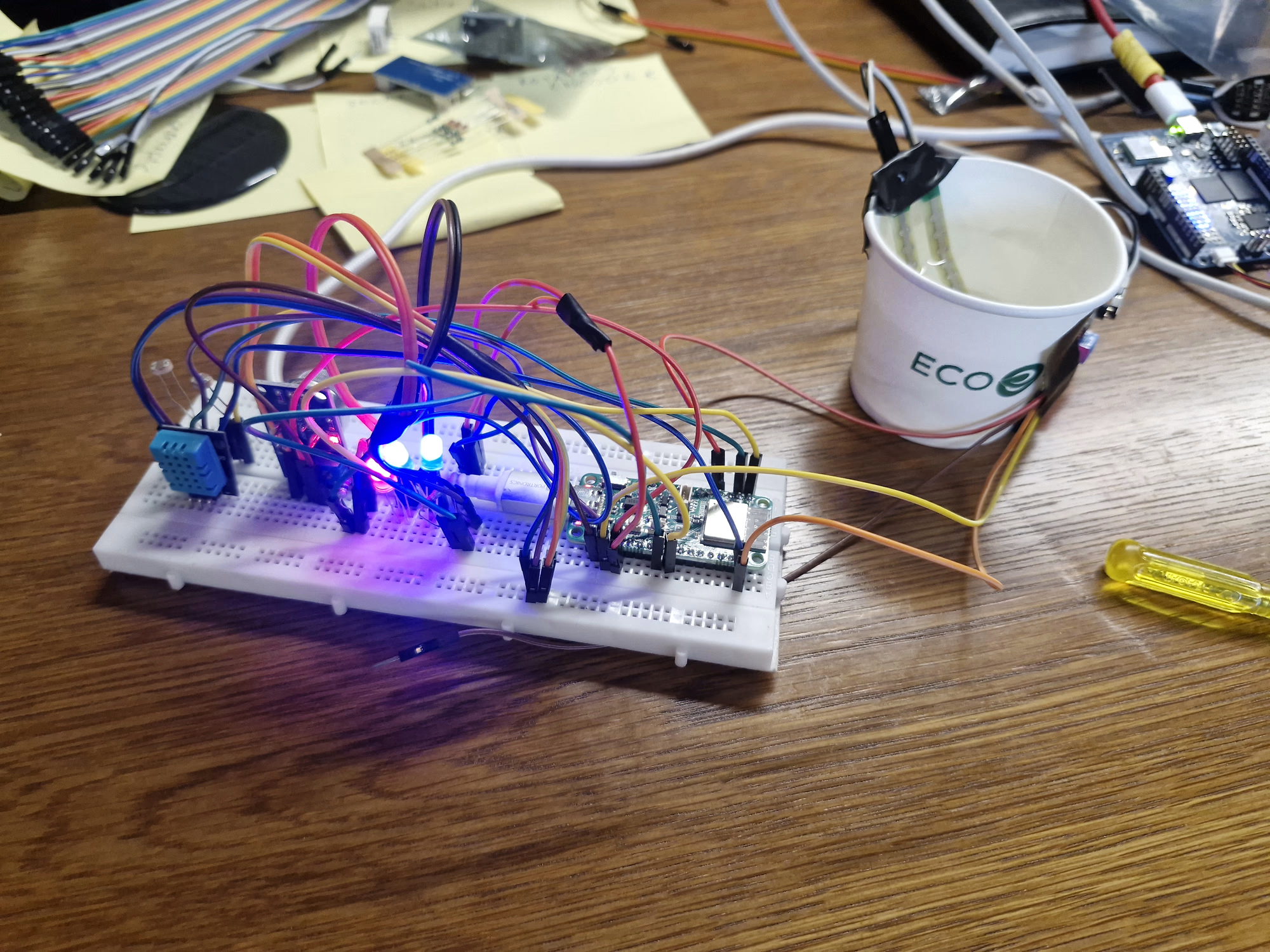
What they built: A safety system for underground mining of iron and coal ores.
What it solves:
- Detects harmful gases present in the mining field that workers may not be aware of.
- Uses YOLO to detect hazards before they occur, allowing workers to plan and execute evacuation routes.
- Detects flooding in underground mines.
- Designed for underground mine workers, government bodies, and private companies operating in the mining sector.
Demo
Project Resources
- Source Code: Source Code
- Social Post: Social Post
- Circuit Design: Circuit Link
Team Villa Boys
Summary
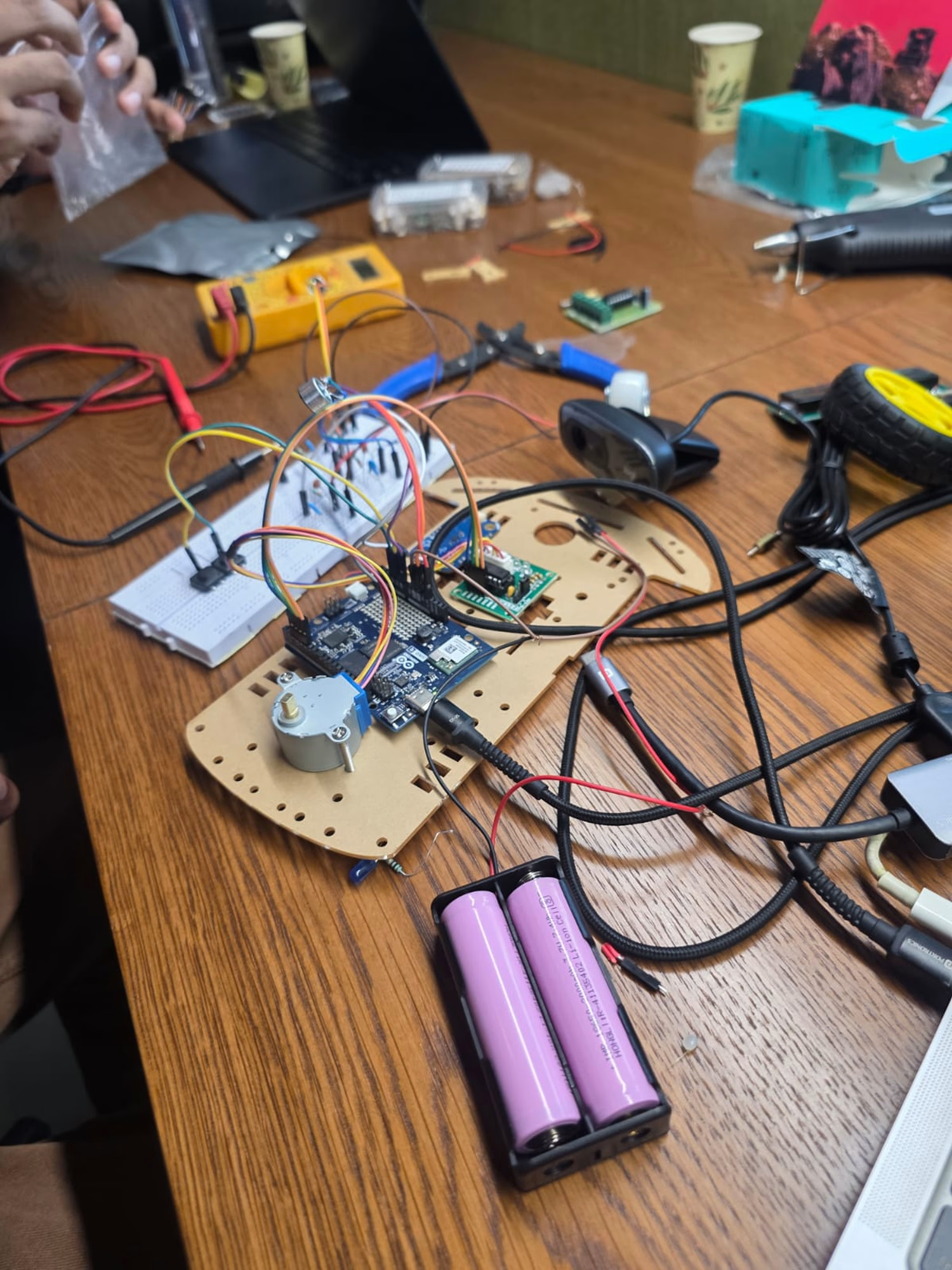
What they built: A hypothetical audio localization system that isolates the direction from which audio is originating, even with multiple different users speaking simultaneously.
What it solves: It provides robots with hearing senses similar to humans, allowing them to locate sound sources.
Demo
Project Resources
- Source Code: Source Code
- Circuit Design: Circuit Link
Team Himanshu
Summary
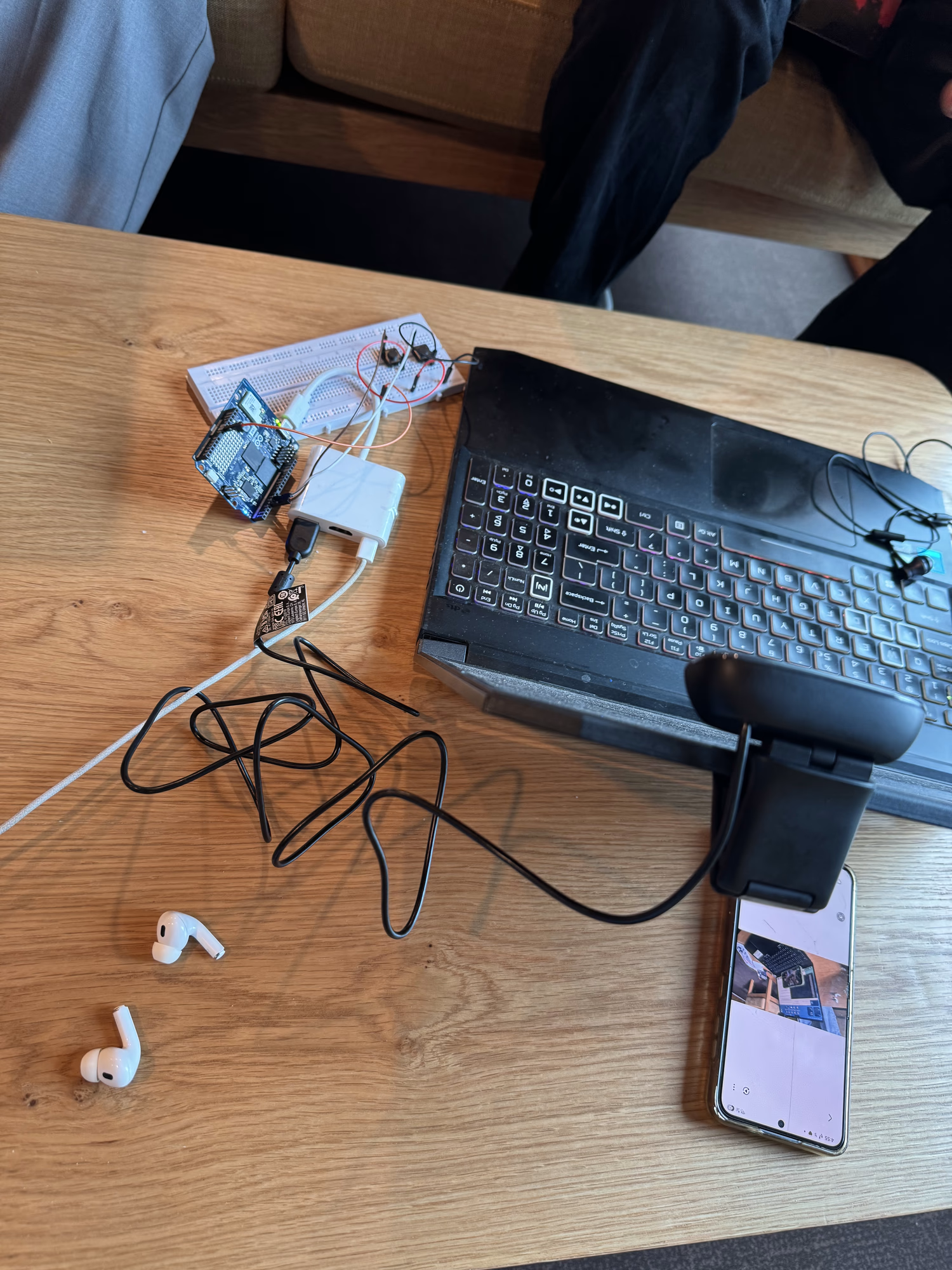
What they built: Air Instruments — an invisible drum kit, piano, and synth played by striking the air. A webcam on an Arduino UNO Q watches the player's hands; snapping a hand down through an invisible line instantly triggers a drum sound (or a Fmaj7/Amaj7 chord in synth mode) in their AirPods, with the board's LED matrix flashing to the beat. Two physical buttons turn it into a loop station: recording a groove, layering sounds on top, and switching instruments—all running standalone on the board without a laptop.
What it solves: Instruments are loud, bulky, and expensive, and drum practice can annoy others. Air Instruments gives musicians, kids learning rhythm, and anyone who taps on desks a silent, pocket-sized instrument—audio goes straight to earphones, and the looper lets a single player build full multi-layer beats with bare hands. It also serves as a template for gesture-controlled instruments: swapping the samples allows the same strike engine to become a piano, synth, or sampler.
Demo
Project Resources
- Source Code: Source Code
- Social Post: Social Post
- Circuit Design: Circuit Link
Team Audio Guard
Summary
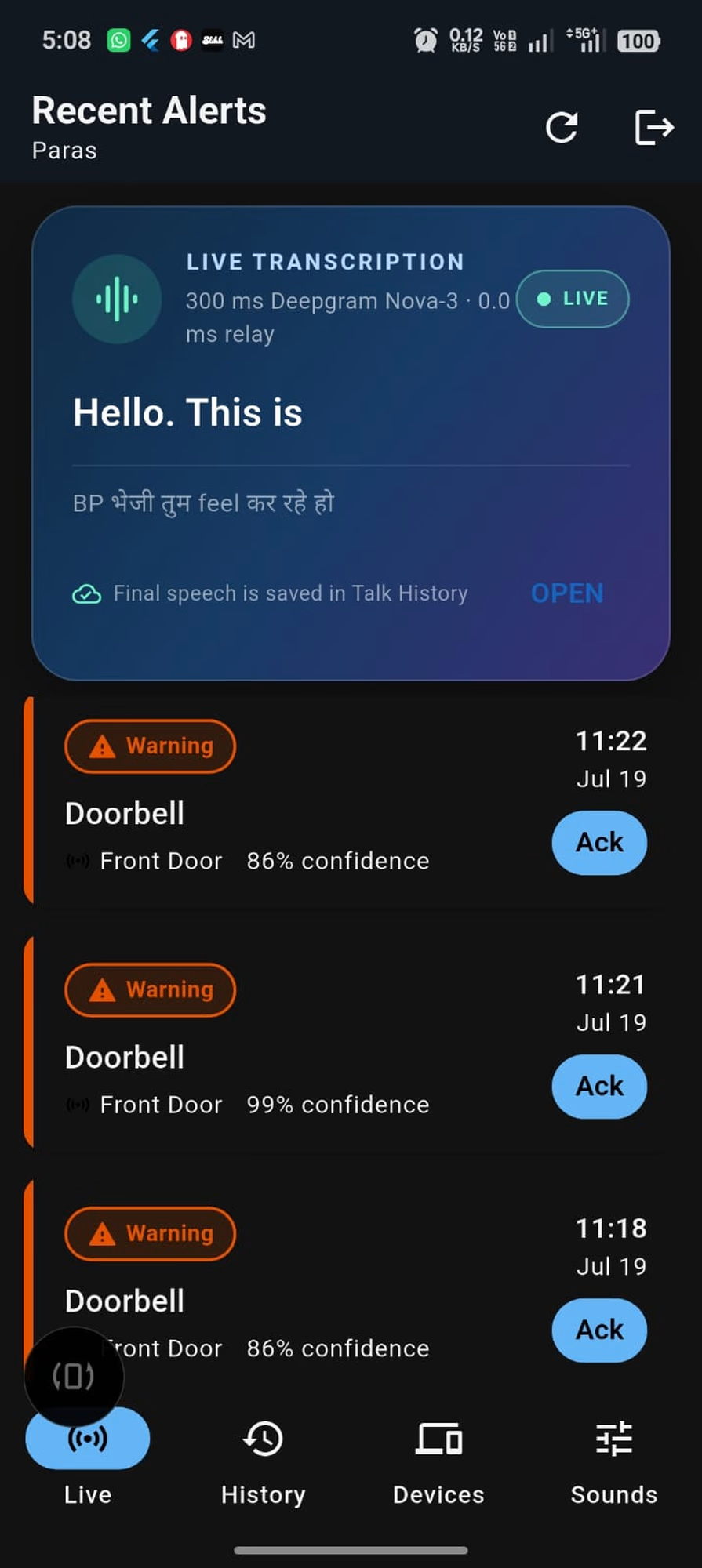
What they built: An application that provides live transcription along with a sound recognition and detection system, enabling users to easily understand what other people are saying. It can also recognize specific environmental sounds, such as a doorbell or a dog barking.
What it solves: A system designed to help deaf and hard-of-hearing individuals navigate confidently and safely inside their own homes.
Demo
Project Resources
- Circuit Design: Circuit Link
Team Tech Stacked
Summary
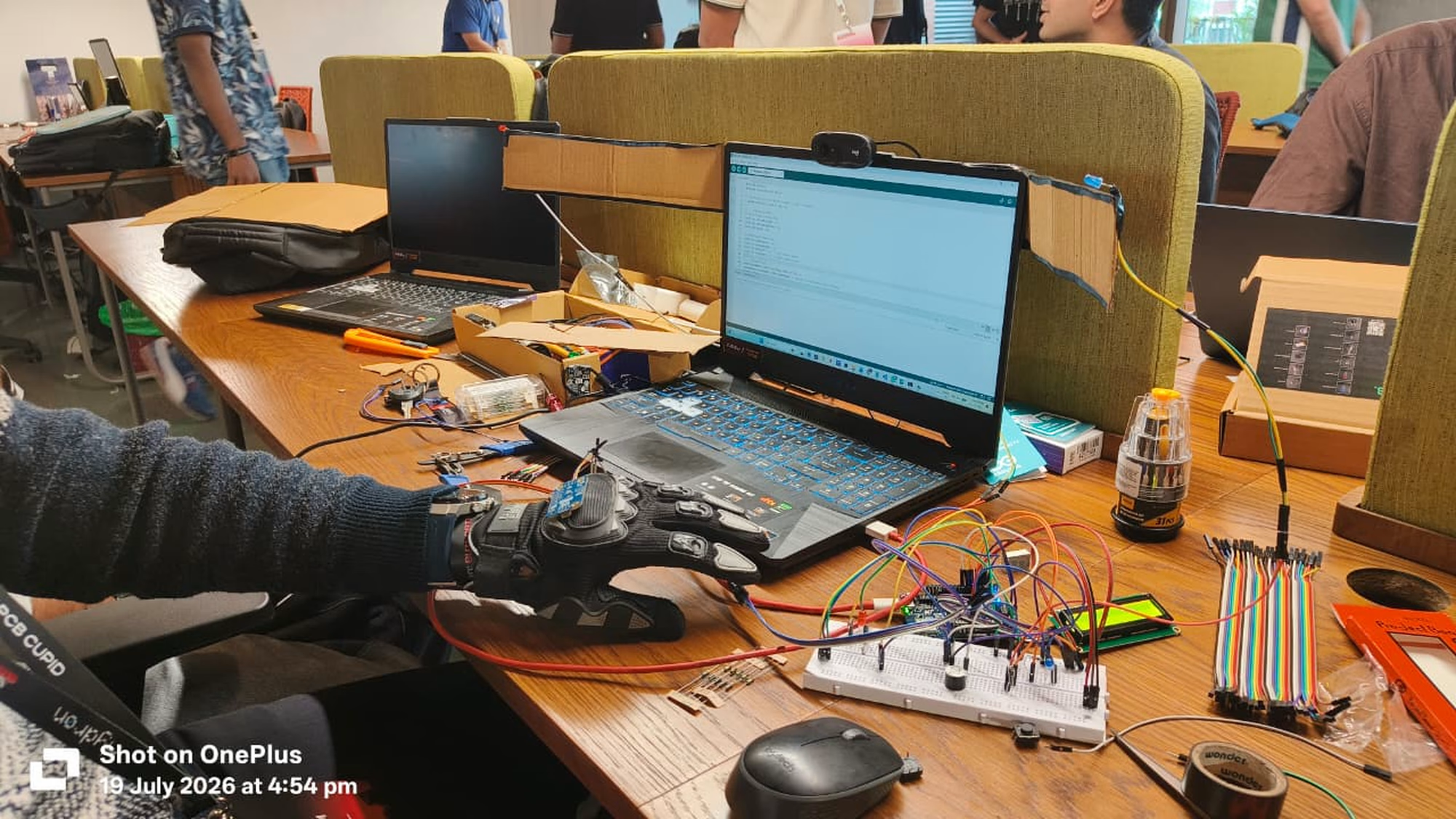
What they built: A dual-mode neurological diagnostic and rehabilitation hardware suite powered by edge computing and AI vision. It features Oculo-Sync, an optical tracking rig that measures microsecond eye-movement latency (saccades), and KinetiSense, a frictionless magnetic-sensor board that tracks and gamifies physical motor reaction times.
What it solves: The Problem: Gold-standard neurological evaluations typically require expensive, proprietary equipment (like $10,000+ clinical eye trackers) and often rely on interfaces that are difficult for patients with severe tremors to use. This leaves rural clinics, school sports sidelines, and underfunded rehab centers without accurate, data-driven diagnostic tools.
The Audience: This suite is designed for clinicians, physical therapists, and sports medics who need portable, highly accurate, and low-cost screening tools. Ultimately, it serves patients with Traumatic Brain Injuries (TBIs), concussions, and motor-degenerative conditions like Parkinson's Disease, providing them with accessible, zero-force diagnostic and rehabilitation interfaces.
Demo
Project Resources
- Source Code: Source Code
- Social Post: Social Post
- Circuit Design: Circuit Link
Team Vandan
Summary
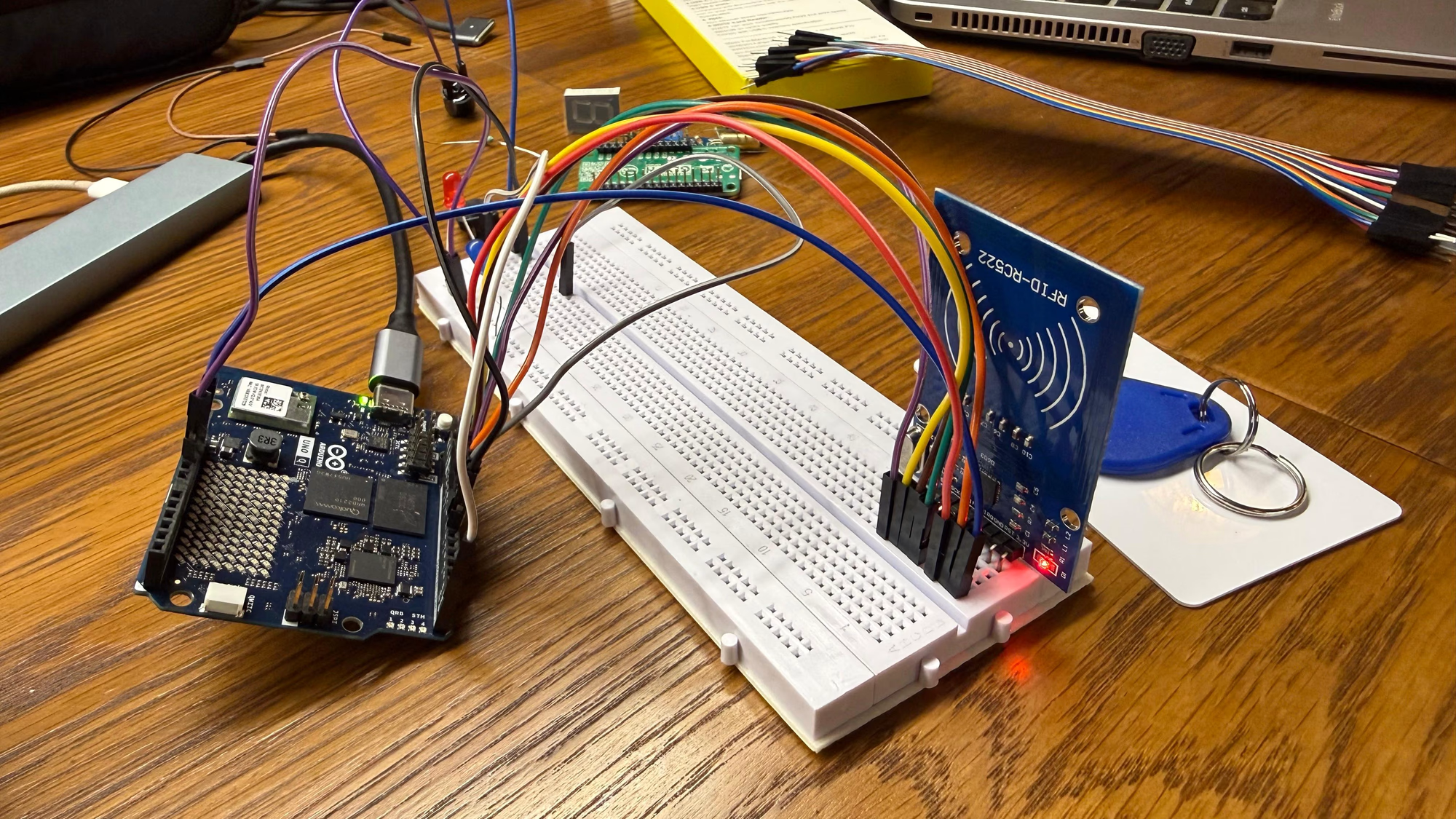
What they built: A multi-option security lock system.
What it solves: It allows users to configure a security lock using multiple options—such as face recognition, RFID scans, and custom knock-rhythm patterns (like in spy movies)—enabling multi-level lock configuration.
Demo
Project Resources
- Source Code: Source Code
- Social Post: Social Post
- Circuit Design: Circuit Link
Team NammaDashcam
Summary
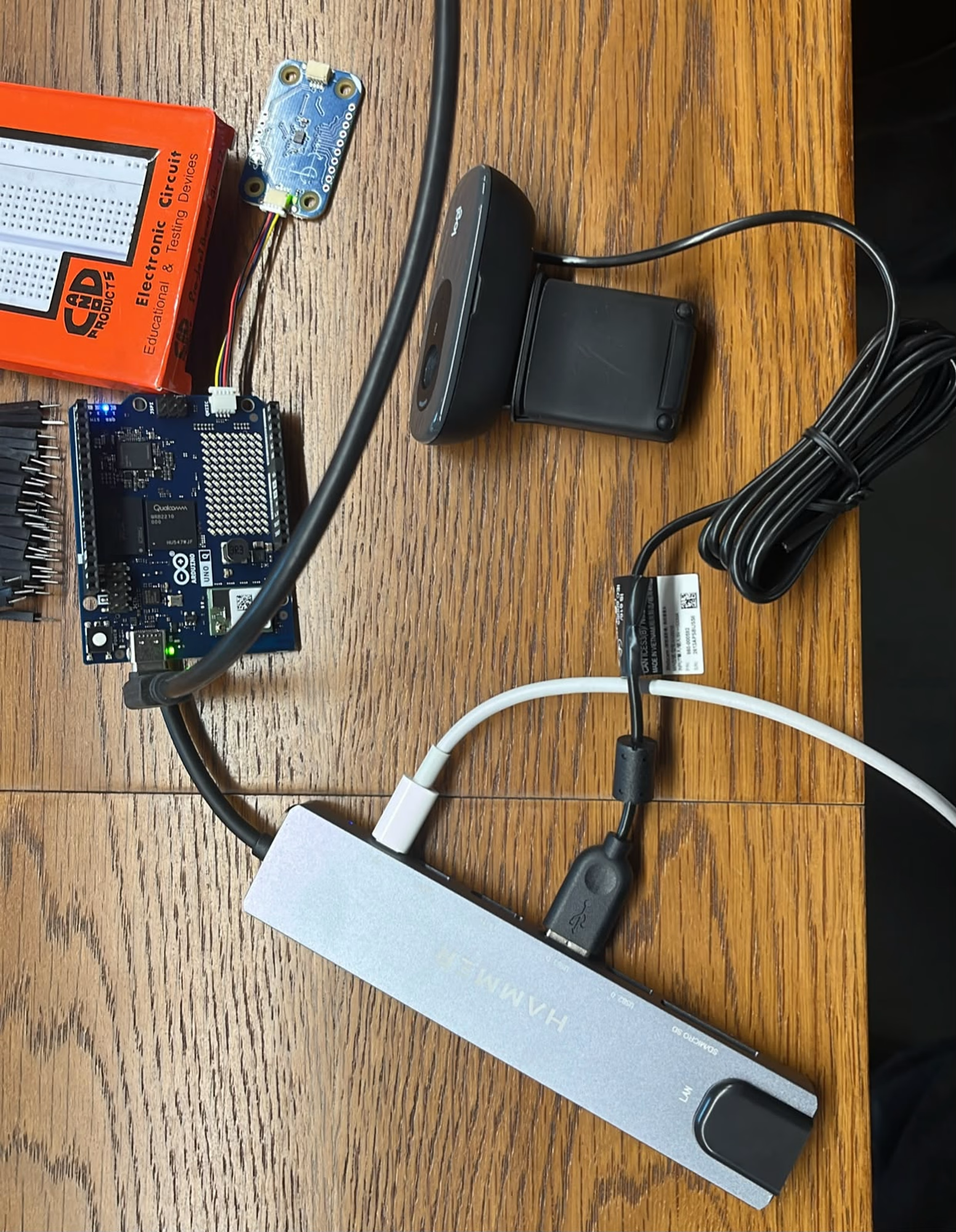
What they built: A smart, decentralized transit vision system that automatically maps road infrastructure quality. NammaDashcam flags structural impacts (like potholes) in real time with visual proof, streaming the geo-tagged telemetry data directly to a crowd-sourced platform.
What it solves: It solves asset management at scale for every city. It solves the massive inefficiency, delay, and lack of real-time data in road maintenance. Built for both local civic authorities who need automated, cost-effective infrastructure audits, and everyday commuters who suffer vehicle damage. By crowdsourcing verification, marking a pothole "resolved" when subsequent vehicles pass over the same GPS coordinates smoothly, it builds an active, self-healing map of city roads.
Demo
Project Resources
- Source Code: Source Code
- Social Post: Social Post
- Circuit Design: Circuit Link
Team AeroSense AI
Summary
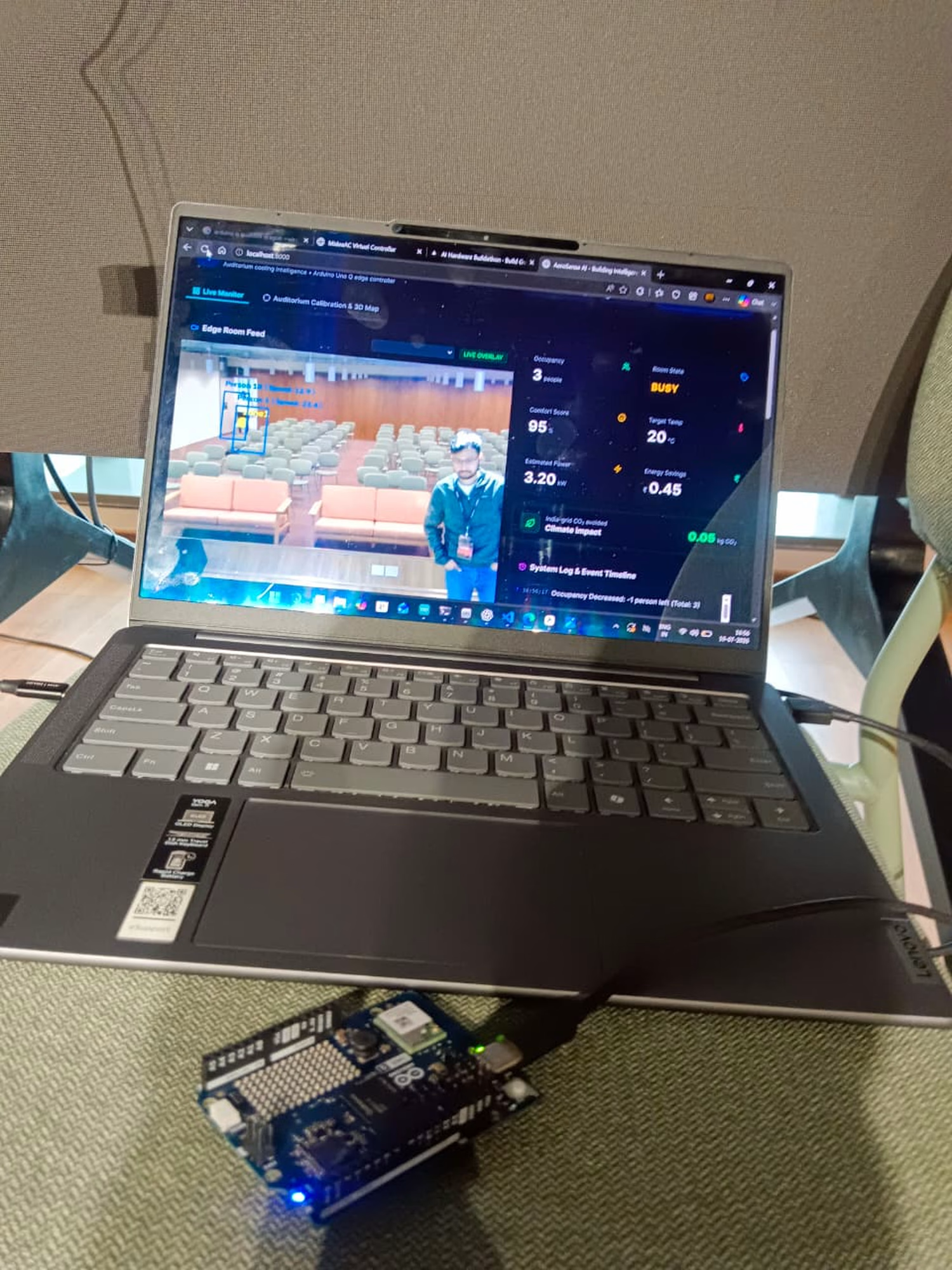
What they built: AeroSense AI — Vision-Powered Smart HVAC. A real-time, AI-driven air conditioning optimizer that uses a camera + YOLOv8 neural network to count people in a room and automatically adjusts dual-zone AC units — temperature, fan speed, on/off — based on who is where, right now. It pairs a Python vision pipeline with Arduino-controlled hardware (IR blasters, relays, Modulino vibration sensors) and streams everything to a live web dashboard with explainable AI reasoning.
What it solves: India's commercial buildings devour 33% of national electricity — and HVAC alone eats 40% of that load. Here's the absurdity: a typical auditorium AC burns a constant 3.2 kW whether 300 people are seated or the hall is bone empty — and halls sit vacant 60–70% of operating hours. That's Rs.15,000/month per hall cooling air nobody breathes, pumping 0.823 kg of CO2 per kWh (CEA India) into the atmosphere for nothing. The root cause? Conventional HVAC has zero eyes, zero intelligence, zero adaptation. It doesn't know if 200 people walked in or the last person walked out. It just runs — blind, wasteful, and expensive.
Built for: facility managers drowning in electricity bills, building operators flying blind on plant efficiency, sustainability officers hunting measurable CO2 data for ESG, and event organizers stuck between overheated and overcooled halls.
Demo
Project Resources
- Source Code: Source Code
- Social Post: Social Post
- Circuit Design: Circuit Link
Team Anshit
Summary
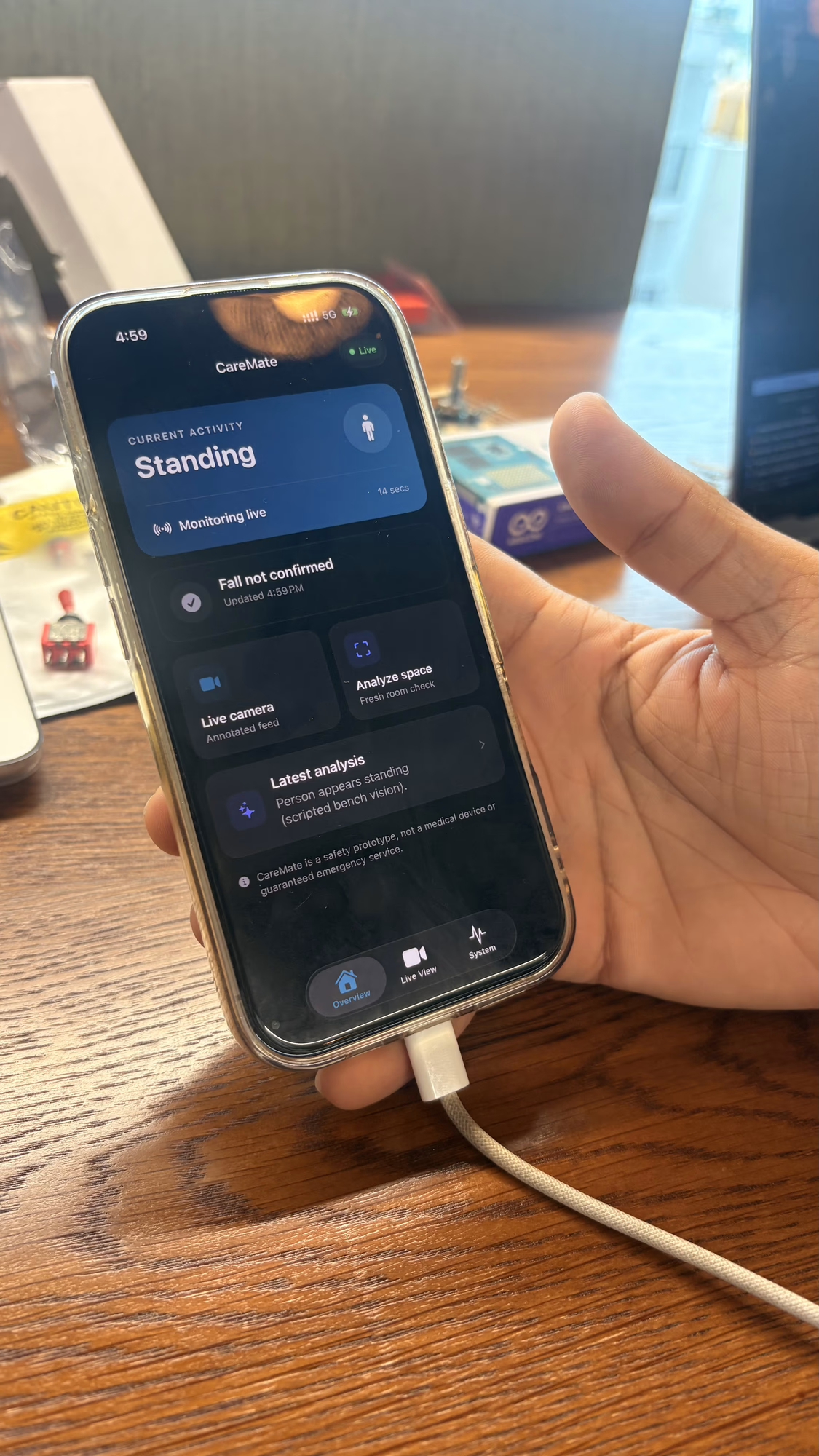
What they built: CareMate is a stationary elderly-safety monitor that catches falls using two independent signals. A worn ESP32 + motion sensor flags a possible fall, a camera hub confirms it with pose detection, and a confirmed fall fires a local alarm plus a real-time alert on a phone/web app — which can also ask "what's happening?" and get a live annotated view of the room.
What it solves: For older adults living alone — and the family and caregivers who worry about them — the real danger of a fall isn't the fall, it's the hours spent on the floor before anyone knows. CareMate detects it the instant it happens and alerts a caregiver, while requiring both the wearable and the camera to agree so it doesn't cry wolf. A safety net for aging in place — a prototype, not a medical device.
Demo
Project Resources
- Source Code: Source Code
- Circuit Design: Circuit Link
Team KyaBoltiPublic
Summary
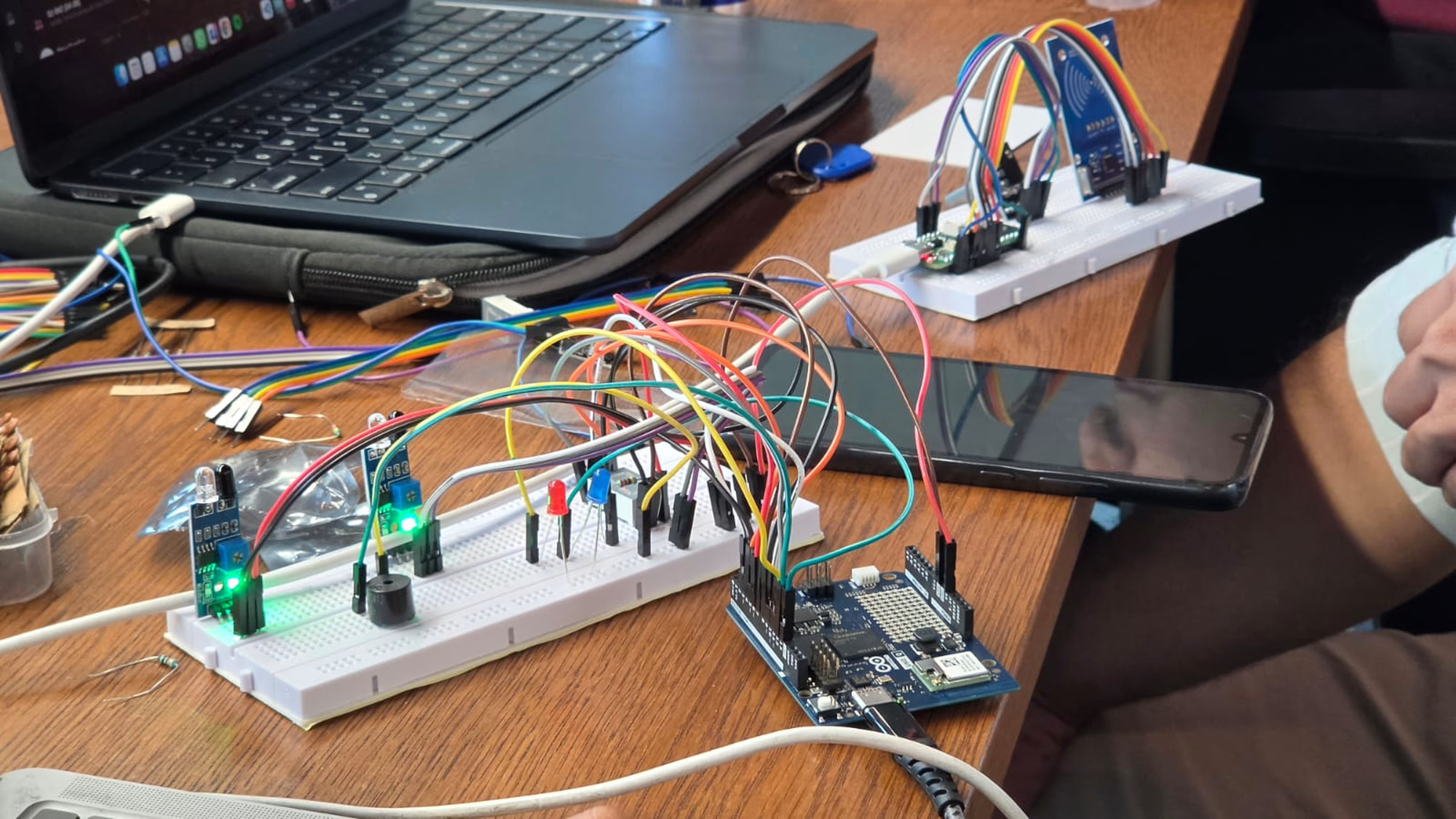
What they built: A counter and Darshana (Divine sight) system designed to manage crowds at the Tirupati temple.
What it solves: Wait-Time Anxiety: By providing dynamic, real-time estimates, it removes the frustration of open-ended waiting for devotees.
Overcrowding & Bottlenecks: Tracking space availability prevents dangerous overcrowding and helps maintain a steady flow of people.
Security & Record Management: The facial capture feature solves the challenge of tracking massive crowds, making it easier to reunite lost individuals (like children or the elderly) with their families and maintain secure historical logs.
Who It Is For: The Devotees: Pilgrims get a smoother, safer, and much more transparent Darshana experience, allowing them to plan their visit without exhausting themselves in unpredictable lines.
The Temple Administration & Security: It gives temple authorities (like the TTD) and security personnel a powerful operational tool to manage resources, monitor capacity limits, and maintain a high level of safety on the premises.
Demo
Project Resources
- Source Code: Source Code
- Social Post: Social Post
- Circuit Design: Circuit Link
Team Bittu
Summary
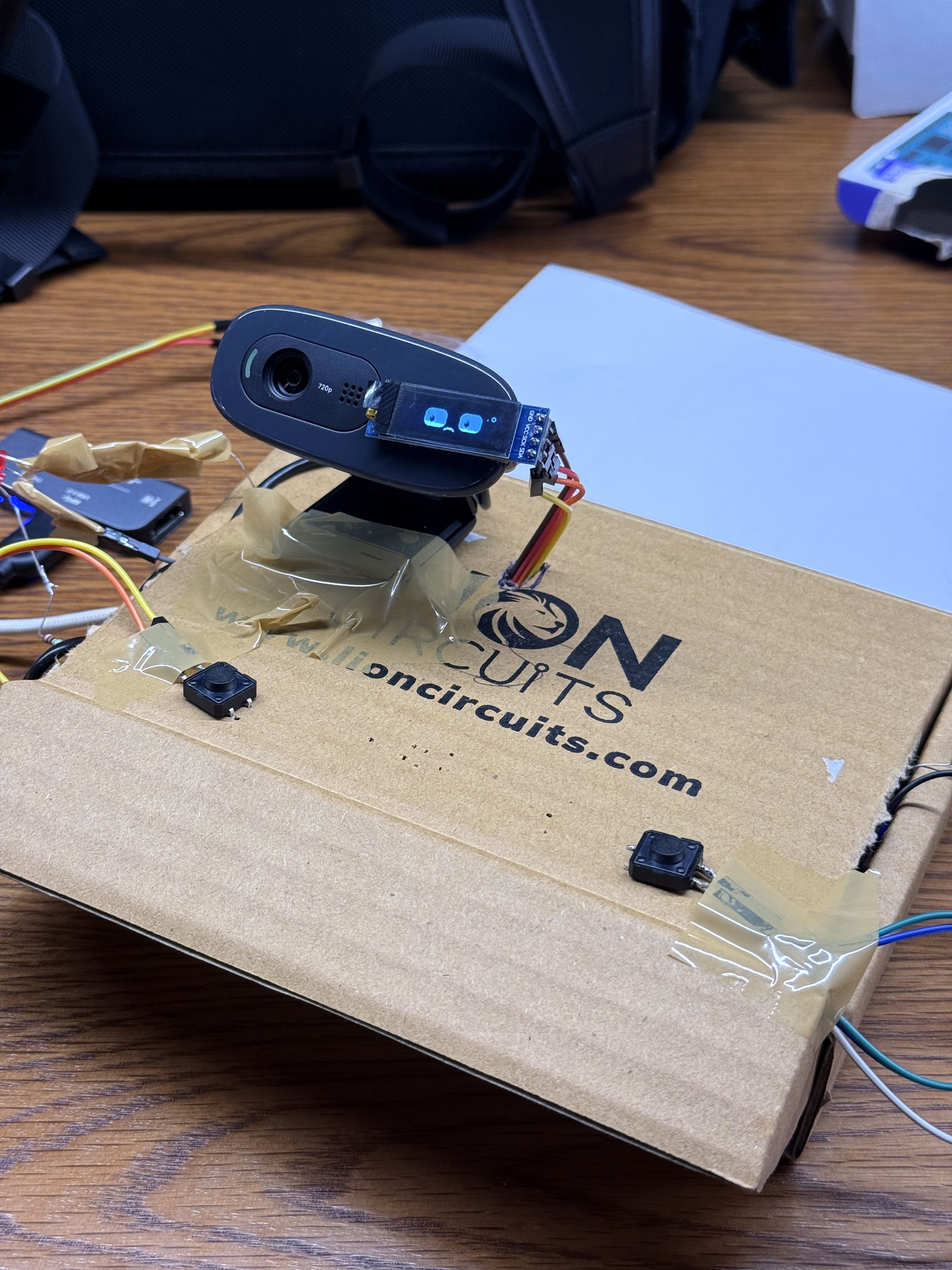
What they built: A desktop assistant designed to keep developers company while they code. It connects to Claude Code, WhatsApp, Swiggy MCP, and weather services, keeping the user updated on notifications and acting as a coding companion.
What it solves: It addresses the solitary nature of modern programming. Bittu provides companionship and offers a fun way to interact with and control work agents.
Demo
Project Resources
- Source Code: Source Code
- Social Post: Social Post
- Circuit Design: Circuit Link
Team Nishith
Summary
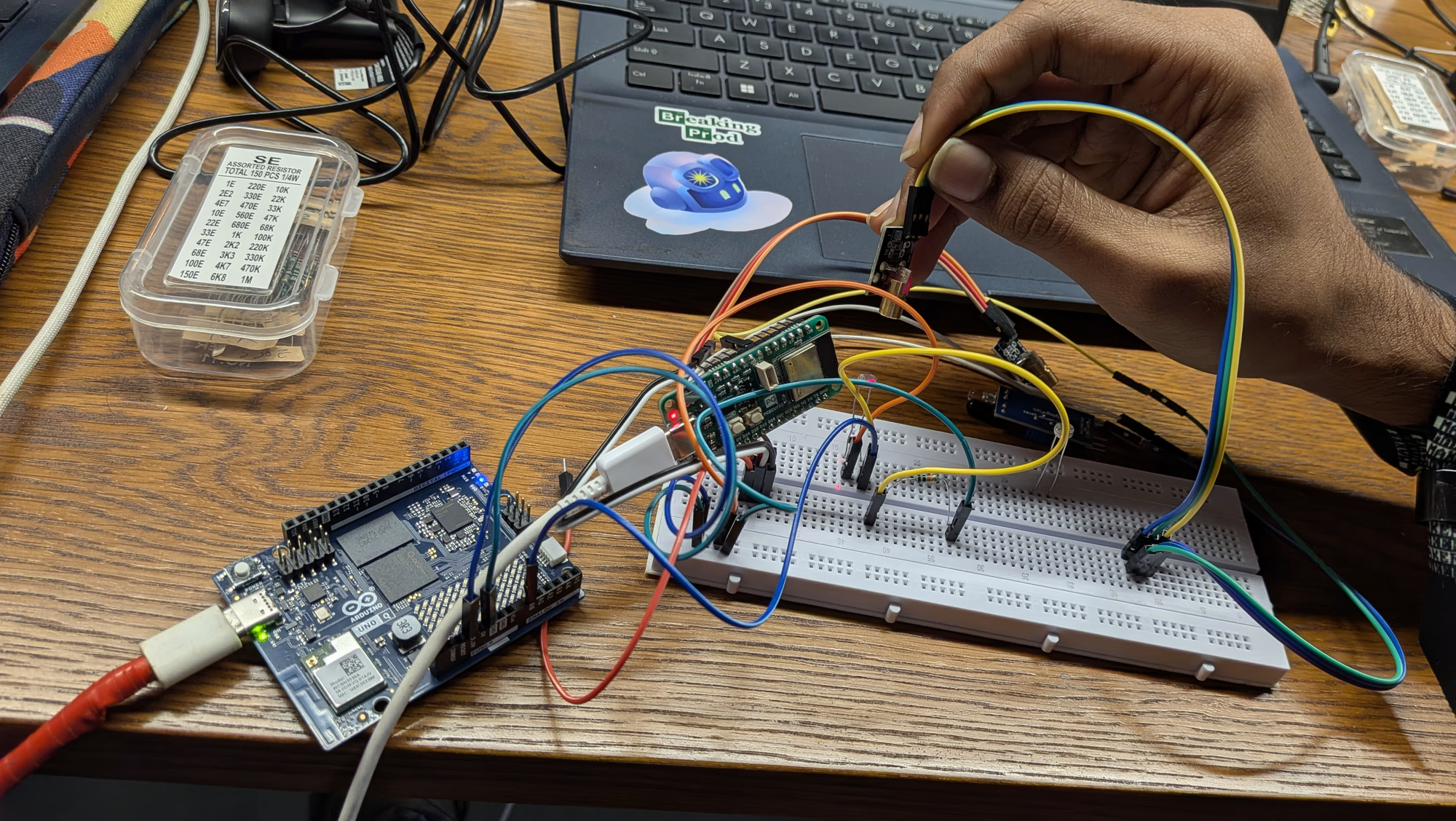
What they built: Photon Protocol is a semantic optical communication stack for embodied AI agents. Instead of communicating over Wi-Fi or Bluetooth, autonomous AI agents use visible light to exchange compressed semantic information, enabling local LLMs to collaborate through a custom physical communication protocol with human-in-the-loop controls.
What it solves: Photon Protocol enables AI agents to collaborate in environments where conventional networking is unavailable, undesirable, or restricted, such as air-gapped facilities, industrial automation, robotics, disaster response, and defense. It demonstrates a new paradigm for embodied AI, where intelligent machines communicate meaningful information over physical optical channels rather than traditional network infrastructure.
Demo
Project Resources
- Source Code: Source Code
- Social Post: Social Post
- Circuit Design: Circuit Link
Team Nehal
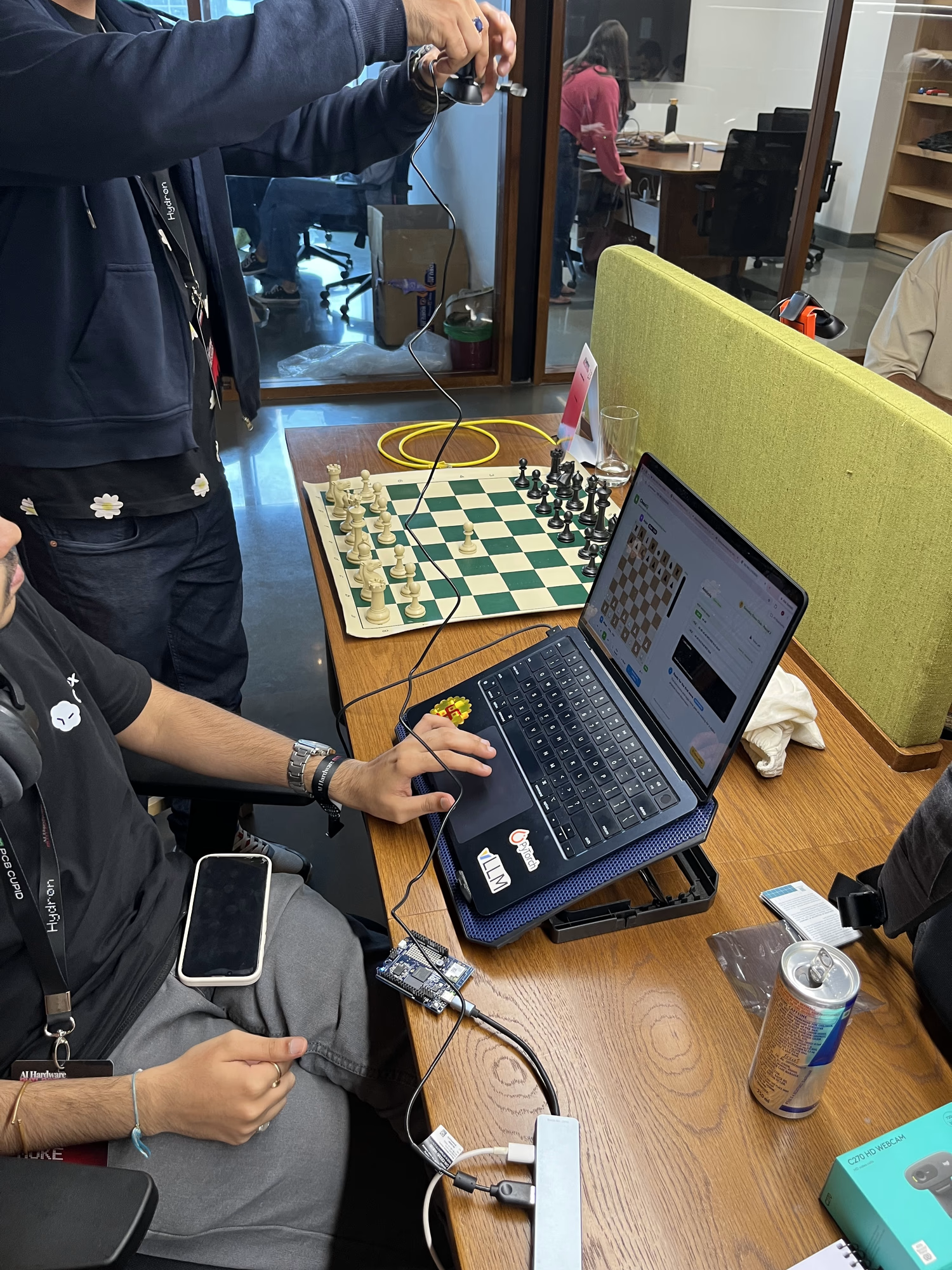
Summary
What they built: Chess IQ: a standalone, intelligent chess analysis device that digitizes on-board moves and analyzes them using the Stockfish chess engine and an AI VLM model on the Arduino UNO Q.
What it solves: It makes chess game analysis and digitization of game data affordable and portable. It is built for local chess clubs, students, school tournaments, and players who cannot afford a professional smart chess board costing six figures in rupees.
Demo
Project Resources
- Source Code: Source Code
- Social Post: Social Post
- Circuit Design: Circuit Link
Team Foodee
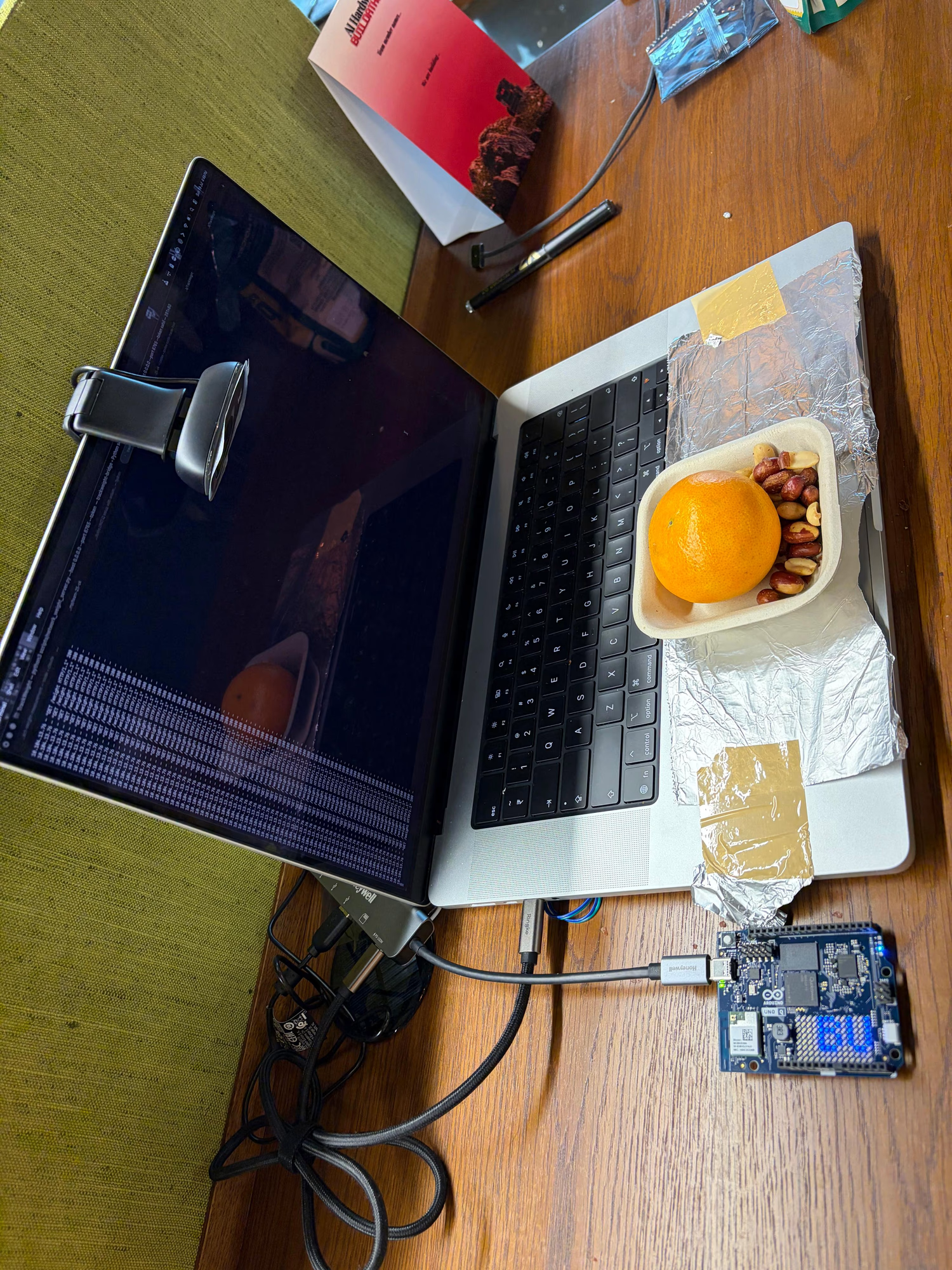
Summary
What they built: Foodee: an AI-powered smart food scale that automatically photographs and weighs food, estimates its calories, and logs everything over time—without requiring the user to use a phone.
What it solves: Foodee addresses the difficulty of consistent calorie tracking, as fewer than 5% of users stick with app-based tracking after two months. Instead of stopping to photograph, measure, and manually log every meal, users simply prepare their plates as usual. The smart scale captures the food, weighs it, estimates calories, and logs it automatically.
It's for people who want to lose weight or keep weight off naturally -- without medication or injections -- but struggle to consistently track what and how much they eat.
Demo
Project Resources
- Source Code: Source Code
- Social Post: Social Post
- Circuit Design: Circuit Link
Team Balcony Buddy
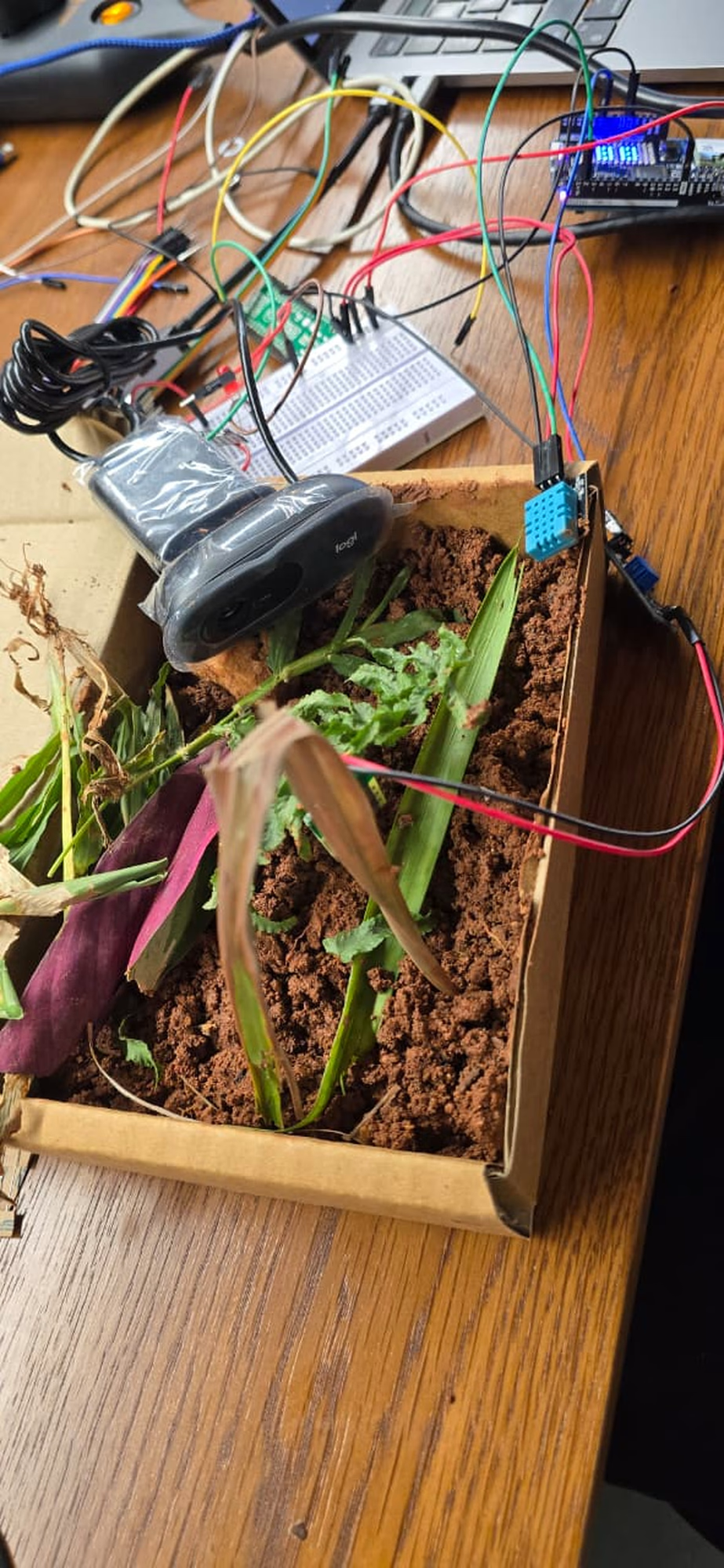
Summary
What they built: Balcony Buddy is an AI-powered garden copilot that combines live soil moisture, temperature, humidity and light readings with camera-based plant analysis. It triangulates sensor trends, plant needs and weather to identify problems and give gardeners simple, personalised actions—such as when to water, move or protect each plant.
What it solves: Balcony Buddy is for urban plant lovers who want a thriving garden but lack the time or expertise to interpret changing sunlight, weather and plant symptoms. It combines sensor and camera data to tell them exactly which plant needs attention, why, and what action to take—before it starts dying.
Demo
Project Resources
- Source Code: Source Code
- Social Post: Social Post
- Circuit Design: Circuit Link
Team Naman
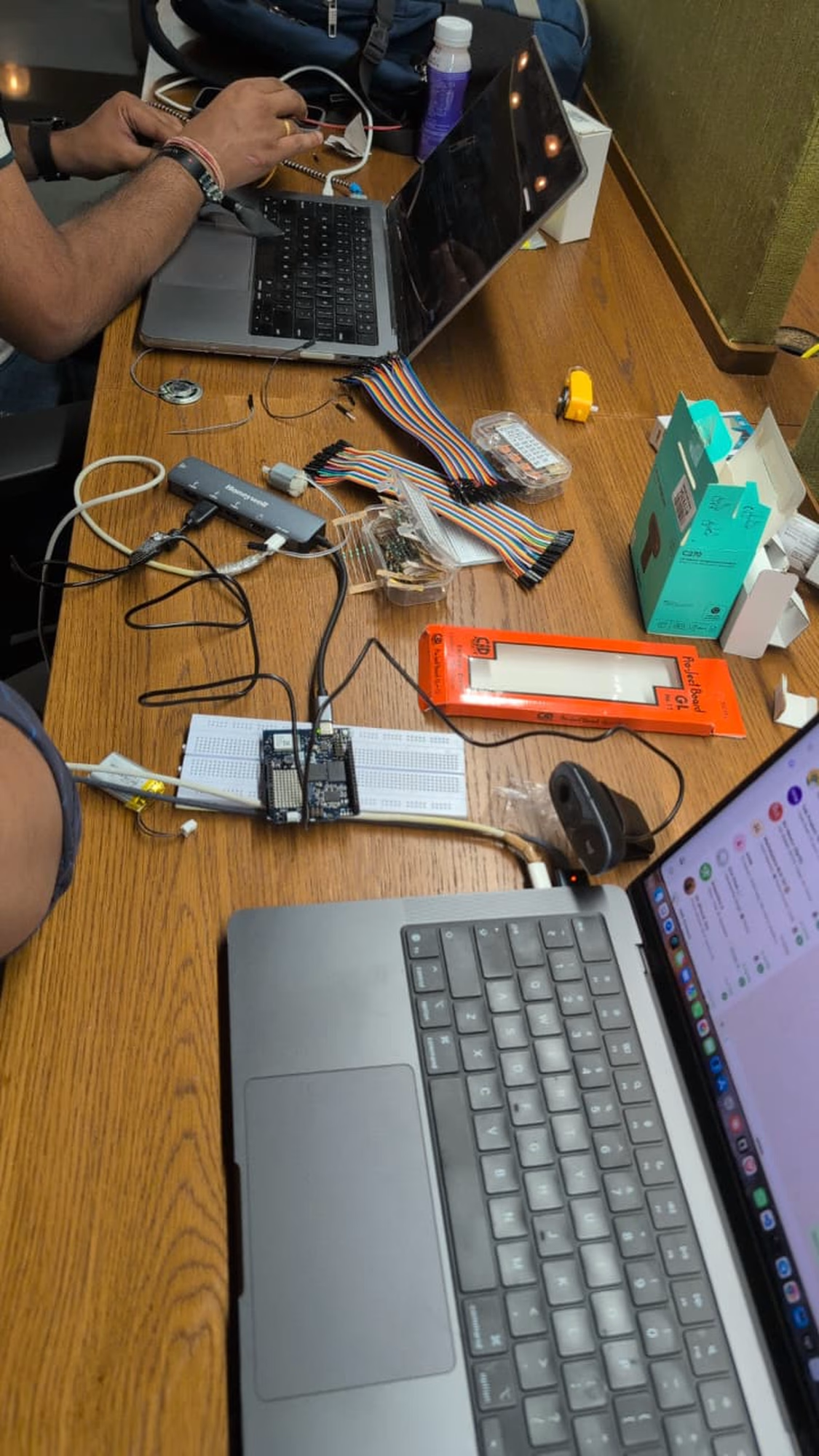
Summary
What they built: Fitness OS: a standalone, AI-powered posture and rep coach for squats, built on the Arduino UNO Q. A USB webcam feeds a MoveNet pose-estimation model (TFLite) running entirely on the board's Linux side (Qualcomm QRB) — requiring no laptop, cloud, or phone app. Python code computes knee angle and torso lean from the detected pose and drives a squat state machine that only counts correct reps.
What it solves: Home exercise done wrong is worse than not done at all; people cheat depth, round their backs, and count bad reps, with nobody watching. Fitness OS enforces correct form in real time: it only counts reps done right, and buzzes the instant form breaks.
This is for rehab and physio patients doing prescribed exercises at home unsupervised — plus anyone training solo who wants an honest rep count without a coach, laptop, or app. (An offline AI coach that counts only your correct squats, a physio's rules, enforced 24/7 on a board).
Demo
Project Resources
- Source Code: Source Code
- Circuit Design: Circuit Link
Team The Companions Companion
Summary
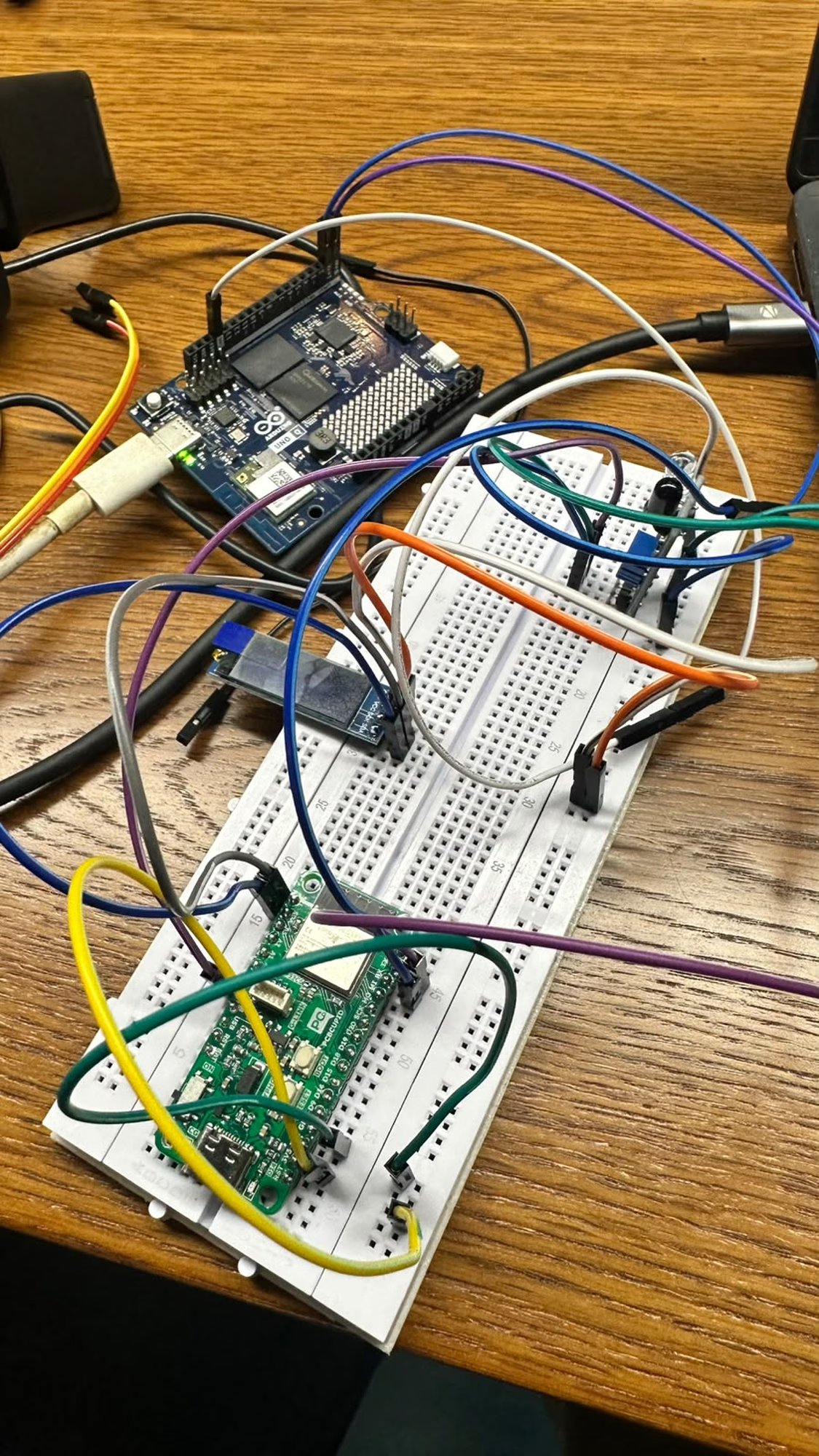
What they built: A smart productivity companion that automatically records how long you spend at your desk and lets you talk to an AI assistant with one button press.
What it solves: It makes productivity tracking automatic and more engaging. It helps students, professionals, and hobbyists understand their desk-time habits, stay accountable, and access AI support without interrupting their flow.
Demo
Project Resources
- Source Code: Source Code
- Social Post: Social Post
- Circuit Design: Circuit Link
Team GradeX
Summary
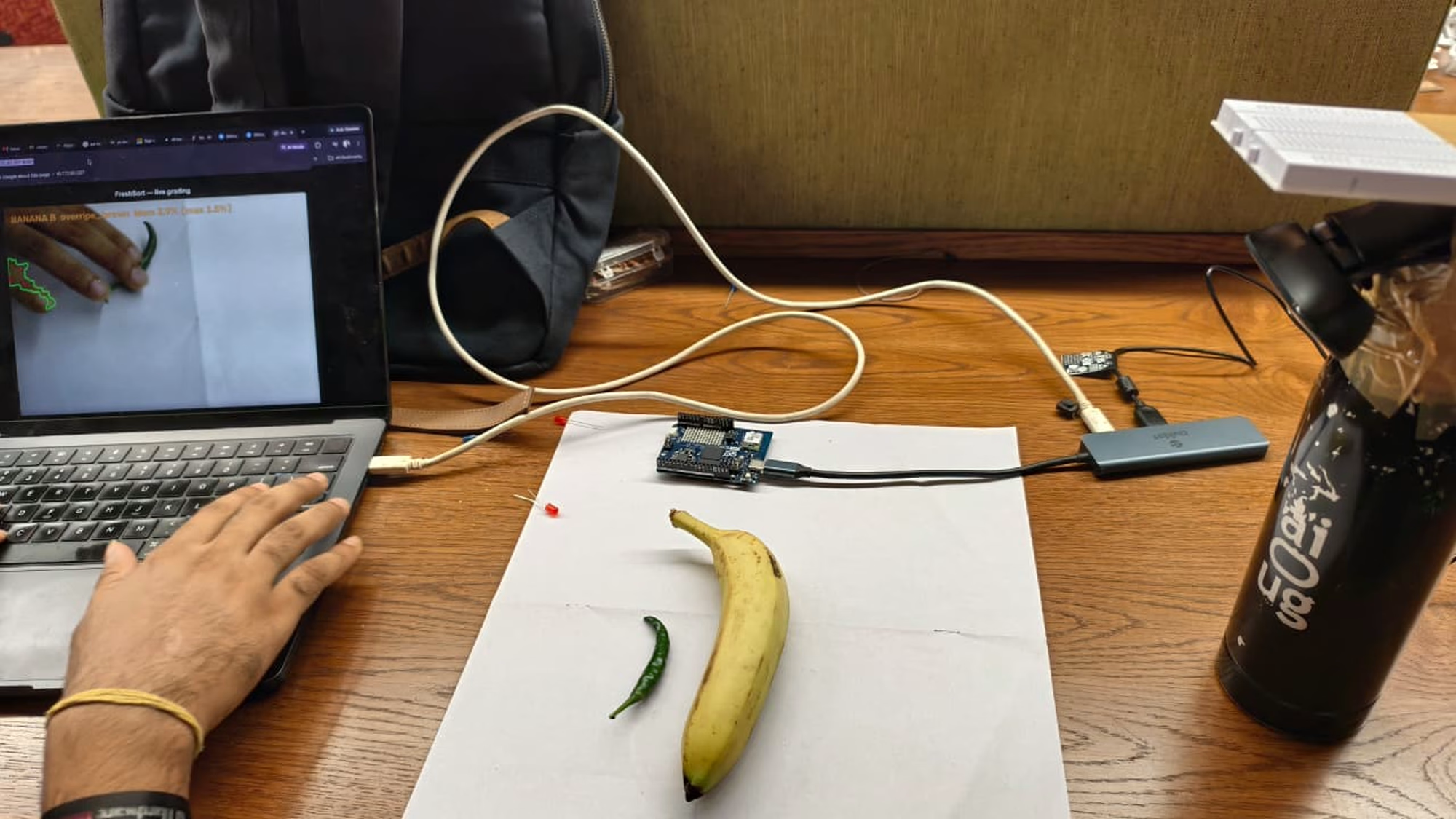
What they built: FreshSort is a produce-grading station built on the Arduino UNO Q. A Logitech C270 looks at one fruit at a time on a white tray; the UNO Q's Linux side white-balances the frame against the paper background, then grades it on three axes — ripeness (hue-band classification mapped to the industry 5-stage color scale), total blemish area (%), and largest single blemish (%). The verdict fires over the built-in Bridge to the microcontroller side: LED matrix shows ✓ or ✗, speaker beeps accept/reject. Every fruit gets a photo-stamped CSV log row. It grades bananas AND green chilies — it auto-detects which produce it's looking at and switches grading rulebooks. Everything — vision, grading, logging — runs locally on the board. No cloud, no GPU server, no model training: it's a calibrated instrument, tuned live today against frames from this very desk.
What it solves: This is built for Fresh Produce vendors, farmers and exporters. Yash runs a fresh-produce venture that supplied Gir Kesar mangoes to Blinkit/Hyperpure this season. Quick-commerce buyers reject entire lots above a 5% defect threshold and return them at the vendor's cost, and grading today is a human at a pack-house table: no record, no consistency, disputes at goods-receipt, and farmers eating the loss. The green chilies graded today were ordered from Zepto mid-buildathon. FreshSort gives pack-houses, FPOs, and q-commerce vendors three things: consistent buyer-spec grading, a physical accept/reject signal any line worker understands, and a photo-stamped log that is dispute-proof evidence at the buyer's gate and fair payment proof for the farmer. Built for the ₹4,000-board price point and offline operation that a rural pack-house actually needs.
Demo
Project Resources
- Social Post: Social Post
- Circuit Design: Circuit Link