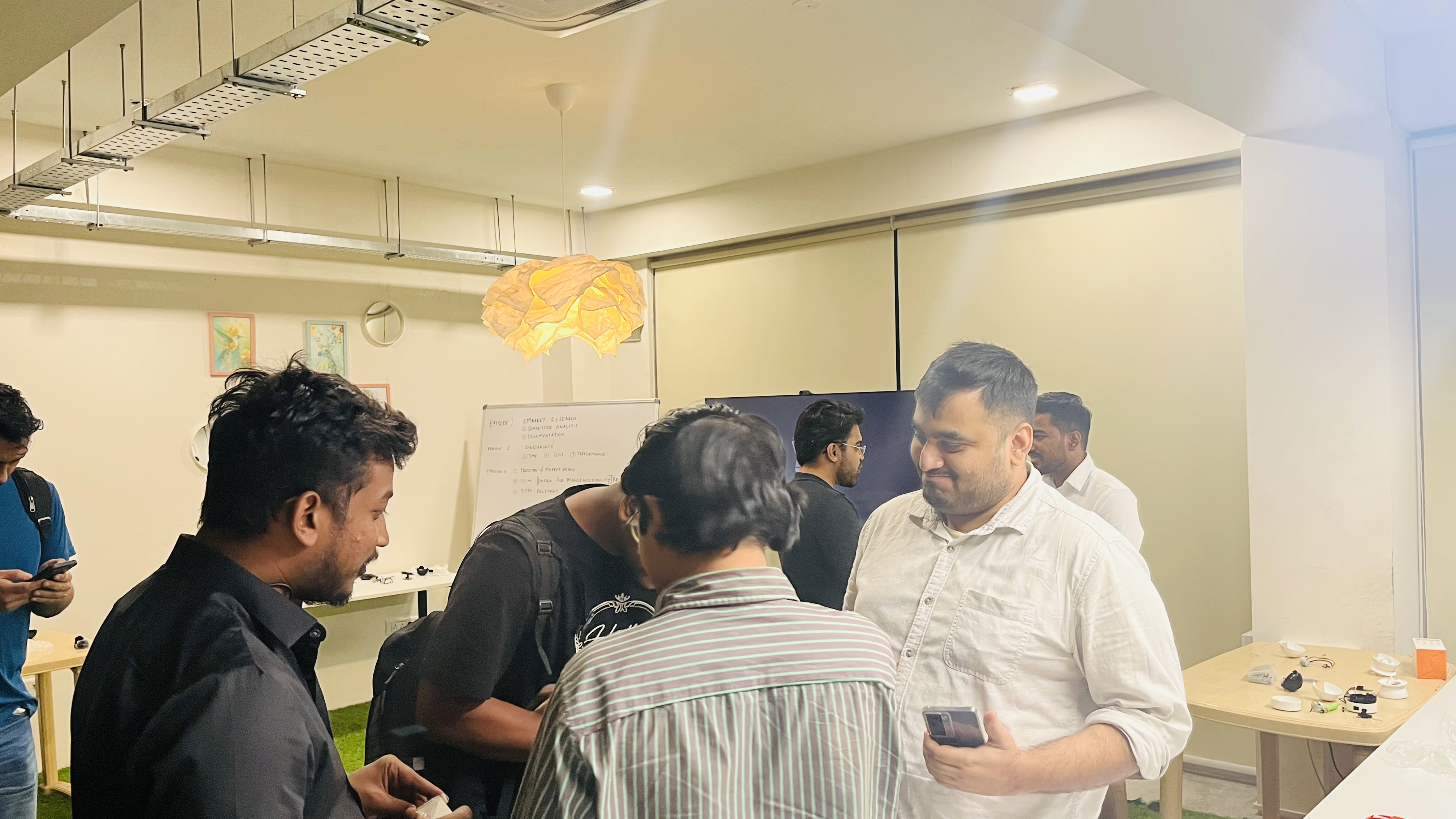
Deconstruct to Reconstruct
Summary
This session offers a complete walkthrough of hardware product development—from design and prototyping to scaling, teardown, and manufacturing. It blends practical teardown insights (using an IP camera) with frameworks like Design for Manufacturing (DFM) and House of Quality to illustrate how cost, performance, and scalability are balanced. The conversation also explores challenges in India’s hardware ecosystem and highlights future opportunities in open-source hardware and niche semiconductor sectors.
Highlights
-
Frameworks for Product Development: Introduction to House of Quality and DFM principles to balance cost, performance, and manufacturing efficiency.
-
Cost and Performance Trade-offs: Example of smartphone and GPU upgrades illustrating constant pressure to improve performance while reducing costs.
-
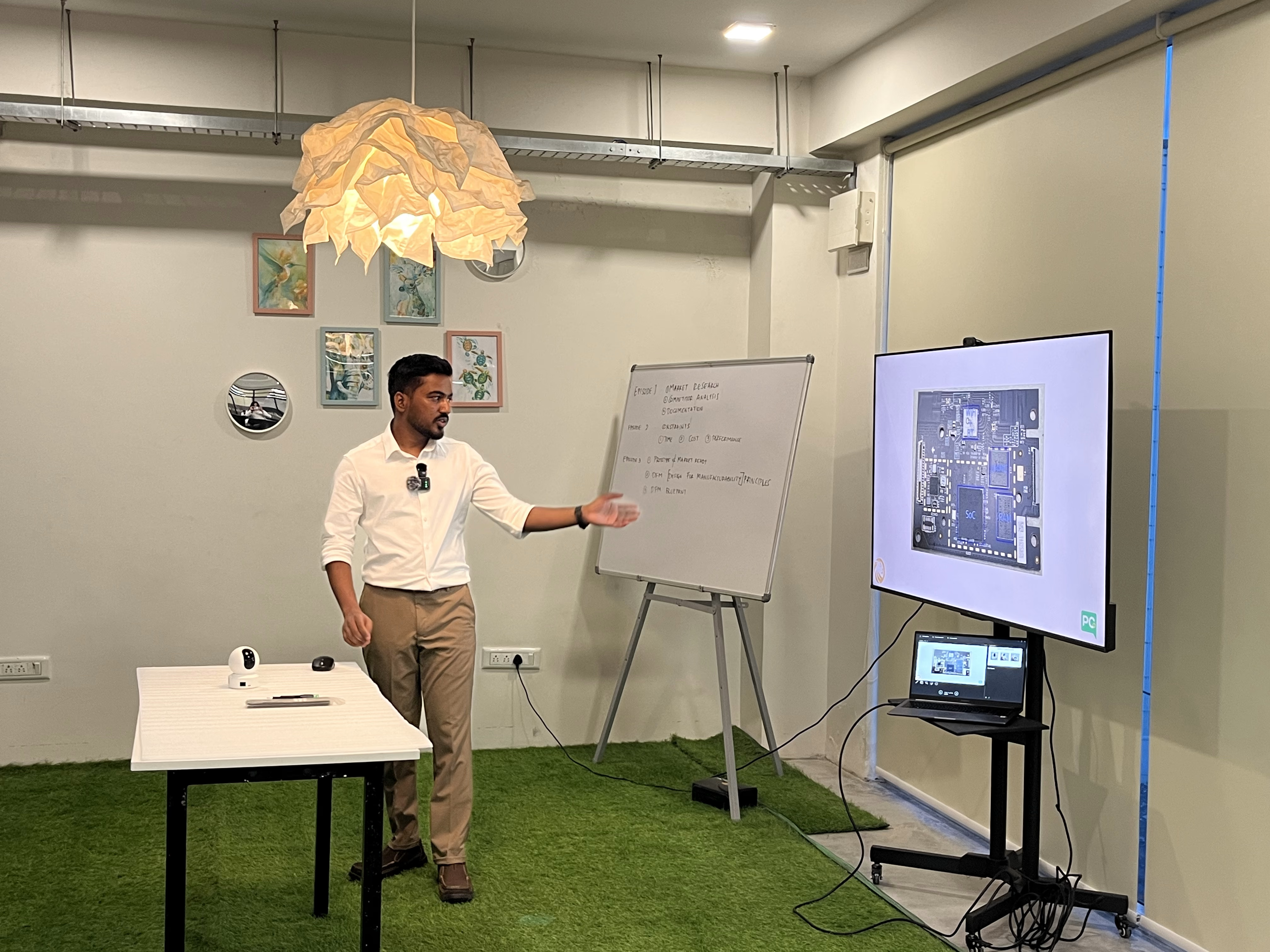
Product Teardown Deep Dive: Detailed breakdown of an IP camera’s components, showcasing embedded systems design, cost optimization, and manufacturing choices.
-
MCU vs MPU Explained: Differences between microcontrollers and microprocessors, and the role of embedded Linux versus RTOS in product design.
-
Indian Hardware Ecosystem Challenges: Skill gaps, documentation issues, and supply chain dependencies limiting India’s hardware manufacturing scale.
-
Global Comparison & Ecosystem Insights: How China’s mature manufacturing ecosystem and local suppliers enable competitive hardware production.
-
Commercial Product Success Stories: End-to-end product development examples, emphasizing certification, design iteration, and market adaptation.
Key Insights
-
Cost vs. Performance: Every product is a trade-off—smart teardown decisions (like simplified connectors or integrated PCBs) show how cost savings are engineered without major performance loss.
-
Prototype to Production: Prototyping is exploratory; scaling requires re-engineering with DFM to reduce cost, defects, and complexity.
-
MCU vs. MPU: Microcontrollers suit simple tasks (with inbuilt memory), while microprocessors run full Linux systems and need complex support circuitry.
-
Global Manufacturing Edge: China’s mature supplier ecosystem gives it cost and speed advantages—India must build similar local capabilities.
-
Teardown = Real Learning: Product teardowns reveal real-world design choices, helping engineers understand cost, layout, integration, and performance trade-offs.
-
Certification is Crucial: Compliance (FCC, CE, etc.) ensures global readiness and is a must-have for commercial success, especially in regulated industries.
-
India’s Semiconductor Potential: India can lead in emerging materials (like silicon carbide) rather than competing directly with mature silicon fabs.
-
Iterative Design Wins: Products go through multiple versions before launch; each iteration integrates feedback, cost reduction, and performance improvements.
-
Collaboration & Ecosystems Matter: Access to turnkey services—component sourcing, documentation, prototyping—accelerates hardware innovation and market entry.