Hardware Hackathon 3.0
The Edge of Intelligence
Collaborators




The judging panel
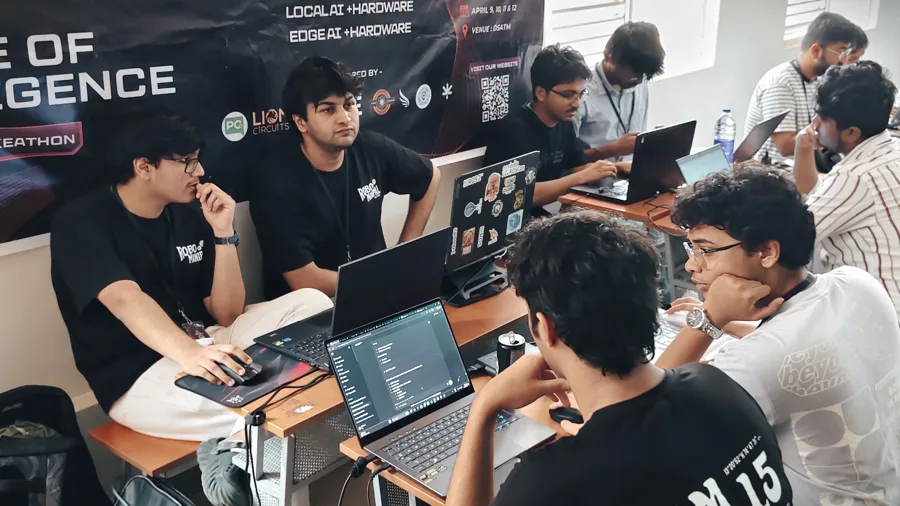
From the floor
Full galleryBuilt here
All 4 builds
Inside the event
Hardware Hackathon 3.0
⚡ The Blueprint for the Future is in Your Hands.
This isn't just a competition; it's a Hardware Revolution. We are calling the dreamers, the tinkers, and the digital architects who aren't afraid to get their hands dirty.
The world is moving to the edge. Intelligence is no longer just in the cloud—it's in the sensors, the motors, and the silicon you'll be coding. This is your chance to build the "impossible" and prove that the next great leap in technology starts with a single PCB.
⚠️ THE CLOCK IS TICKING.
Limited Seats Available. This is an elite gathering of the brightest minds. Will you be the one to bridge the gap between AI and the physical world, or will you watch from the sidelines?
Three Core Build Tracks
The Theme for this hackathon is Edge of Intelligence, focusing on three main areas:
- Cloud AI + Hardware: Leverage cloud-based AI models to power hardware devices and interactive systems.
- Edge AI + Hardware: Build AI/ML systems that run directly on microcontrollers or edge devices with strict constraints (limited RAM, Flash, and compute power).
- Local AI + Hardware: Develop custom AI models and run them locally on PCs, edge servers, or hybrid systems connected to hardware.
🏆 Prize Pool: ₹3.5 Lakhs
Build it bold. Engineer it to endure. Ignite the future.
Pictures
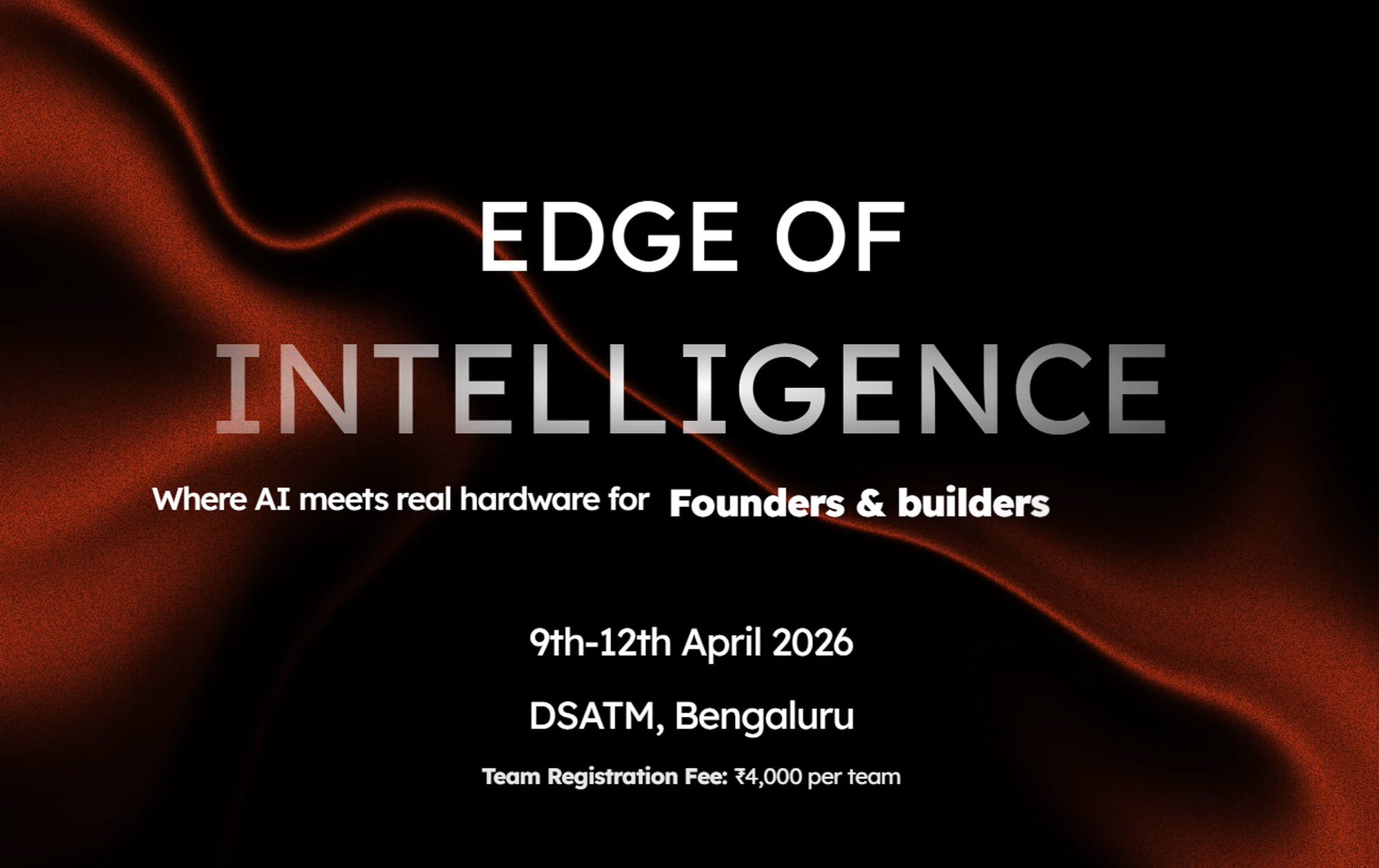
The total prize pool was ₹3.5 lakh.
Lion Circuits
A leading platform for high-quality PCB manufacturing and assembly. They provide end-to-end solutions for hardware engineers, from rapid prototyping to mass production. Visit website
PCBCUPID
A community-driven platform empowering hardware enthusiasts. They provide resources, tutorials, and component sourcing to bridge the gap in product development. Visit website
Param Foundation
A non-profit organization committed to supporting deep-tech innovation and engineering excellence by providing infrastructure for breakthrough research. Visit website
DSATM
A premier educational institution in Bangalore, affiliated with VTU, emphasizing academic excellence and futuristic engineering through high-quality technical education. Visit website
DSATM Maker Space
A dedicated innovation hub designed to foster hands-on learning, rapid prototyping, and collaborative engineering projects for aspiring creators and makers.
Sarvam AI
A full-stack Indian AI platform building foundational large language models and multimodal systems specifically tailored for Indian languages and use cases. Visit website
Hyfix India
Innovators in high-precision GNSS technology, providing low-cost hardware and embedded software for high-accuracy RTK and spatial data engines. Visit website
Astrm Labs
A defense technology company pioneering spatial intelligence, rocket defense systems, and precision guidance technology for national security, pushing the boundaries of hardware engineering. Visit website
The Residency
A boutique hacker house and co-living space in Bangalore for high-caliber builders, founders, and creatives to live, build, and scale world-class products. Visit website
Absurd Industries
Building handcrafted, open-source "sentient" hardware and DIY kits to push boundaries and make science education more engaging and rebellious. Visit website
9RE
A creative merchandise and design lab specializing in custom tech-themed apparel and wearable art for communities and innovators. Visit website
Pictures





Please read this docs to have a smooth 72-hour hackathon!
On Venue
-
Procure all your components exclusively from the component list given.
-
Design and build a functional, innovative project using only those components.
-
Workshops will run in parallel, which will help with guidance or any support needed for a particular topic.
-
Showcase your creativity, smart planning, and technical skills within real-world constraints. Choose boldly, design cleverly, and build something remarkable.
-
Accommodation, food, and snacks will be provided by the organizers from 9th of April post 1 PM.
-
The event is happening in DSATM (Engineering College), so please follow college campus rules.
-
Soft copy of any ID for verification purposes (e.g., Aadhaar card, Driving License, Voter ID, etc.).
-
The project doesn't have to strictly follow the abstract, you can also come up with a new idea based on the given components.
Note : Please make sure to return the project that are built during the hackathon & the additional components to the organizers.
You are free to carry the toolkit that was provided at the beginning of the hackathon.
Off Venue
-
Transportation expenses shall be borne by the participants.
-
All utility (or freshening up) work must be completed only in the allocated rooms/areas.
Schedule & Key Timelines
9th April - Thursday (Day 00)
| Time | Activity |
|---|---|
| 1:00 PM | Check-in |
| 3:00 PM - 4:30PM | Inauguration |
| 9:00 PM | Bed Time |
10th April - Friday (Day 01)
| Time | Activity |
|---|---|
| 7:45 AM | Check-in |
| 8:00 AM – 9:30 AM | Breakfast/Snacks |
| 9:30 AM – 10:00 AM | Instructions |
| 10:00 AM – 1:30 PM | Ideation + Planning |
| 1:30 PM – 2:30 PM | Lunch |
| 2:30 PM – 4:30 PM | Start R&D |
| 4:30 PM – 5:30 PM | Snacks and Networking |
| 5:30 PM – 8:30 PM | Continue R&D |
| 8:30 PM – 9:30 PM | Dinner |
| 9:30 PM | Continue R&D & PCB design (Mentor Walkthroughs) |
11th April - Saturday (Day 02)
| Time | Activity |
|---|---|
| 8:00 AM - 9:00 AM | Breakfast |
| 9:00 AM – 12:30 PM | Finalize R&D and PCB design |
| 1:30 PM – 2:30 PM | Lunch |
| 2:30 PM – 4:30 PM | Continue Firmware/3D printing/Software, etc. |
| 4:30 PM – 5:30 PM | Snacks and Networking |
| 5:30 PM – 8:30 PM | Continue development |
| 8:30 PM – 9:30 PM | Dinner |
| 9:30 PM | Continue development |
12th April - Sunday (Day 03)
| Time | Activity |
|---|---|
| 8:00 AM | Breakfast |
| 10:00 AM – 11:00 AM | Continue development |
| 11:00 AM – 12:00 PM | Bare board will be shipped |
| 12:00 PM – 1:30 PM | Assemble the final product |
| 1:30 PM – 2:30 PM | Lunch |
| 2:30 PM – 4:30 PM | (Cont.) Assemble the final product & submit |
| 4:30 PM – 5:00 PM | Snacks |
| Before 5:00 PM | Submit the final product |
| 5:00 PM – 7:00 PM | 1st Judging round / Presentation round |
| 7:00 PM – 7:30 PM | Dinner |
| 7:30 PM – 8:30 PM | Final Judging round & Presentation / Winner Announcement |
| 8:30 PM – 9:00 PM | Break-off from the event |
Notes:
- The networking session is a great opportunity to connect with mentors, judges, and fellow participants, don’t miss it!
Virtual Shop Timing
| Date | Time |
|---|---|
| 1st day - 10th | 2:30 PM to 9:00 PM |
| 2nd day - 11th | 10:00 AM to 5:00 PM |
| 3rd day - 12th | 10:00 AM to 5:00 PM |
NOTE:
- Please plan to purchase within a budget of ₹4000, use the wallet credit only.
- We tried our best to provide accurate information on the components procurement website, but there might be some mishaps :( so please purchase & verify components during PCB design.
- If you have damaged boards, we won't be replaced.
- Most of the 3rd partys components are directly procured from trusted vendors, we won't be reponsible for the incorrect functionality.
3D Print Timing
| Date | Time |
|---|---|
| 1st day - 10th | 2:30 PM to 10:00 PM |
| 2nd day - 11th | 9:00 AM to 10:00 PM |
| 3rd day - 12th | 9:00 AM to 10:00 PM |
NOTE:
- Please plan to print within a budget of ₹3000, the application will auto-calculate the cost.
- There are 5 printers running in parallel, so plan in advance and submit your prints early.
- All prints will be in PLA (Black) only.
PCB Design Submission
| Date | Time |
|---|---|
| 2nd day - 11th | Before 1:30 PM |
NOTE:
- Please use the Lion Circuits capabilities under MII service to ensure DFM compliance and smoother manufacturing.
- Use the KiCad template from Lion Circuits for easier setup.
- Submit the board before 1:30 PM. Failure to do so means the PCB will not be manufactured.
- Maximum of 2 designs per team.
Workshop Timing
| DAY 1 - 10th April | Topic |
|---|---|
| 11:00 AM – 12:00 PM | Product Thinking |
| 3:00 PM – 4:00 PM | How to Think Like an Engineer |
| 6:00 PM – 7:00 PM | Circuit & PCB Design |
| DAY 2 - 11th April | Topic |
|---|---|
| 9:30 AM – 10:30 AM | Mechanical Design + Electronics Integration |
| 10:00 AM – 12:00 PM | Final Check / DFM / Manufacturing Electronics |
| 3:00 PM – 4:00 PM | AI + Hardware |
| 6:00 PM – 7:00 PM | Scaling AI |
| DAY 3 - 12th April | Topic |
|---|---|
| 9:30 AM – 10:30 AM | Hardware Product Marketing |
| 11:00 AM – 12:00 PM | Soldering / Board Bring-up |
| 3:00 PM – 4:00 PM | Presentation / Pitches |
NOTE:
- Minimum one person per team must attend all workshops.
- Maximum of 2 members per team can participate.
- Missing a workshop results in a penalty of 3 points per workshop.
Team Guidelines
-
Team size: 3 to 4 members per team.
-
Solo participation: Not allowed — teamwork is essential.
-
Teams must strictly adhere to the total budget of ₹10,000 (₹4,000 components, ₹3,000 3D printing, ₹3,000 PCB).
-
Each team is responsible for managing their components.
-
All work must be completed on-site during hackathon hours.
-
Maintain a collaborative and respectful environment.
-
Teams are allowed to share and trade components.
Judging Criteria
| Category | Description | Score Range |
|---|---|---|
| Innovation & Creativity | Originality and uniqueness of the idea | 1 – 15 |
| Technical Implementation | Functionality, complexity, and working system | 1 – 45 |
| Efficient Budget Use | Strategic use of virtual budget | 1 – 10 |
| Presentation & Documentation | Clarity, teamwork, demo quality, and responses | 1 – 30 |
| Social (optional) | Video pitch / demo / social sharing | 1 – 10 |
Virtual Currency Mapping – Budget Utilization
Each team will receive a virtual budget of ₹4000 to "purchase" components and materials for their project. They can spend up to ₹4000.To promote strategic budgeting, teams will earn points based on how much of the budget they save, as per the following scale:
| Amount Saved (₹) | Bonus Points |
|---|---|
| ₹901 – ₹1000 | 10 points |
| ₹801 – ₹900 | 9 points |
| ₹701 – ₹800 | 8 points |
| ₹601 – ₹700 | 7 points |
| ₹501 – ₹600 | 6 points |
| ₹401 – ₹500 | 5 points |
| ₹301 – ₹400 | 4 points |
| ₹201 – ₹300 | 3 points |
| ₹101 – ₹200 | 2 points |
| ₹1 – ₹100 | 1 point |
| ₹0 | 0 points |
Spend wisely, and save smart to earn extra points!
-
Maximum a team could score will be 100.
-
If two teams score the same score, they end in a tie. The prize will be split between the team.
Submission Details
-
All teams must submit their final deliverables by 12th before 5:00 PM.
-
Full documentation including circuit diagram, picture, demo video, source code for the firmware, gerber & the pcb design files needed to be submitted.
-
Prototype/demo must be ready for judging.
-
Teams will present live.
-
Late submissions will not be accepted.
Code of Conduct & Ethics
-
Maintain a respectful and inclusive environment.
-
Collaboration within the team is encouraged.
-
Plagiarism or pre-built projects are strictly prohibited.
-
Follow safety protocols while handling electronics.
-
Harassment or misconduct leads to disqualification.
-
Judges’ decisions are final.
We wish you the best of luck and look forward to seeing your amazing creations.
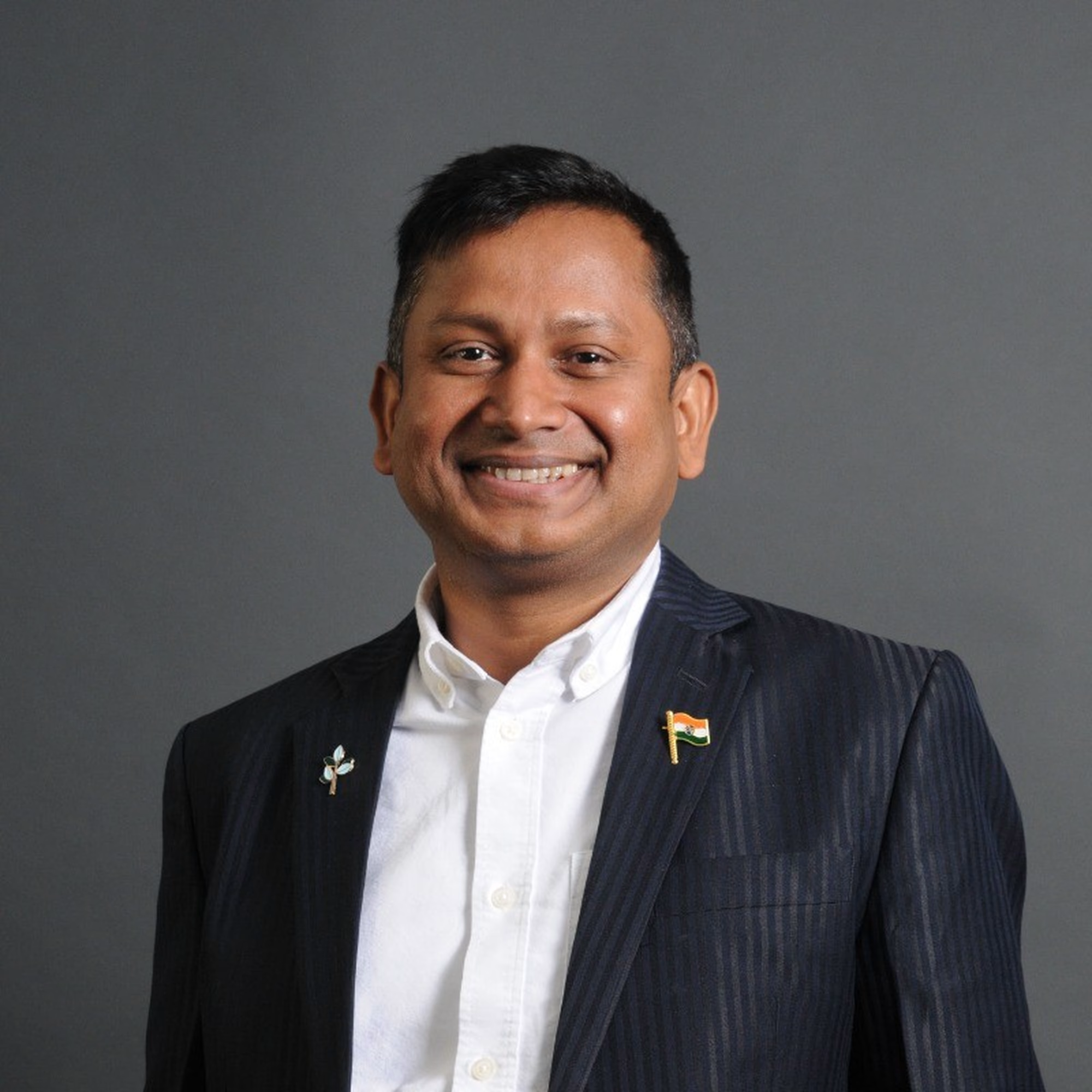
Industry leaders with rich experience in electronics, product engineering, and robotics systems. They bring hands-on expertise to evaluate innovation, creativity, and real-world impact. As judges, they aim to inspire and mentor the next generation of hardware innovators.
Dhananjay Singh
Position: Senior Civil Servant in the Government of India
LinkedIn Profile: https://www.linkedin.com/in/dhananjay-singh-ph-d-19947377
Previous Experience: Commissioned Officer in the Indian Army, Ministry of Defence
Dhananjay Singh is an accomplished public servant, researcher, and leader whose career reflects excellence across government service, academics, and national development. He currently serves in the Indian Revenue Service (IRS), Ministry of Finance, Government of India, where he has been contributing since 2016 in key administrative and strategic roles across multiple states. Earlier, he also served as a Commissioned Officer under the Ministry of Defence, showcasing his strong commitment to national service, discipline, and leadership. His work spans governance, policy implementation, cyber forensics, ethics, and organizational management.
He earned his Doctor of Philosophy (Ph.D.) from the Indian Institute of Technology (IIT) Kanpur, specializing in AI Ethics, Responsible AI, and Sustainable Supply Chain Management. He also completed higher legal studies at the National Law School of India University (NLSIU), strengthening his expertise in business law, governance, and ethics. Among his notable achievements are the prestigious Duke University USA Fellowship for Future Leaders in Development, appreciation from the Chairman of CBIC, multiple UGC National Eligibility Test qualifications, and publications in reputed journals such as The TQM Journal and Business Standard. His presence as a judge added immense credibility, insight, and inspiration to the event.
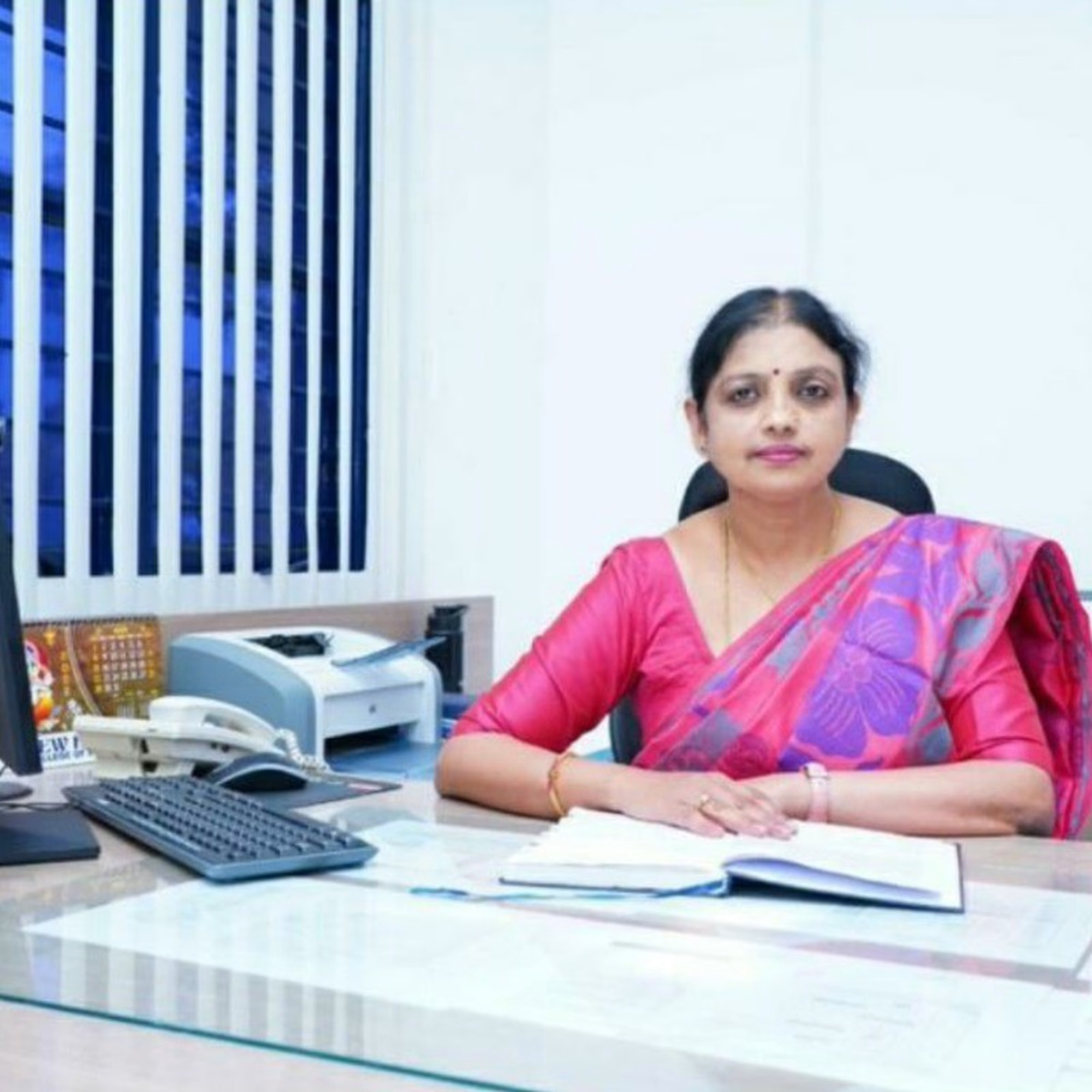
Dr. Uma Reddy N
Position: Professor and Head of the Department - Artificial Intelligence and Machine Learning
LinkedIn Profile: https://www.linkedin.com/in/dr-uma-reddy-n
Previous Experience: Professor and Head-ECE, AMC Engineering College
Dr. Uma Reddy N is a highly respected academic leader and researcher with extensive experience in engineering education, innovation, and departmental leadership. She currently serves as the Professor and Head of the Department of Artificial Intelligence & Machine Learning at New Horizon College of Engineering, Bengaluru, where she leads academic development, curriculum design, and emerging technology initiatives. Prior to this, she served for over a decade as Professor and Head of Electronics and Communication Engineering at AMC Engineering College, along with leadership roles at several reputed institutions in Bengaluru. Her career reflects a strong commitment to quality education, student mentorship, and advancing technical learning.
She holds a Ph.D. from Visvesvaraya Technological University (VTU) in Mixed Mode VLSI and further strengthened her expertise through an Executive PG Programme in Machine Learning and AI from IIIT Bangalore. Her transition from core electronics to modern AI and ML domains highlights her adaptability and forward-thinking approach in education. With vast experience in curriculum development, educational leadership, and technical training, her presence as a judge brought valuable academic insight, industry relevance, and inspiring guidance to the event.
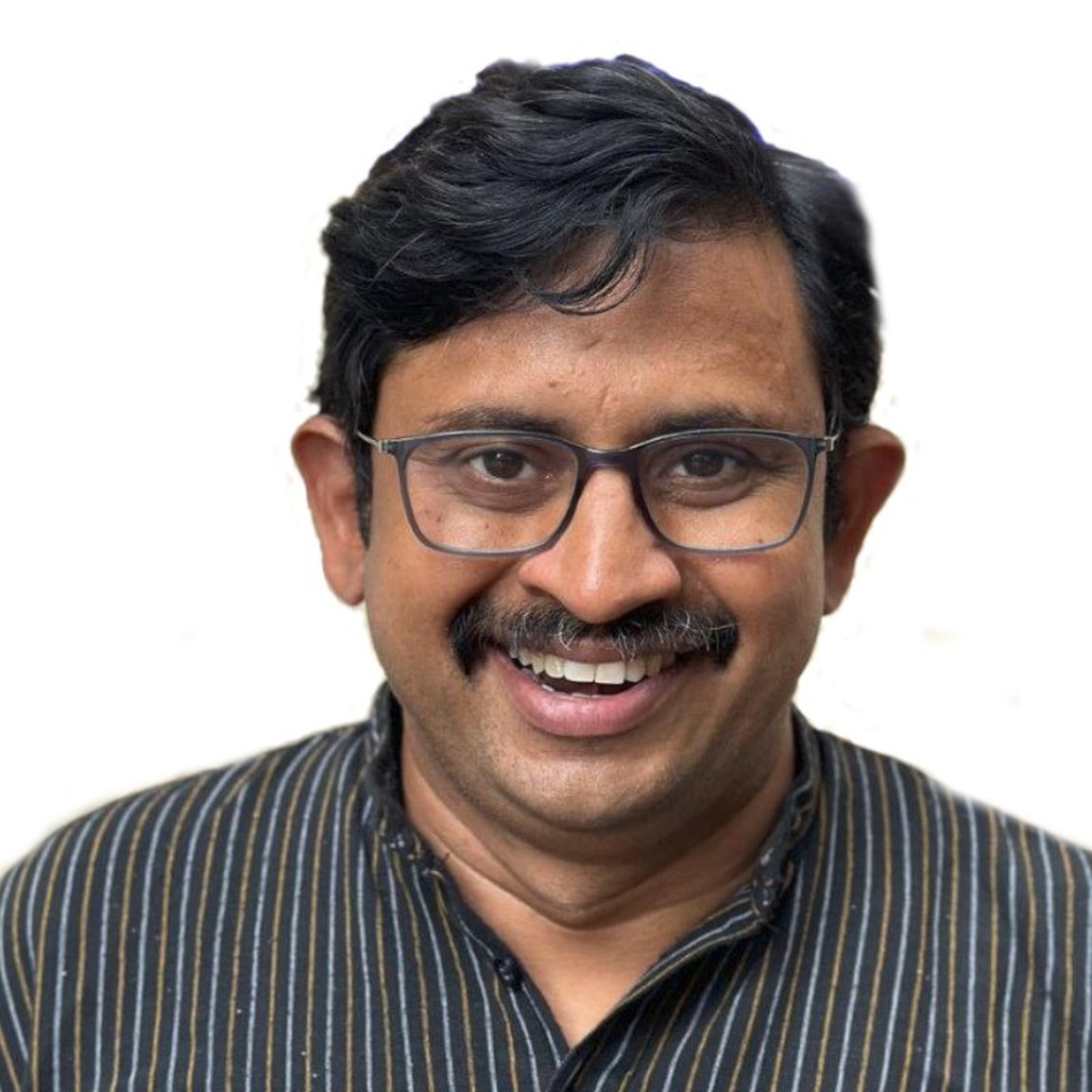
Shreekumar
Position: HardTech + DeepTech for Digital Inclusion and beyond
LinkedIn Profile: https://www.linkedin.com/in/shreekumar3d
Previous Experience: Software Architect, Innominds
Shreekumar is an accomplished technology architect, innovator, and engineering leader with deep expertise in embedded systems, Android platforms, high-performance computing, and scalable product design. He has held key leadership roles at Innominds, where he served as Entrepreneur in Residence and Software Architect, driving breakthrough innovations such as the SmartTerminal platform, a multi-user computing solution that enables 16 or more users to share a single computer efficiently. His work has focused on creating cost-effective, high-impact technology solutions for education, industry, digital libraries, and enterprise environments. Earlier, he was a key contributor at Hewlett-Packard (HP), where he worked on scientific visualization, cluster computing, GPU resource management, and open-source scalable visualization technologies.
He holds a Bachelor’s Degree in Computer Science from University B.D.T College of Engineering and has also earned a Graduate Certificate in Public Policy (Technology and Policy) from The Takshashila Institution with Outstanding Performance. His achievements include a US Patent (2026) for a secure multi-user multimedia terminal system, the Best Paper Award at the Eurographics Parallel Graphics and Visualization Conference, and the HPCWire Reader’s Choice Award for HP’s Scalable Visualization product. With strong expertise in product architecture, innovation, and real-world engineering, his presence as a judge brought valuable technical depth, practical insight, and visionary guidance to the event.
Shivam Kajale
Position: Co-Founder @ ASTRM Intelligence Labs
LinkedIn Profile: https://www.linkedin.com/in/shivam-kajale-23279b88
Previous Experience: Pre-Silicon Verification Engineer at Intel Corporation
Shivam Kajale is an accomplished deep-tech entrepreneur, researcher, and engineer working at the intersection of artificial intelligence, advanced hardware systems, and next-generation autonomous technologies. He is the Co-Founder of ASTRM Intelligence Labs, where he is building AI-native unmanned systems for autonomous and integrated defense applications. Alongside his entrepreneurial work, he has served as a Graduate Research Assistant at the Massachusetts Institute of Technology (MIT), contributing to cutting-edge research in nanoelectronics, instrumentation, and advanced device systems. He has also gained elite industry experience through roles at Cerebras Systems, where he worked on the Wafer-Scale Engine, and Intel Corporation, where he contributed to verification engineering for the Alder Lake SoC platform.
He earned his Ph.D. in Nanoelectronics from the Massachusetts Institute of Technology (MIT) and previously completed a Dual Degree (B.Tech + M.Tech) in Electrical and Electronics Engineering from IIT Bombay. His research portfolio includes work in quantum computing, nanomagnetics, semiconductor systems, and computational materials science, with multiple technical publications to his credit. With a rare combination of academic brilliance, frontier engineering experience, and entrepreneurial vision, his presence as a judge brought world-class technical insight, innovation-focused thinking, and exceptional inspiration to the event.
Dr. Sreejith S
Position: Associate Professor, Department of Artificial Intelligence & Machine Learning, New Horizon, Bangalore
LinkedIn Profile: https://www.linkedin.com/in/dr-sreejith-s-8521b714
Previous Experience: Assistant professor at SNS Institutions, Coimbatore
Dr. Sreejith S is a dedicated academician, researcher, and technology professional with strong experience in higher education, engineering instruction, and applied research. He currently serves as an Associate Professor at New Horizon College of Engineering, Bengaluru, where he contributes to teaching, mentoring, and academic development. Prior to this, he held faculty positions as an Assistant Professor at SNS Institutions, Coimbatore, and at reputed engineering colleges in Kerala, building over a decade of experience in technical education. Earlier in his career, he also worked as a Program Analyst at Cognizant, giving him valuable industry exposure alongside his academic expertise.
He holds a Ph.D. from Anna University Chennai in Information and Communication Engineering, reflecting his strong research background in advanced engineering domains. In addition, he has earned professional certifications from IBM in Enterprise Design Thinking, highlighting his interest in innovation-driven problem solving and modern development practices. With expertise spanning teaching, research, and industry-oriented learning, his presence as a judge brought thoughtful evaluation, technical depth, and valuable guidance to the event.
Pictures

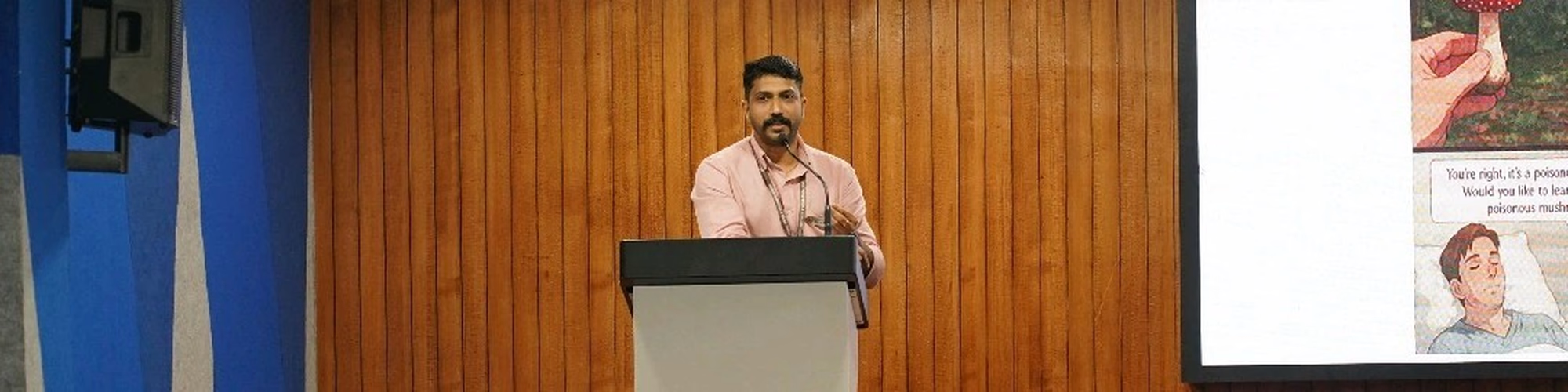
The best hardware hackathons don't produce prototypes. They produce answers. After 72 hours of continuous building, the winning team delivered exactly that — a technically strong, thoughtfully designed solution with a clear place in the real world. We're proud of every team that shipped. 🚀
🏆 1st Prize – Team 4
Project: OpenFPT: An Open-Source Dual-Arm Flying Probe Tester for Automated PCB Electrical Evaluation with AI-Assisted Test Plan Generation and Fault Diagnosis
TEAM MEMBERS:
- Mithilesh
- Jishnu
- Abhiram
Creativity: OpenFPT is a dual-arm robotic probing platform designed for automated PCB electrical evaluation. The system employs two planar 2-DOF robotic arms based on 5-bar parallel linkage mechanisms, controlled by an ESP32-C6 microcontroller. Each arm positions a metallic probe over target test points on a PCB board. After positioning, dedicated probe actuation servos lower the probes to make physical contact with the board, and the system performs electrical measurements including continuity testing, isolation checks, and signal path verification. The platform integrates an AI-powered host software stack that automatically generates test plans from KiCad design files and provides LLM-based fault diagnosis from measurement results.
Presentation & Documentation: Download file
🥈 2nd Prize – Team 23
Project: Nitroasis – AI and IoT Based Smart Farming System with Aquaponics Inspired Nutrient Recycling
TEAM MEMBERS:
- Arunkanna S
- Gokul S
- Akash A
Creativity: Nitroasis is an IoT-based smart farming system designed to monitor agricultural conditions and improve crop productivity. The system uses ESP32 microcontrollers connected to multiple sensors that measure parameters such as temperature, humidity, soil moisture, rainfall, NPK nutrients, water level, and smoke detection.
Presentation & Documentation: Download PDF
🥉 3rd Prize – Team 16
Project: AI-Based Smart Monitoring System with Self-Healing through Fault Isolation and Load Control
TEAM MEMBERS:
- Ananya M Murthy
- Deeksha Ramappa Gani
- Shriya S
- Varsha TM
Creativity: This project develops an intelligent real-time monitoring and fault detection system using sensors, machine learning, and digital twin technology. It continuously analyzes parameters like temperature, vibration, and voltage, compares them with normal operating conditions, and detects abnormalities using KNN and Edge Impulse models. Based on detected faults, the system triggers alerts and load control through relays, while a web dashboard provides live system status and performance monitoring.
Presentation & Documentation: Download file
🏅 Top 4 – Team 22
Project: TinyML-Powered Edge AI Hand Band for Sudden Fall Detection
TEAM MEMBERS:
- Shama AJ
- Sheethal R Bangera
- Srujan
- Sushanth
Creativity: TinyML Fall Guard is a smart hand band designed for safety monitoring. It continuously tracks hand movement using the MPU6050 motion sensor. The collected data is processed by an ESP32 controller running a TinyML model.
When sudden abnormal movement is detected, the system identifies it as a possible fall. Instead of sending an alert immediately, the system waits for a short period to check whether the person resumes normal movement. If normal movement is detected, the system considers the user safe and turns on the green LED. If no recovery movement is observed, the system enters danger mode. In danger mode, the red LED and buzzer are activated. The T5848 microphone is turned on to further confirm whether the user is in distress. After confirmation, an emergency alert is sent through Wi-Fi. A push button is also provided so the user can manually request help at any time.
Presentation & Documentation: Download file
Videos
Contest Rules
To ensure a smooth and enjoyable hackathon experience, please review the following contest rules:
Eligibility Requirements
We strive for an inclusive and compliant event open to:
- Teams of 3 to 4 members
- Employees/Interns with PCBCUPID, directly or indirectly, are not eligible.
- Open to both students and professionals.
- Each team must have 3/4 members and must include at least one student and at least one professional.
Requirements on the day of hackathon
All types of AI specific hardware projects are welcome! For your entry to be considered, please ensure:
- All team members must check in at the front desk on the event day.
- Only original projects not previously made public are accepted.
- Your submission (at the end of hackathon day) should include: clear documentation, a working demo, project description, images, schematics, and code.
- Submit your project before the announced deadline.
- High value components / tools / parts are not allowed to be carried by the participants.
- Things you can carry are (optional) : Soldering Iron, Multimeter, cutter, MicroSD card, power cables, USB cables.
- Additionally we highly recommended you to get your Laptop, phones or tablet for programming the microcontroller or controlling it.
- Participants are expected to handle all equipment, tools, and venue property responsibly. Any intentional or negligent damage to hardware, infrastructure, or facilities will be the responsibility of the individual or team involved and may result in penalties or disqualification.
- Any sort of bullying or harassing will be removed immediately from the venue.
- Any person in the team, found use of any Drug / Alcohol / smoking on the venue will cause disqualification for the whole team and the entire team would be asked to move out of the venue immediately.
Communication & Support
- Dedicated channels are available for questions and assistance throughout the event.
- Organizers LION CIRCUITS, PCBCUPID and DSATM are committed to prompt support and guidance.
- Active and open communication is encouraged to foster a collaborative community.
Prizes & Awards
- Top projects win prizes as mentioned, while all teams who participate will receive digital certificates and goodies.
- Winners are chosen based on judging criteria provided before the event.
- Prizes are awarded to the team as a whole.
- The competition encourages innovation, collaboration, and inclusivity within the tech community.
Rights & Ownership
- Participants retain full ownership of their projects. But the projects codes, schematic and other presentation will be shared in public domain (open sourced) on PCBCUPID website and Github.
- By participating in the event, participants grant the organizers a non-exclusive, worldwide, royalty-free license to use submissions for promotional and educational purposes.
- Organizers reserve the right to enforce the contest rules. By registering and submitting, you agree to all terms and policies stated here, ensuring a fair and transparent process.
Please read this docs to have a smooth 72-hour hackathon!
On Venue
-
Procure all your components exclusively from the component list given.
-
Design and build a functional, innovative project using only those components.
-
Workshops will run in parallel, which will help with guidance or any support needed for a particular topic.
-
Showcase your creativity, smart planning, and technical skills within real-world constraints. Choose boldly, design cleverly, and build something remarkable.
-
Accommodation, food, and snacks will be provided by the organizers from 9th of April post 1 PM.
-
The event is happening in DSATM (Engineering College), so please follow college campus rules.
-
Soft copy of any ID for verification purposes (e.g., Aadhaar card, Driving License, Voter ID, etc.).
-
The project doesn't have to strictly follow the abstract, you can also come up with a new idea based on the given components.
Note : Please make sure to return the project that are built during the hackathon & the additional components to the organizers.
You are free to carry the toolkit that was provided at the beginning of the hackathon.
Off Venue
-
Transportation expenses shall be borne by the participants.
-
All utility (or freshening up) work must be completed only in the allocated rooms/areas.
Schedule & Key Timelines
9th April - Thursday (Day 00)
| Time | Activity |
|---|---|
| 1:00 PM | Check-in |
| 3:00 PM - 4:30PM | Inauguration |
| 9:00 PM | Bed Time |
10th April - Friday (Day 01)
| Time | Activity |
|---|---|
| 7:45 AM | Check-in |
| 8:00 AM – 9:30 AM | Breakfast/Snacks |
| 9:30 AM – 10:00 AM | Instructions |
| 10:00 AM – 1:30 PM | Ideation + Planning |
| 1:30 PM – 2:30 PM | Lunch |
| 2:30 PM – 4:30 PM | Start R&D |
| 4:30 PM – 5:30 PM | Snacks and Networking |
| 5:30 PM – 8:30 PM | Continue R&D |
| 8:30 PM – 9:30 PM | Dinner |
| 9:30 PM | Continue R&D & PCB design (Mentor Walkthroughs) |
11th April - Saturday (Day 02)
| Time | Activity |
|---|---|
| 8:00 AM - 9:00 AM | Breakfast |
| 9:00 AM – 12:30 PM | Finalize R&D and PCB design |
| 1:30 PM – 2:30 PM | Lunch |
| 2:30 PM – 4:30 PM | Continue Firmware/3D printing/Software, etc. |
| 4:30 PM – 5:30 PM | Snacks and Networking |
| 5:30 PM – 8:30 PM | Continue development |
| 8:30 PM – 9:30 PM | Dinner |
| 9:30 PM | Continue development |
12th April - Sunday (Day 03)
| Time | Activity |
|---|---|
| 8:00 AM | Breakfast |
| 10:00 AM – 11:00 AM | Continue development |
| 11:00 AM – 12:00 PM | Bare board will be shipped |
| 12:00 PM – 1:30 PM | Assemble the final product |
| 1:30 PM – 2:30 PM | Lunch |
| 2:30 PM – 4:30 PM | (Cont.) Assemble the final product & submit |
| 4:30 PM – 5:00 PM | Snacks |
| Before 5:00 PM | Submit the final product |
| 5:00 PM – 7:00 PM | 1st Judging round / Presentation round |
| 7:00 PM – 7:30 PM | Dinner |
| 7:30 PM – 8:30 PM | Final Judging round & Presentation / Winner Announcement |
| 8:30 PM – 9:00 PM | Break-off from the event |
Notes:
- The networking session is a great opportunity to connect with mentors, judges, and fellow participants, don’t miss it!
Virtual Shop Timing
| Date | Time |
|---|---|
| 1st day - 10th | 2:30 PM to 9:00 PM |
| 2nd day - 11th | 10:00 AM to 5:00 PM |
| 3rd day - 12th | 10:00 AM to 5:00 PM |
NOTE:
- Please plan to purchase within a budget of ₹4000, use the wallet credit only.
- We tried our best to provide accurate information on the components procurement website, but there might be some mishaps :( so please purchase & verify components during PCB design.
- If you have damaged boards, we won't be replaced.
- Most of the 3rd partys components are directly procured from trusted vendors, we won't be reponsible for the incorrect functionality.
3D Print Timing
| Date | Time |
|---|---|
| 1st day - 10th | 2:30 PM to 10:00 PM |
| 2nd day - 11th | 9:00 AM to 10:00 PM |
| 3rd day - 12th | 9:00 AM to 10:00 PM |
NOTE:
- Please plan to print within a budget of ₹3000, the application will auto-calculate the cost.
- There are 5 printers running in parallel, so plan in advance and submit your prints early.
- All prints will be in PLA (Black) only.
PCB Design Submission
| Date | Time |
|---|---|
| 2nd day - 11th | Before 1:30 PM |
NOTE:
- Please use the Lion Circuits capabilities under MII service to ensure DFM compliance and smoother manufacturing.
- Use the KiCad template from Lion Circuits for easier setup.
- Submit the board before 1:30 PM. Failure to do so means the PCB will not be manufactured.
- Maximum of 2 designs per team.
Workshop Timing
| DAY 1 - 10th April | Topic |
|---|---|
| 11:00 AM – 12:00 PM | Product Thinking |
| 3:00 PM – 4:00 PM | How to Think Like an Engineer |
| 6:00 PM – 7:00 PM | Circuit & PCB Design |
| DAY 2 - 11th April | Topic |
|---|---|
| 9:30 AM – 10:30 AM | Mechanical Design + Electronics Integration |
| 10:00 AM – 12:00 PM | Final Check / DFM / Manufacturing Electronics |
| 3:00 PM – 4:00 PM | AI + Hardware |
| 6:00 PM – 7:00 PM | Scaling AI |
| DAY 3 - 12th April | Topic |
|---|---|
| 9:30 AM – 10:30 AM | Hardware Product Marketing |
| 11:00 AM – 12:00 PM | Soldering / Board Bring-up |
| 3:00 PM – 4:00 PM | Presentation / Pitches |
NOTE:
- Minimum one person per team must attend all workshops.
- Maximum of 2 members per team can participate.
- Missing a workshop results in a penalty of 3 points per workshop.
Team Guidelines
-
Team size: 3 to 4 members per team.
-
Solo participation: Not allowed — teamwork is essential.
-
Teams must strictly adhere to the total budget of ₹10,000 (₹4,000 components, ₹3,000 3D printing, ₹3,000 PCB).
-
Each team is responsible for managing their components.
-
All work must be completed on-site during hackathon hours.
-
Maintain a collaborative and respectful environment.
-
Teams are allowed to share and trade components.
Judging Criteria
| Category | Description | Score Range |
|---|---|---|
| Innovation & Creativity | Originality and uniqueness of the idea | 1 – 15 |
| Technical Implementation | Functionality, complexity, and working system | 1 – 45 |
| Efficient Budget Use | Strategic use of virtual budget | 1 – 10 |
| Presentation & Documentation | Clarity, teamwork, demo quality, and responses | 1 – 30 |
| Social (optional) | Video pitch / demo / social sharing | 1 – 10 |
-
Maximum a team could score will be 100.
-
If two teams score the same score, they end in a tie. The prize will be split between the team.
Submission Details
-
All teams must submit their final deliverables by 12th before 5:00 PM.
-
Full documentation including circuit diagram, picture, demo video, source code for the firmware, gerber & the pcb design files needed to be submitted.
-
Prototype/demo must be ready for judging.
-
Teams will present live.
-
Late submissions will not be accepted.
Code of Conduct & Ethics
-
Maintain a respectful and inclusive environment.
-
Collaboration within the team is encouraged.
-
Plagiarism or pre-built projects are strictly prohibited.
-
Follow safety protocols while handling electronics.
-
Harassment or misconduct leads to disqualification.
-
Judges’ decisions are final.
We wish you the best of luck and look forward to seeing your amazing creations.
Special Prizes
Along with the main hackathon prizes, we have exciting special category awards to recognize teams pushing boundaries in AI + Hardware and PCB design workflows.
🧠 Best Use of Sarvam AI
Each participant will receive ₹1000 worth of AI credits, with an additional ₹1000 credits available on demand during the hackathon.
Judging Criteria
Projects will be evaluated based on:
- Usefulness of the application
- How technically well Sarvam AI is integrated with hardware
- How efficiently and effectively AI credits are utilized
Evaluation Process
- Judging will be conducted by the Sarvam AI team during the final presentation and demo rounds.
- The decision made by the Sarvam team will be final and binding.
Prize
- Winners will receive ₹10,000 worth of Sarvam AI credits
- This prize is independent of overall rankings, meaning even teams outside the top 3 or top 5 can win
⚡ Best Use of Circuit Spell
Circuit Spell is an AI-based CAD tool developed by PCB Cupid, designed to simplify and accelerate PCB design workflows.
Judging Criteria
Projects will be evaluated based on:
- Creativity in using the tool
- Overall project innovation and creativity
- Number and depth of features used within the CAD application
- Elegance of the solution compared to traditional CAD approaches
- Preference for projects that use 100% Circuit Spell workflow (without external CAD tools or exports)
Evaluation Process
- Judging will be conducted by the PCB Cupid team
- The decision will be final and binding
Prize
- Winner will receive a ₹10,000 cash prize
Push the limits, explore the tools deeply, and build something truly exceptional to stand out in these categories! 🚀