Electropia 2025
A disaster-management build challenge connecting sensing, communication and hands-on engineering.
Collaborators


The judging panel
Built here
All 3 builds
Inside the event
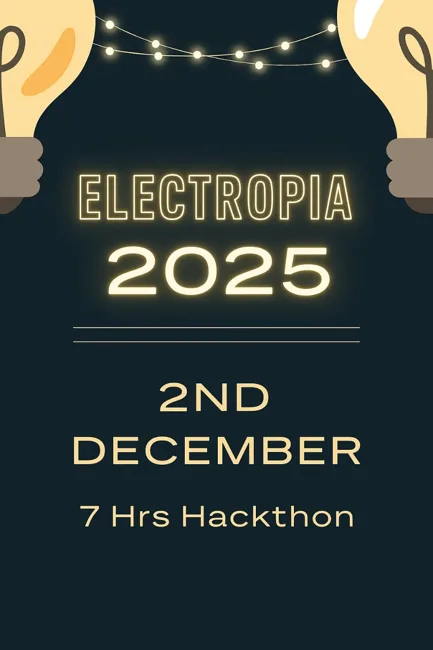
Electropia 2025
⚔ A Build-Off That Hits Harder Than You Think.
Enter a battlefield of innovation where wires, boards, and code come alive. Create hardware solutions that push boundaries and redefine what’s possible.
Not just a hackathon—a hardware proving ground. DSATM Bengaluru x PCB CUPID unite India's boldest engineers to craft solutions with speed, skill, and imagination that doesn’t flinch.
The Theme for this hackathon is Disaster Management, your open to build anything aroudn this topic with the resource and the budget we provide! But To ensure a smooth and enjoyable hackathon experience, please review the following contest rules: Rules
Make it real. Make it strong. Make it unforgettable!
Pictures
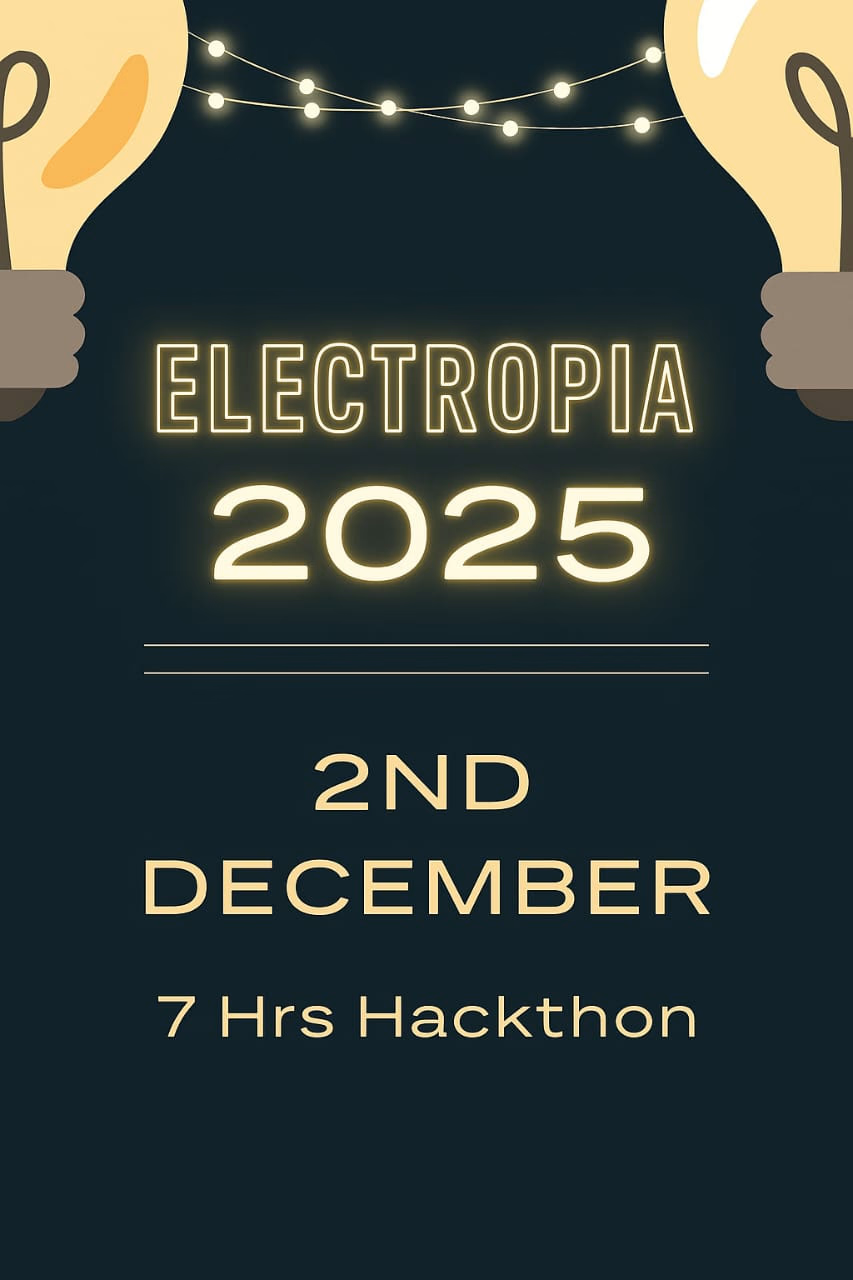
T. VIGNESH
Location: Bengaluru, India.
Position: Assistant Professor, DSATM.
Previous Experience: Assistant Professor,Sri Krishna College of Engineering and Technology.
T. VIGNESH is a passionate academic and robotics researcher specializing in mechatronics, automation, and intelligent systems. With a strong foundation from MIT – Anna University, he combines technical depth with a hands-on approach to teaching. He has guided numerous student teams to national-level achievements including SIH, TCS XR and multiple E-kart & Solar kart competitions. His research contributions include 15+ granted patents, multiple publications, and projects funded over ₹40 lakhs. Vignesh is skilled across CAD modelling, robotics, CNC systems, MATLAB, LabVIEW and embedded controller platforms. He actively drives innovation through real-time robotics applications, automation prototypes and AR/VR system development. Known for his mentorship, he bridges classroom learning with practical engineering outcomes. He continues to inspire students to explore, build and create technology that solves real-world problems.
Pictures
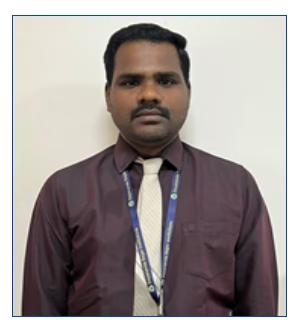
Rising above intense competition, the winners presented a hardware solution that combined technical precision with meaningful real-world impact. Their creativity, smart system design, and efficient implementation truly distinguished them from the rest.
🏆 1st Prize "Team-Smartz"
PROJECT TITLE: Smart Multi Disaster Detection and Response System
TEAM MEMBERS:
-
Hemanth S
-
Khushi S U
-
Guruprasad
-
Tejas Gowda G J
Creativity: Smart Multi-Disaster Detection and Response System is an intelligent hardware solution designed to detect multiple types of disasters such as fire, gas leaks, floods, and earthquakes in real time. The system uses integrated sensors and automated alerts to ensure rapid response and enhanced safety. It aims to minimize damage and improve emergency preparedness through smart monitoring and timely intervention.
🥈 2nd Prize – Team "Electro Vikasa"
PROJECT TITLE: Post Disaster Human Survivor and Obstacle Detection System
Creativity: Post-Disaster Human Survivor and Obstacle Detection System is an intelligent hardware solution designed to assist rescue teams in locating survivors in disaster-affected areas. Using advanced sensors and detection technologies, it identifies human presence and maps obstacles in real time. The system enhances search efficiency, reduces response time, and improves safety during critical rescue operations.
🥉 3rd Prize – Team "Voltuara"
PROJECT TITLE: Seed -Search Escort & Environmental Defense
Team Members :
-
Shriya S
-
Ananya M Murthy
-
Varsha TM
-
Deeksha Ramappa Gani
Creativity: SEED – Search Escort & Environmental Defense is an intelligent response system designed to assist in search operations while monitoring environmental conditions in real time. Equipped with advanced sensors and mobility features, it enhances safety by detecting hazards and guiding rescue efforts efficiently. The system aims to support emergency teams with faster, smarter, and more reliable field operations.
Contest Rules
To ensure a smooth and enjoyable hackathon experience, please review the following contest rules:
Eligibility Requirements
We strive for an inclusive and compliant event open to:
- Teams of 3 to 4 members
- Employees/Interns with PCBCUPID, directly or indirectly, are not eligible.
Requirements on the day of hackathon
All types of hardware projects are welcome! For your entry to be considered, please ensure:
- All team members must check in at the front desk on the event day.
- Only original projects not previously made public are accepted.
- Your submission (at the end of hackathon day) should include: clear documentation, a working demo, project description, images, schematics, and code.
- Submit your project before the announced deadline on the day of the hackathon.
- All components issued for the hackathon must be returned once the event concludes.
High value components / tools / parts are not allowed to be carried by the participants. Things you can carry are (optional) : Soldering Iron, Multimeter, cutter, stripper, hot glue, scissor, cardboard, battery (less than 3.7v 1000mAh), MicroSD card, magnets, power cables, USB cables. Additionally we highly recommended you to get your Laptop, phones or tablet for programming the microcontroller or controlling it.
Communication & Support
- Dedicated channels are available for questions and assistance throughout the event.
- Organizers PCBCUPID and DSATM are committed to prompt support and guidance.
- Active and open communication is encouraged to foster a collaborative community.
Rights & Ownership
- Participants retain full ownership of their projects. But the projects codes, schematic and other presentation will be shared in public domain (open sourced) on PCBCUPID website and Github.
- By participating in the event, participants grant the organizers a non-exclusive, worldwide, royalty-free license to use submissions for promotional and educational purposes.
- Organizers reserve the right to enforce the contest rules. By registering and submitting, you agree to all terms and policies stated here, ensuring a fair and transparent process.
Arduino IDE SetUp
👉 Click Here: Arduino IDE Installation
👉 Click Here: Setup Guide on PCBCUPID
Components List
| No. | Picture | Name | Use Case | Price | Quantity |
|---|---|---|---|---|---|
| 1 | 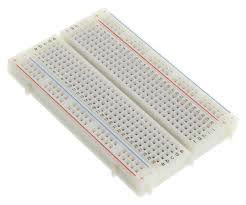 | Breadboard | A breadboard is a reusable platform for quickly prototyping and testing electronic circuits without soldering, ideal for learning, experimentation, and development. | ₹60 | 15 |
| 2 | 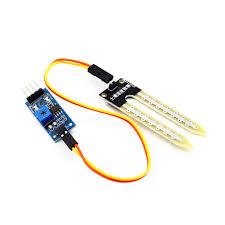 | Soil Humidity sensor | A soil humidity sensor measures the moisture content in soil, ideal for automated irrigation systems and plant health monitoring in gardening and agricultural projects. | ₹50 | 11 |
| 3 | 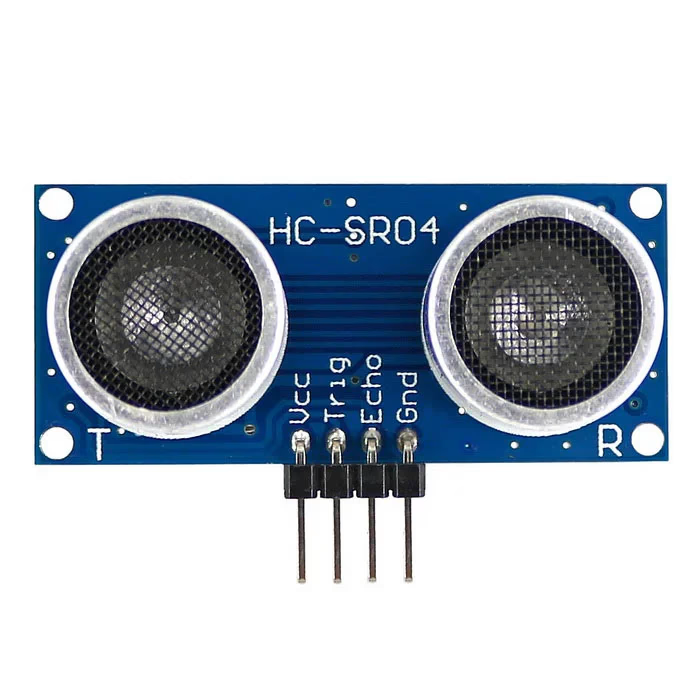 | Ultrasonic Sensor | An ultrasonic sensor measures distance by emitting sound waves and detecting their echo, ideal for obstacle detection, distance measurement, and automation projects. | ₹99 | 14 |
| 4 | 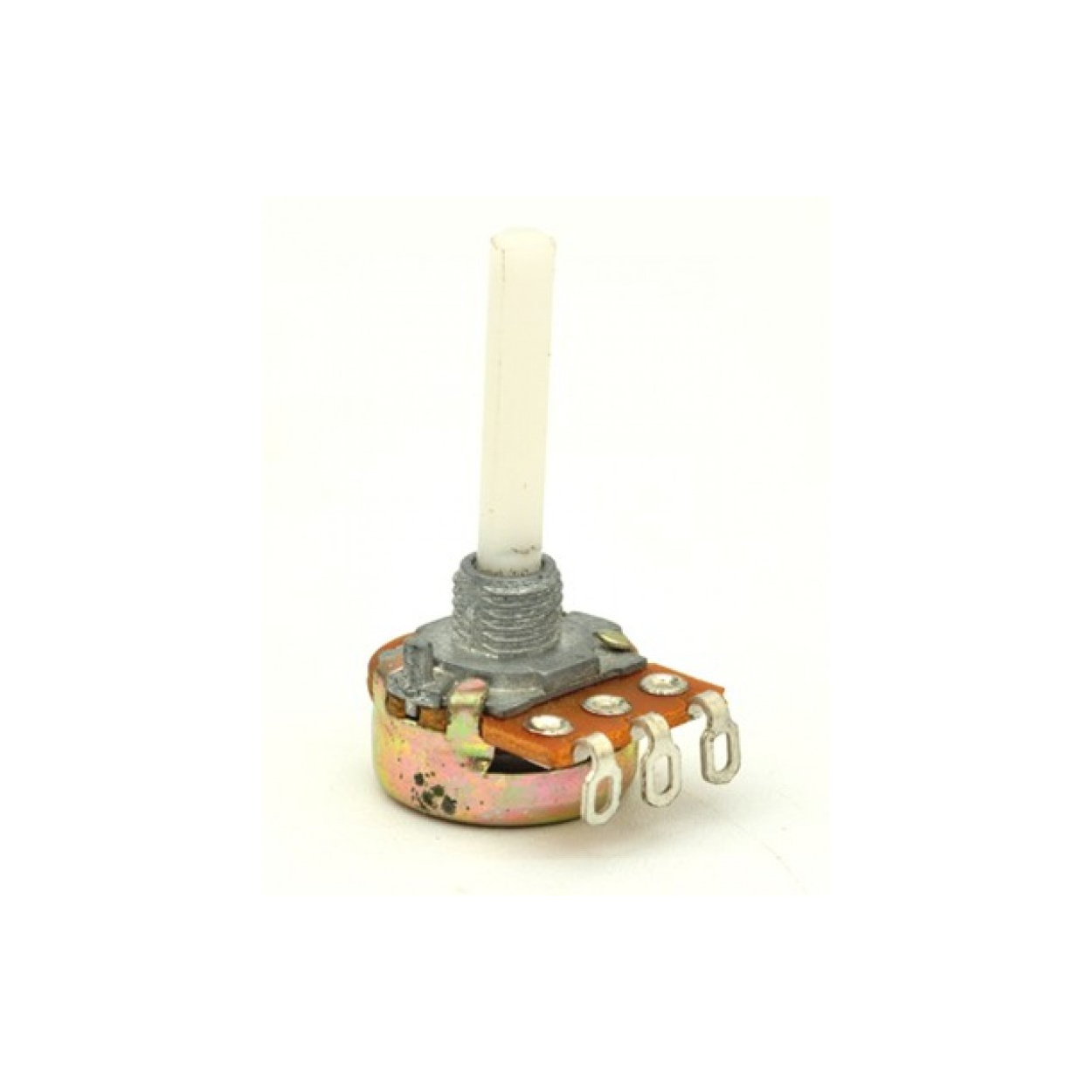 | 1k potentiometer | A variable resistor used to adjust voltage or control signal levels in electronic circuits. | ₹25 | 14 |
| 5 | 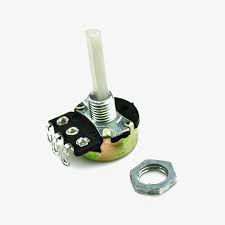 | 10k Potentiometer | Potentiometers are adjustable resistors used to control voltage or signal levels in electronic circuits, commonly found in volume controls, sensor tuning, and variable settings. | ₹25 | 11 |
| 6 | 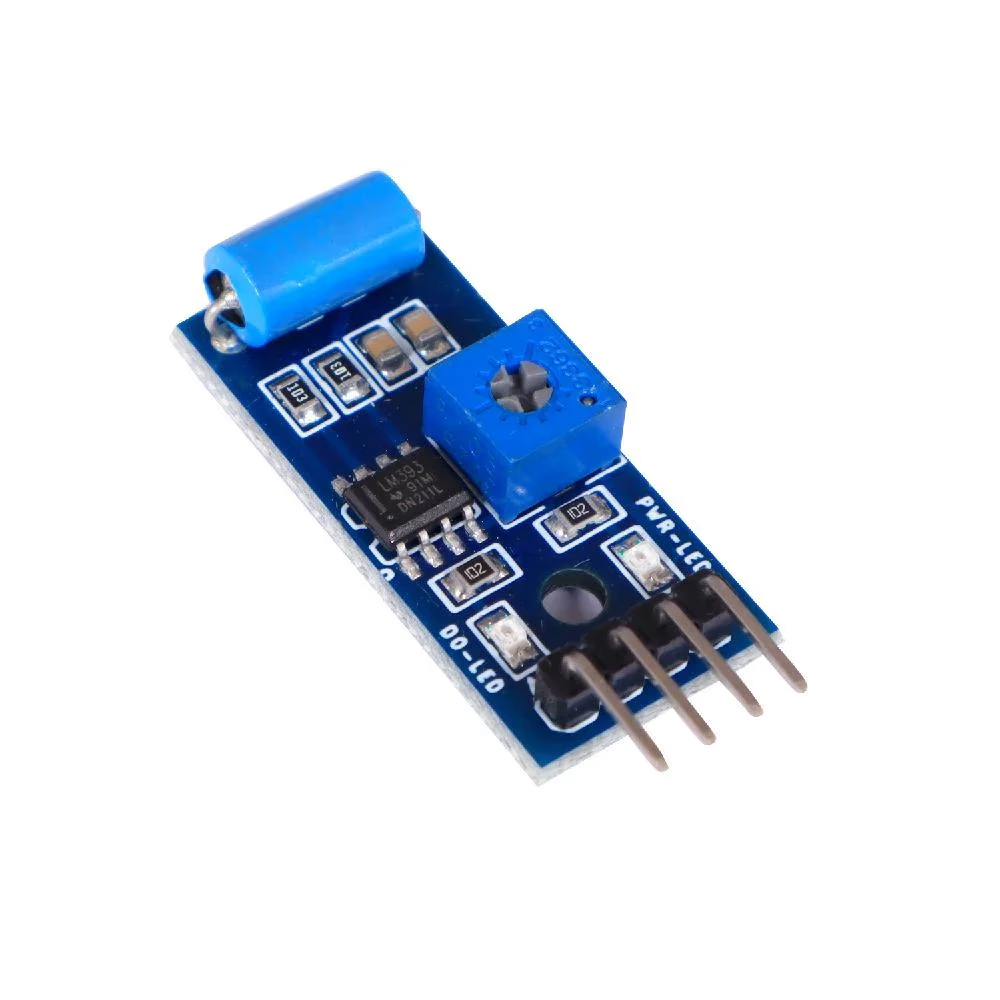 | Vibration Sensor | A digital vibration sensor module with adjustable sensitivity and a built-in LM393 comparator, designed to detect shocks or movements (3.3–5 V, logic output). | ₹75 | 15 |
| 7 | 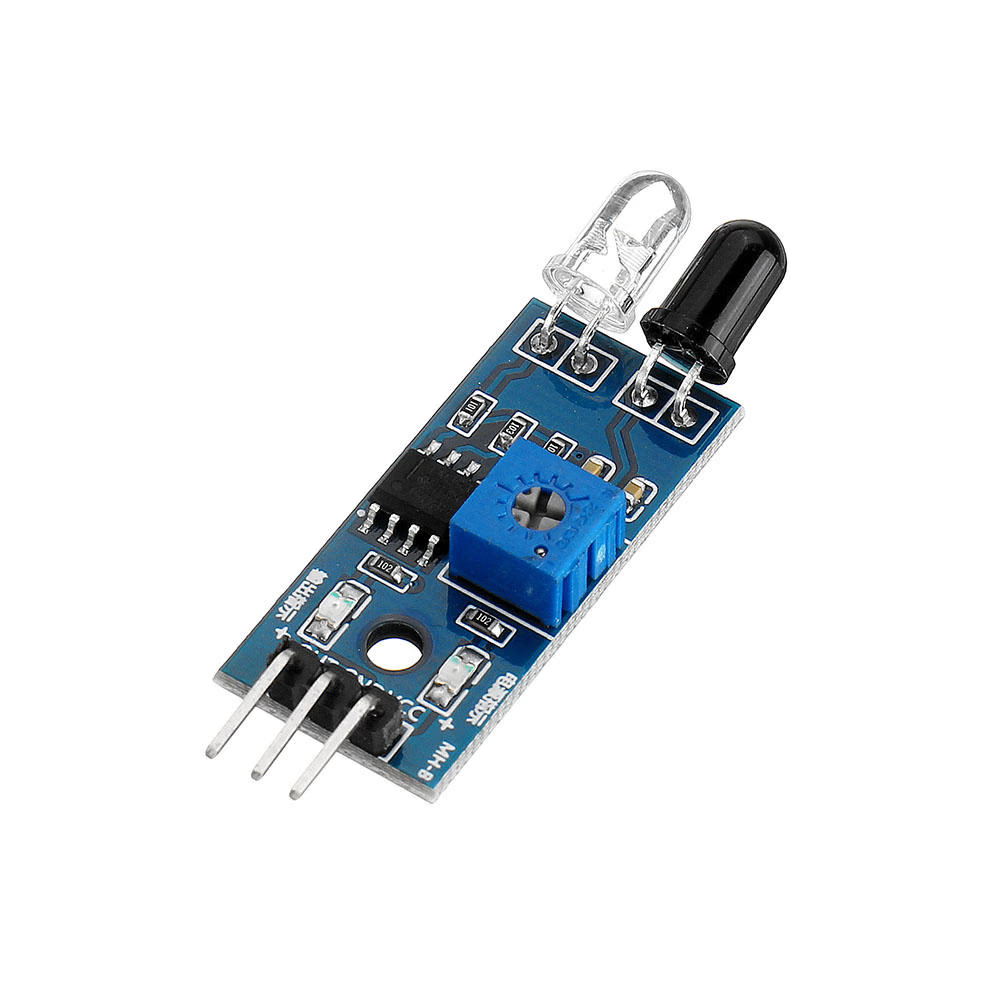 | IR Sensor | An IR (Infrared) sensor detects objects or motion by emitting and receiving infrared light, commonly used in obstacle detection, line following, and proximity sensing. | ₹45 | 19 |
| 8 | 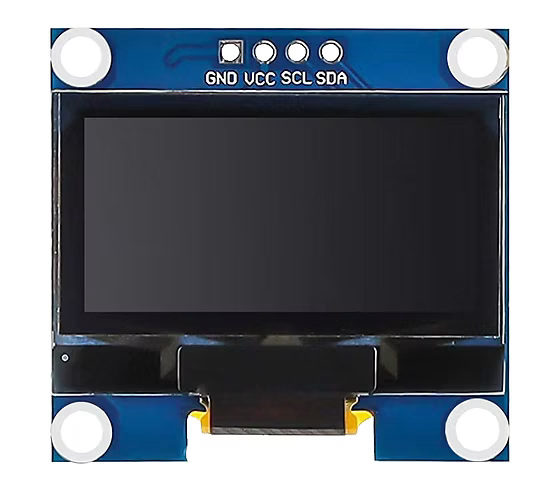 | OLED Display | 👉Read More:OLED-Display | ₹200 | 8 |
| 9 | 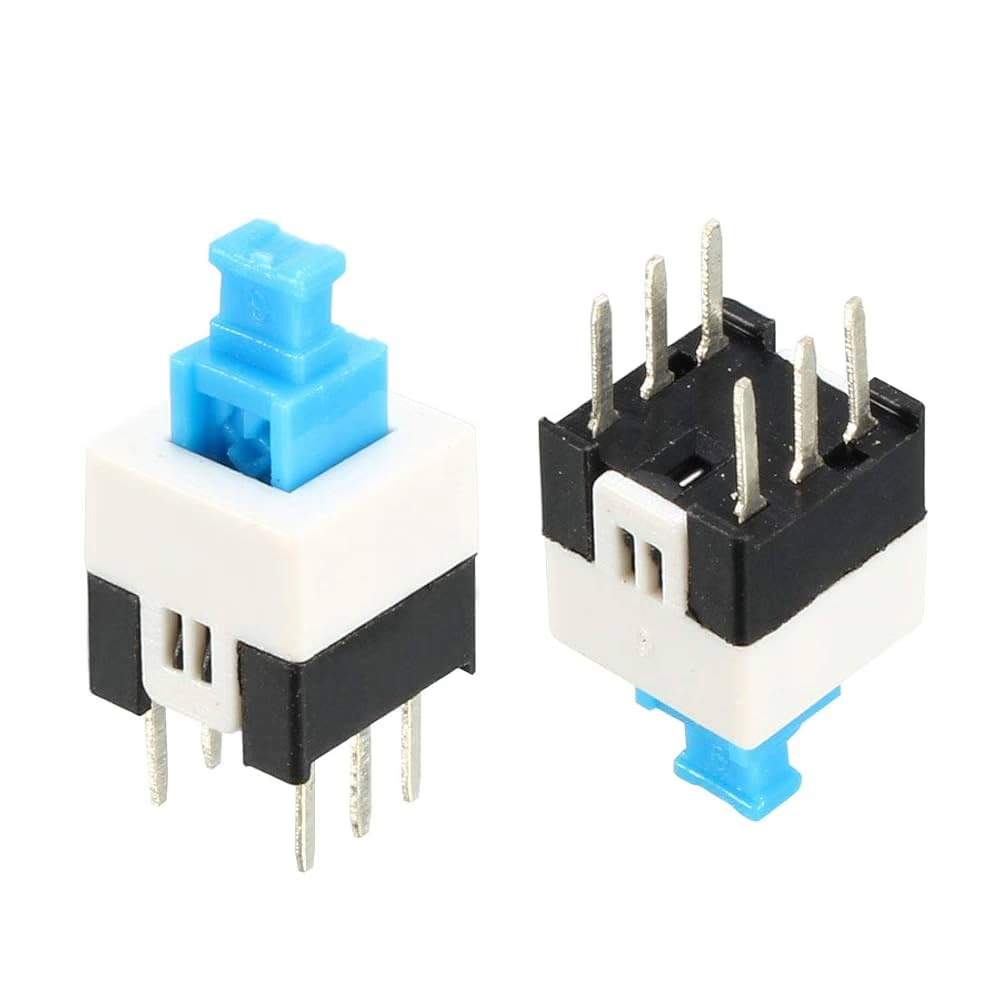 | Tactile Push Button Switch Self Lock(DPdT Switch) | A self-locking tactile push button switch that maintains its state until pressed again, ideal for toggling functions in electronic circuit | ₹10 | 19 |
| 10 | 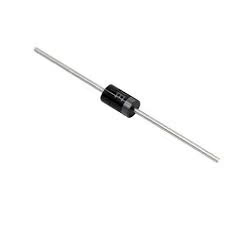 | 1N4001 Diode | The 1N4001 is a general-purpose silicon rectifier diode used for blocking or converting AC to DC in low-voltage power applications, with a peak reverse voltage of 50V. | ₹2 | 80 |
| 11 | 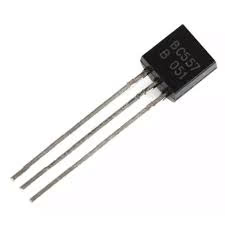 | PNP Transistor (BC557) | The BC557 is a general-purpose PNP bipolar junction transistor commonly used for switching and low-power amplification in electronic circuits. | ₹2 | 40 |
| 12 | 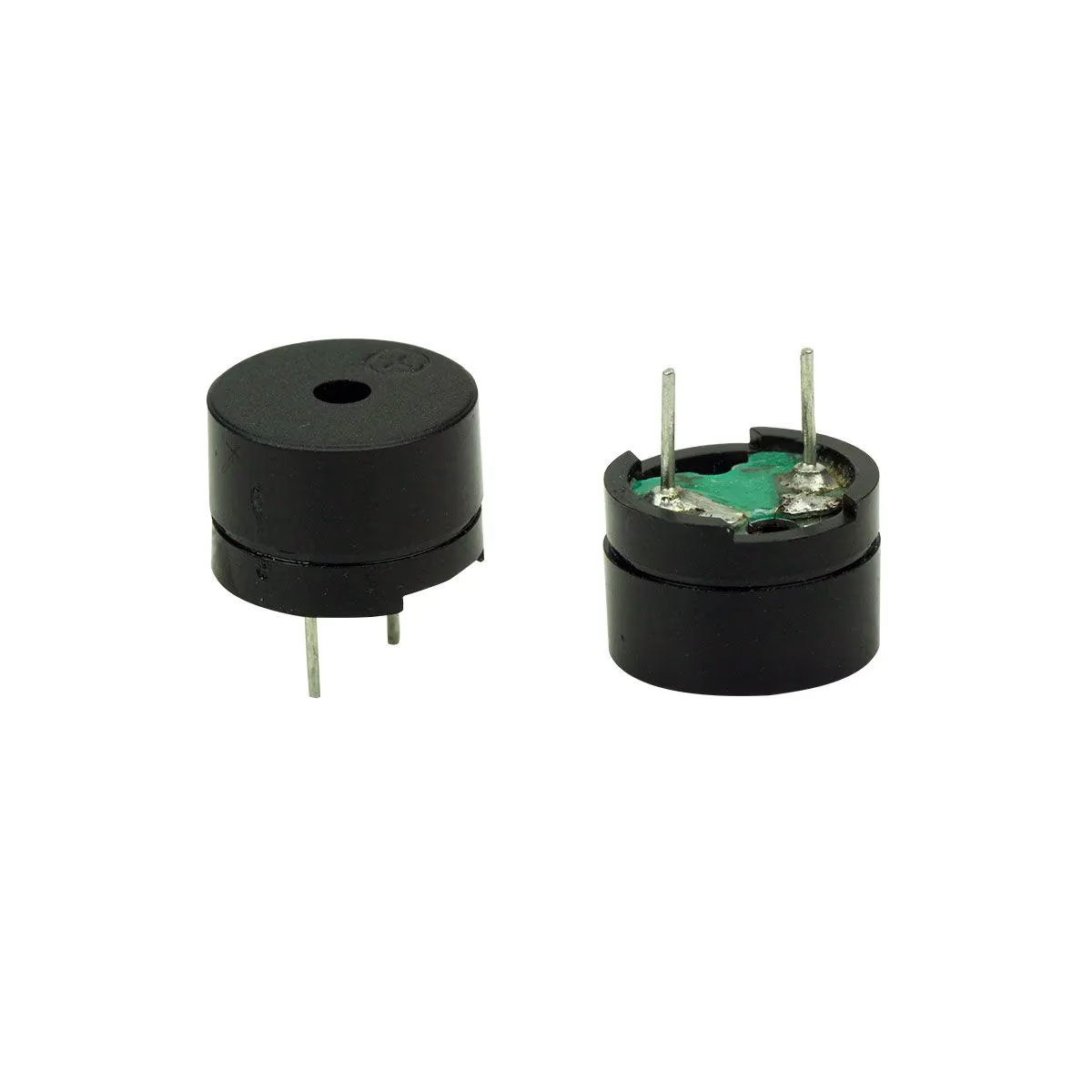 | Buzzer | 👉Read More:Buzzer | ₹20 | 12 |
| 13 | 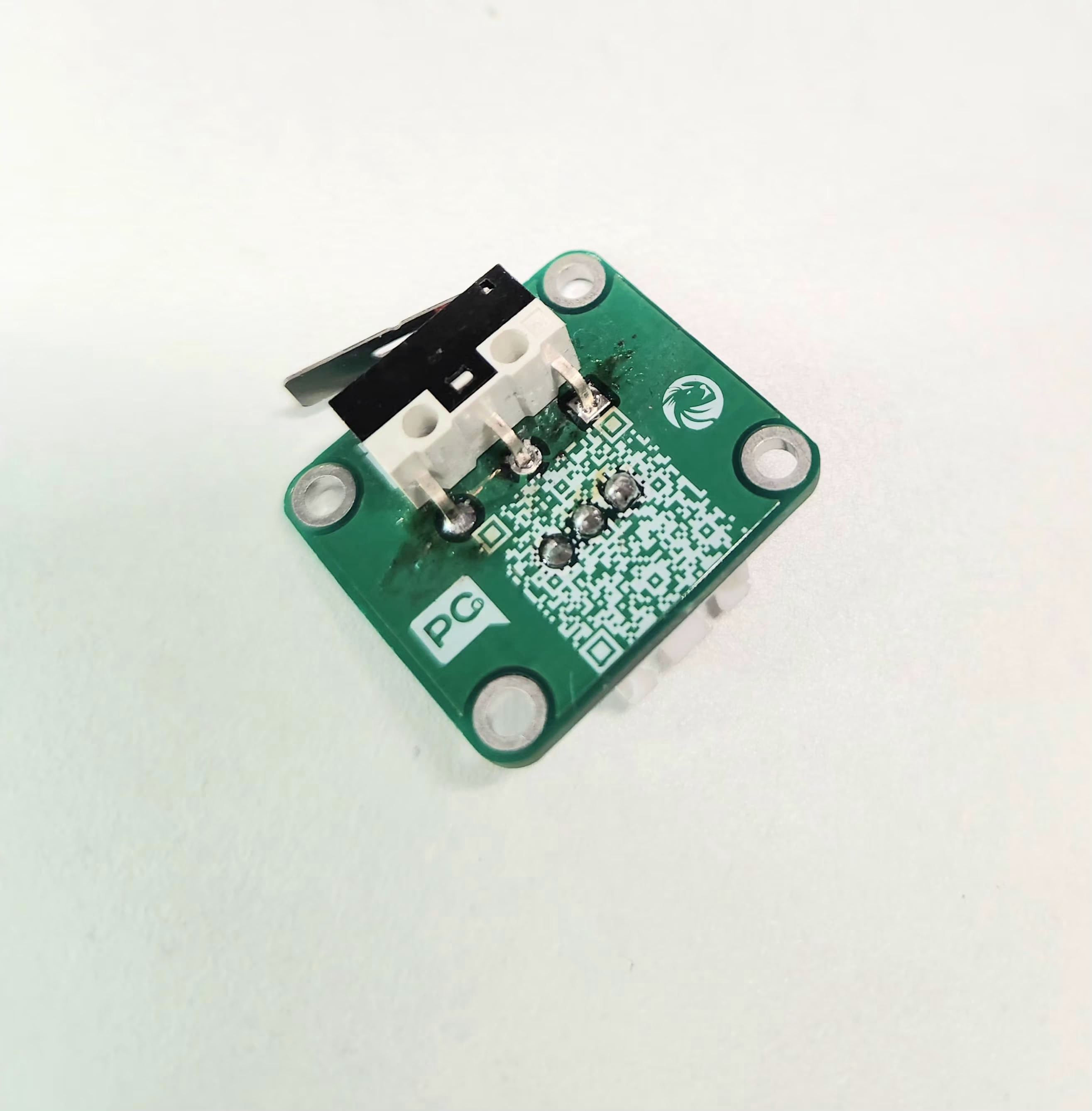 | Limit Switch | A limit switch is an electromechanical device used to detect the presence or position of an object, often serving as a safety or control trigger in automation and robotics systems. | ₹99 | 32 |
| 14 | 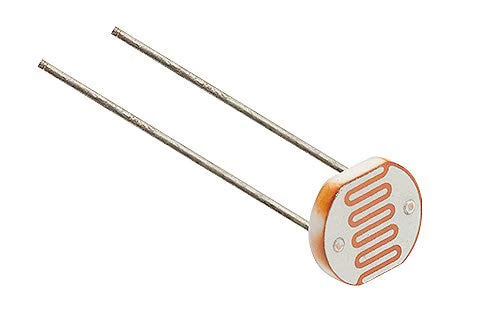 | LDR(5mm) | The 5mm LDR (Light Dependent Resistor) changes its resistance based on light intensity, making it ideal for light-sensing applications. | ₹15 | 27 |
| 15 |  | Condenser mic | A sensitive condenser microphone module that captures clear audio signals, ideal for sound detection and voice input applications. | ₹20 | 10 |
| 16 | 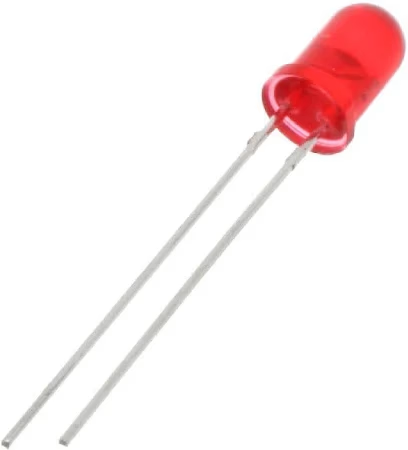 | 5mm Red LED | A standard 5mm red LED that emits bright red light, commonly used for indicators, status signals, and visual feedback in electronic circuits. | ₹5 | 35 |
| 17 | 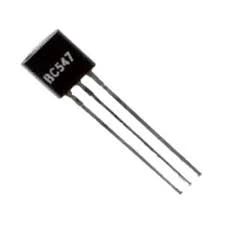 | NPN Transistors (BC547) | The BC547 is a general-purpose NPN bipolar junction transistor used for switching and amplification in low-power electronic circuits | ₹2 | 30 |
| 18 | 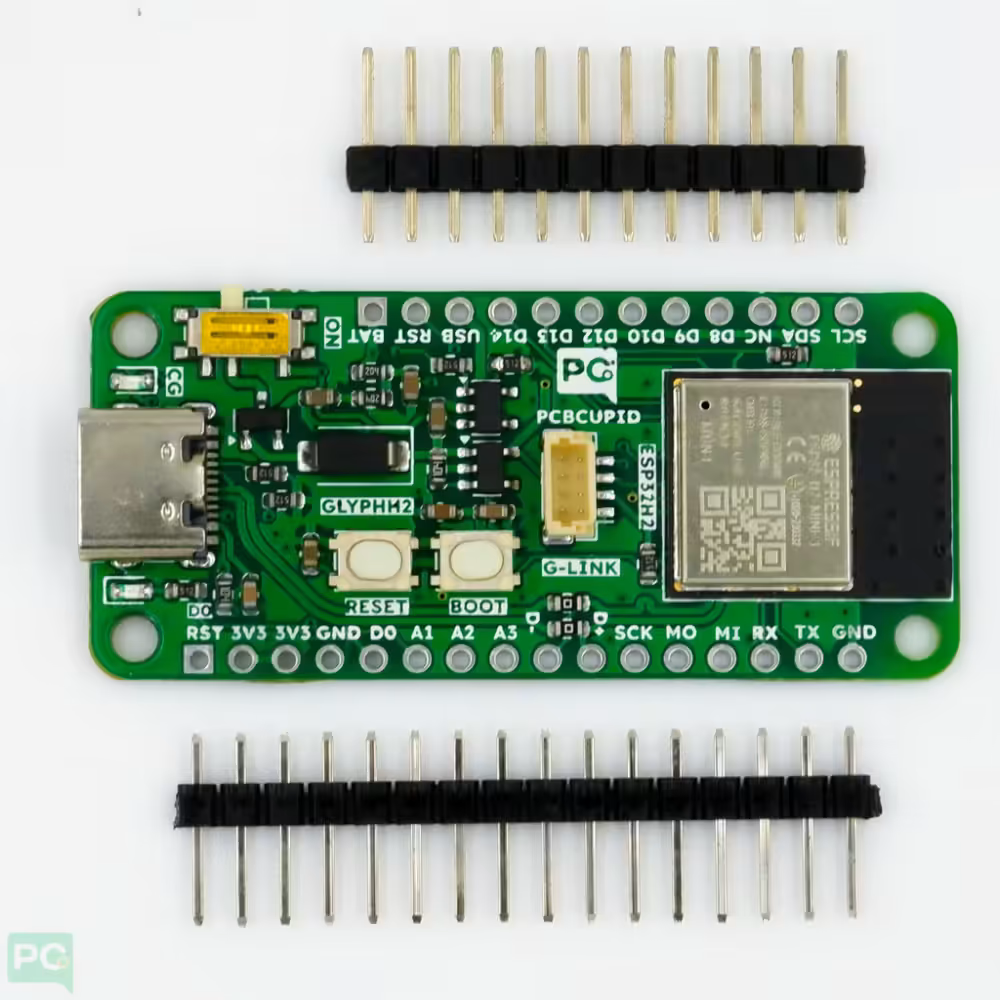 | Glyph H2 | 👉 Read More:Glyph H2 | ||
| 👉 Shop here: Glyph H2 | ₹530 | 10 | |||
| 19 | 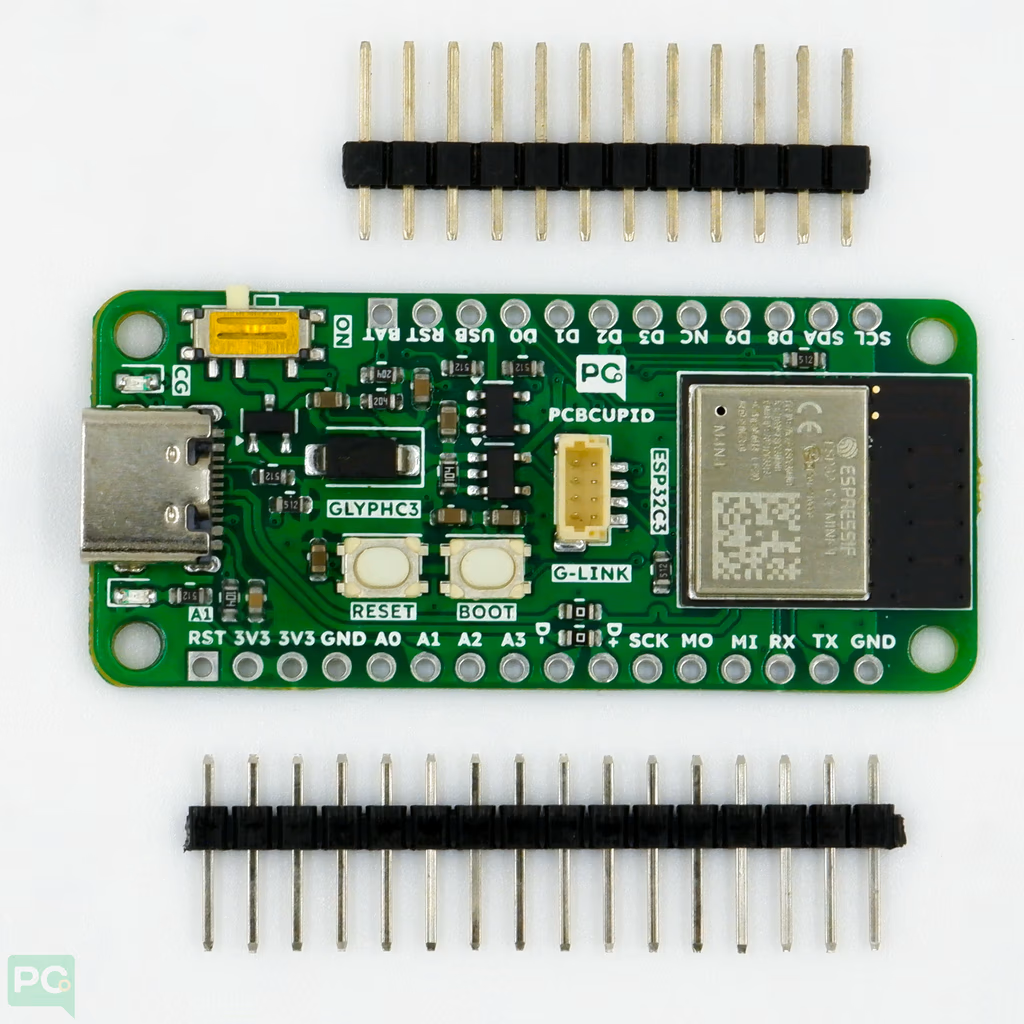 | Glyph C3 | 👉 Read More:Glyph C3 | ||
| 👉Shop here: Glyph C3 | ₹470 | 10 | |||
| 20 | 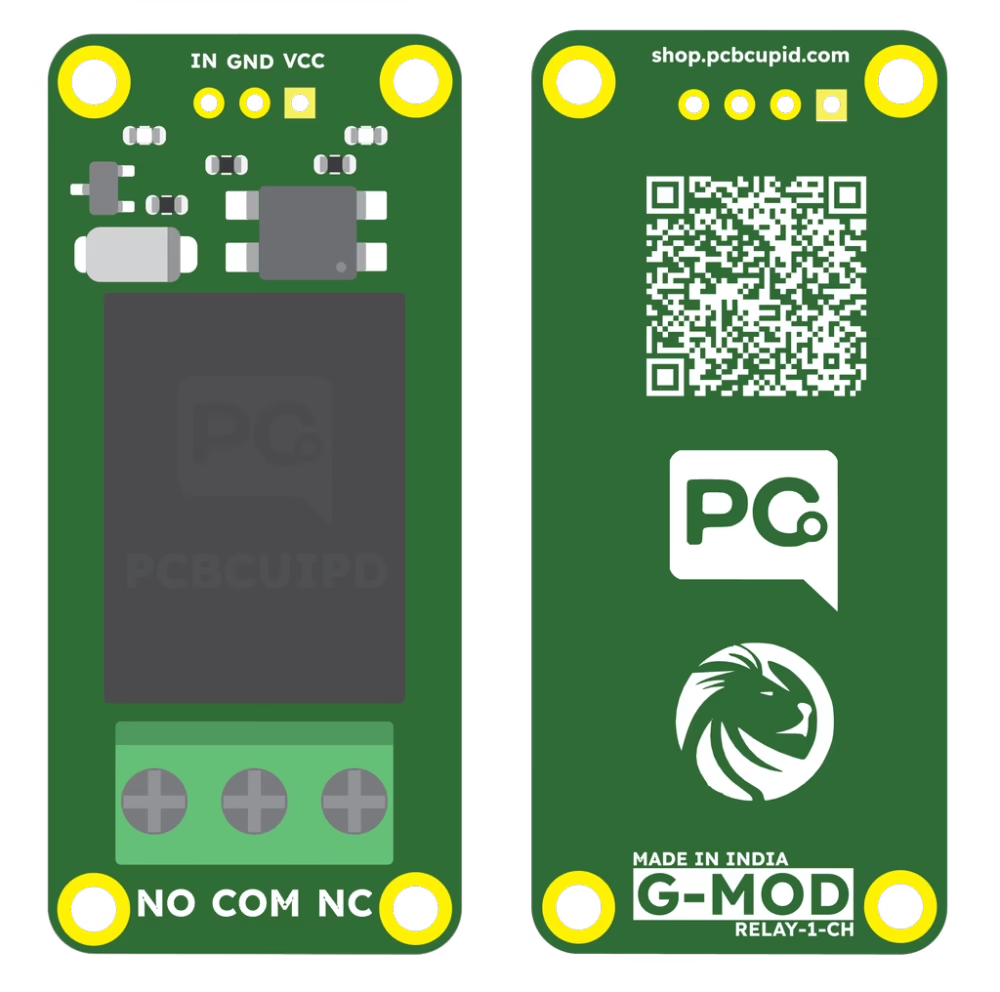 | G-MOD : 1 Channel 5V Relay Module with Optocoupler | 👉Read More:1ch-Relay | ||
| 👉Shop here:1ch-Relay | ₹80 | 15 | |||
| 21 | 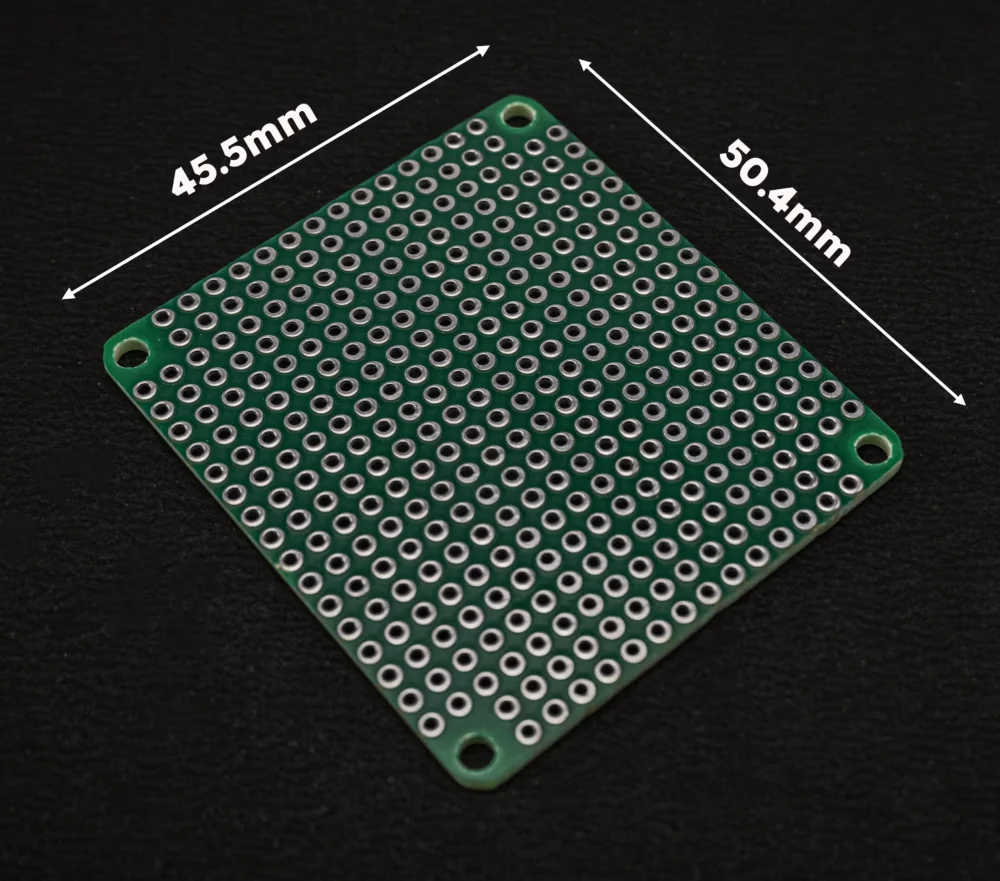 | FR4 – High Quality Zero board PCB (Perfboard) | A versatile prototyping board with pre-drilled holes, ideal for building and testing electronic circuits | ||
| 👉Shop here: Glyph H2 | ₹45 | 29 | |||
| 22 | 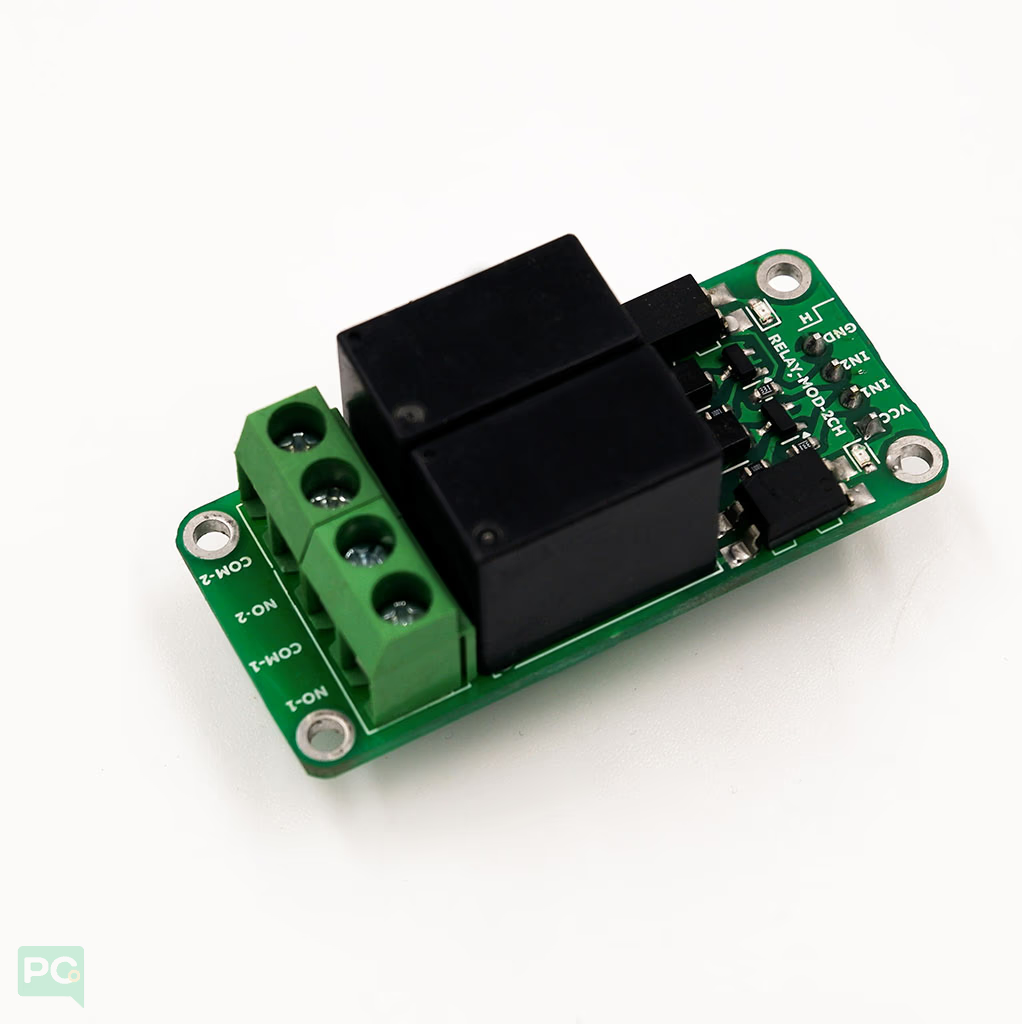 | G-MOD : 2 Channel 5V Relay Module with Optocoupler | 👉Read More:2ch-Relay | ||
| 👉Shop here:2ch-Relay | ₹180 | 7 | |||
| 23 | 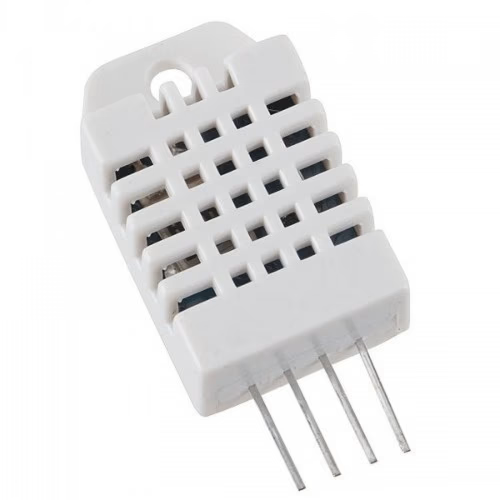 | DHT 22 - Humidity and Temperature Sensor | A high-accuracy digital sensor for measuring temperature and humidity, suitable for indoor environmental monitoring projects. | ₹212 | 7 |
| 25 | 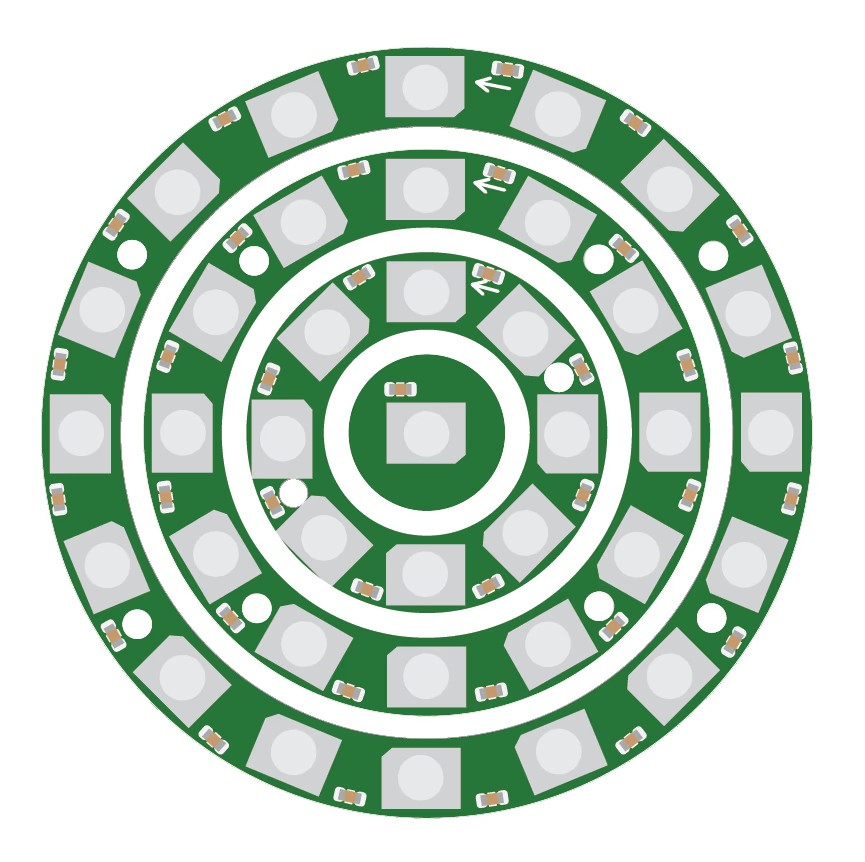 | G-MOD : WS2812B Addressable RGB LED RING [37 LED] | 👉Read More:G-MOD | ||
| 👉Shop here:G-MOD | ₹500 | 5 | |||
| 26 | 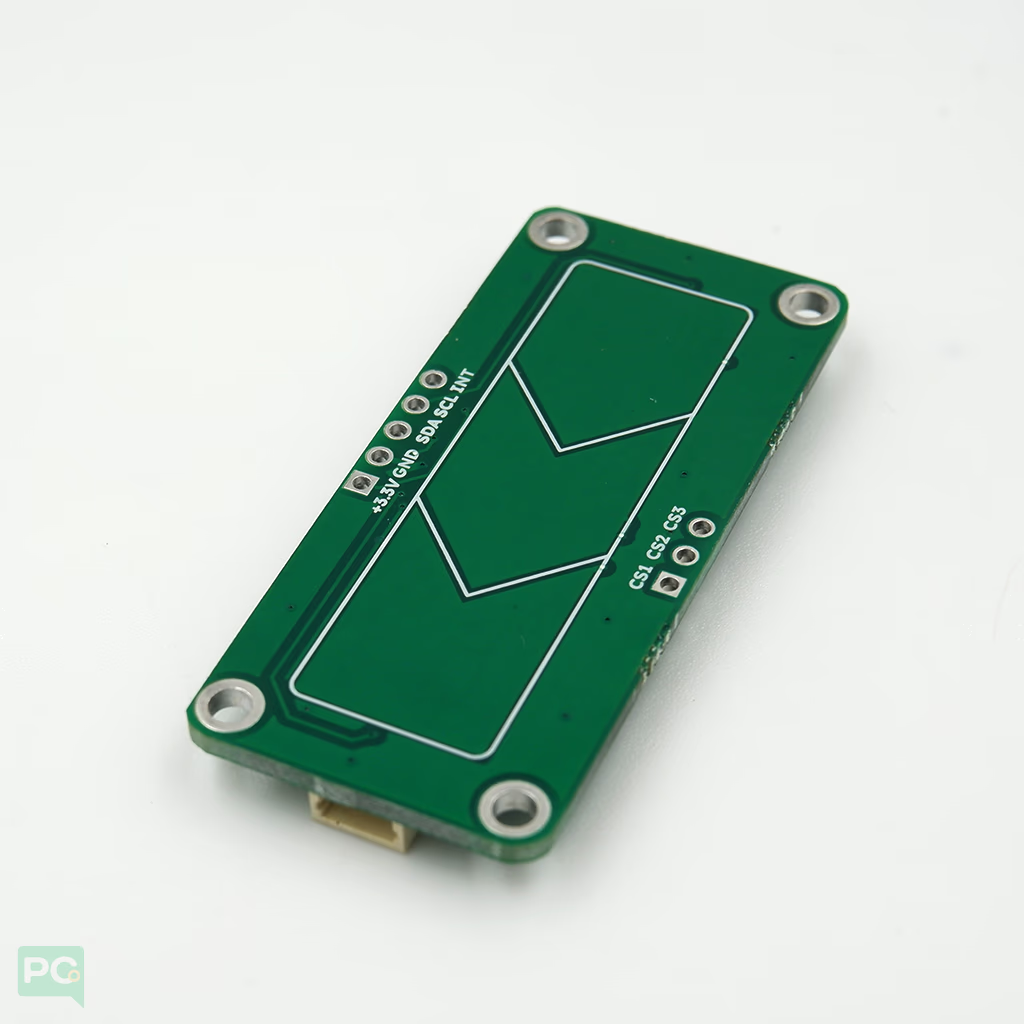 | G-Sense : Capacitive Touch Slider – CAP1203 | 👉Read More: Touch Slider | ||
| 👉Shop here: Touch Slider | ₹140 | 10 | |||
| 27 | 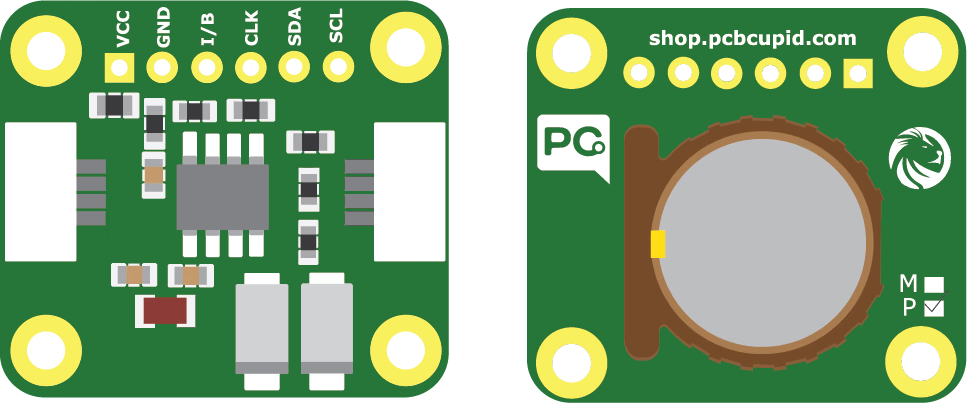 | G-MOD : PCF8563 Precision Real-Time Clock (RTC) Module | 👉Read More:1ch-Relay | ||
| 👉Shop here:1ch-Relay | ₹130 | 10 | |||
| 28 | 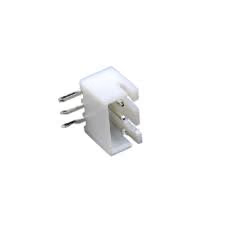 | 3 Pin JST Male Right Angle Connector | A 3-pin JST male right-angle connector ideal for secure, low-profile wire-to-board connections in space-constrained electronic designs. | ₹10 | 100 |
| 29 | 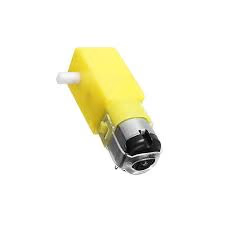 | DC Motor Single Shaft | A compact DC motor with a single output shaft is commonly used for driving wheels, fans, or mechanical parts. | ₹100 | 8 |
| 30 |  | wheels BO Motor | BO motor wheels provide stable movement for robotics and DIY vehicles, easily attachable to BO motors. | ₹25 | 20 |
| 31 | 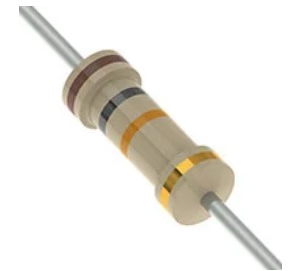 | 10k resistor | A 10k resistor is widely used as a pull-up or pull-down resistor to keep digital input pins at a stable logic level. | ₹2 | 100 |
| 32 | 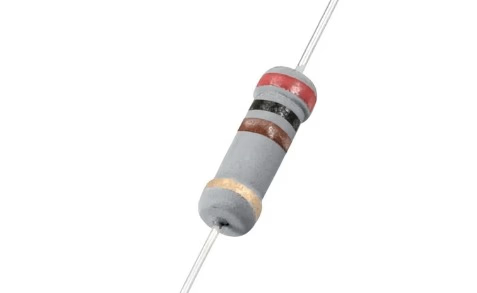 | 200ohm resistor | A 200Ω resistor is typically used to limit current to LEDs or other low-power components to prevent damage. | ₹2 | 100 |
| 34 | 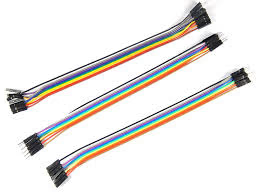 | Jumper wires (Male-male,female-female, male-female) | Jumper wires are short, insulated conductors used to connect components on a breadboard or between header pins without soldering. They come in male-to-male, male-to-female, and female-to-female types for versatile prototyping. | ₹1 | 500 |
| 35 | 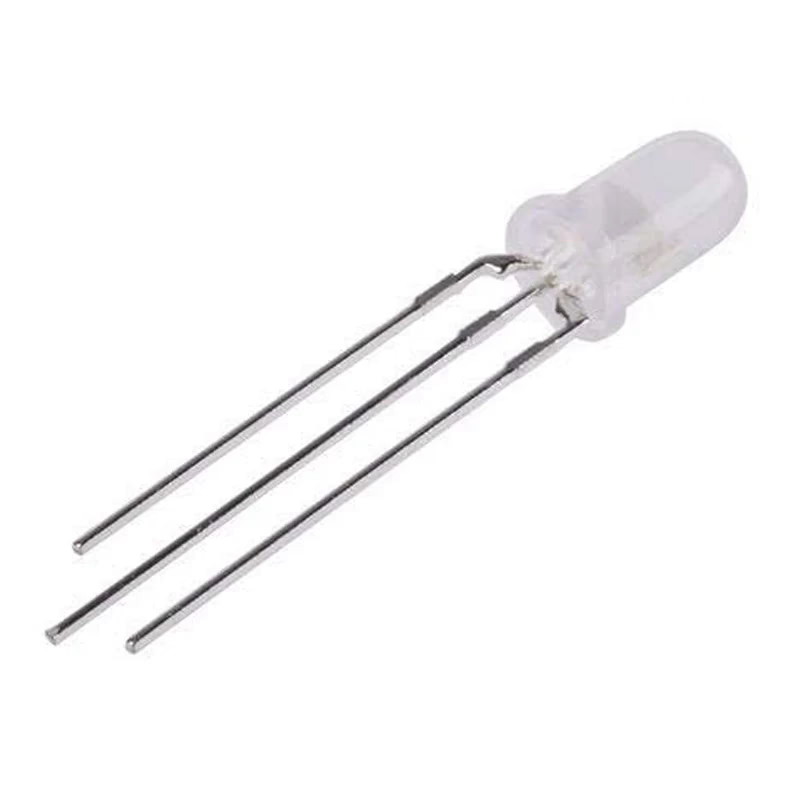 | Bi Color LED | A 3-pin RGB LED that combines red, green, and blue emitters in one package, allowing mixed color output using PWM control. | ₹10 | 23 |
| 36 | 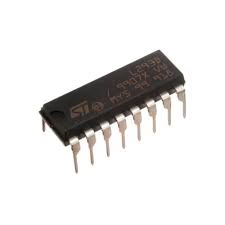 | Motor Driver IC- L293D | The L293D is a dual H-bridge motor driver IC that allows bidirectional control of two DC motors or one stepper motor using microcontrollers. | ₹30 | 20 |
| 37 | 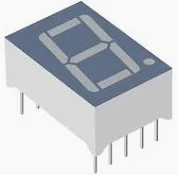 | 7 segment display | A numeric 7-segment display with a common cathode configuration, used for displaying digits in counters, timers, and digital readouts. | ₹12 | 16 |
| 38 | 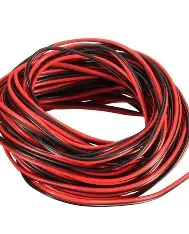 | Wires | Wires are essential components used to establish electrical connections between different parts of a circuit. They carry current and signals, enabling communication and power transfer in electronic systems. | ₹15 | 20 |
| 39 | 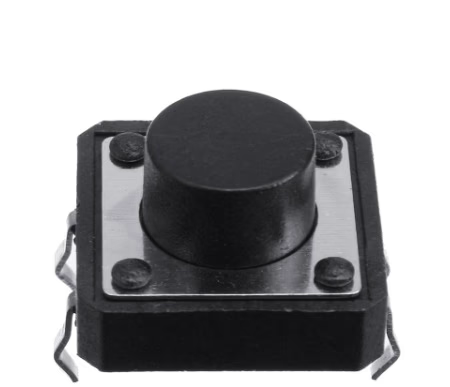 | Large push button | A large push button is used as a user-friendly high-visibility input control for tasks like starting/stopping machines, emergency shutoff, or easy manual triggering in prototypes. | ₹10 | 54 |
| 40 | 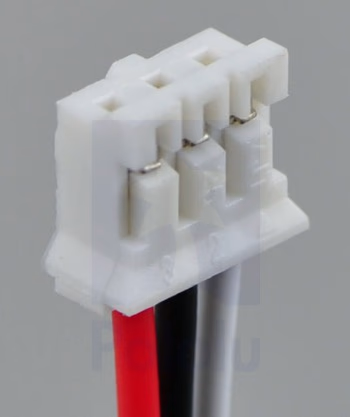 | 3 pin JST female | A 3-pin JST 90° female connector is commonly used for compact right-angle connections to sensors, servos, or power/signal interfaces on PCBs where vertical space is limited. | ₹15 | 100 |
Hackathon Theme
In this 07-hour hackathon:
1️⃣ Each team will receive a fixed budget of ₹1500.
2️⃣ Procure all your components exclusively as per the reference given: link .
3️⃣ Design and build a functional, innovative project using only those components.
5️⃣ Showcase your creativity, smart planning, and technical skills — all within real-world constraints.
Choose boldly, design cleverly, and build something remarkable.
Schedule & Key Timelines
Will be updated shortly!
Notes:
- Teams must finalize and submit their component list before 01st December 5PM.
- All final project work must be completed by the alloted time.
Team Guidelines
-
Team size: 3 to 4 members per team.
-
Solo participation: Not allowed — teamwork is essential for this hackathon.
-
Teams must strictly adhere to the budget allocated for component procurement.
-
All components issued for the hackathon must be returned once the event concludes.
-
If you’d like to keep the projects or components after the hackathon, you can purchase them by paying the equivalent amount in real currency for the virtual credits you used.
-
Please ensure while ordering, you include your team number when placing your order for smooth processing.
-
Each team is responsible for managing and using their own components throughout the hackathon.
-
All project work must be completed on-site during hackathon hours no pre-built solutions or external work allowed.
-
Teams must maintain a collaborative, respectful, and positive atmosphere at all times.
-
Final deliverables, including the prototype/demo and presentation, must be ready before the judgment.
Description of Judging Criteria
Virtual Currency Mapping – Budget Utilization
Each team will receive a virtual budget of ₹1500 to "purchase" components and materials for their project. They can spend up to ₹1500.To promote strategic budgeting, teams will earn points based on how much of the budget they save, as per the following scale:
| Amount Saved (₹) | Bonus Points |
|---|---|
| ₹901 – ₹1000 | 10 points |
| ₹801 – ₹900 | 9 points |
| ₹701 – ₹800 | 8 points |
| ₹601 – ₹700 | 7 points |
| ₹501 – ₹600 | 6 points |
| ₹401 – ₹500 | 5 points |
| ₹301 – ₹400 | 4 points |
| ₹201 – ₹300 | 3 points |
| ₹101 – ₹200 | 2 points |
| ₹1 – ₹100 | 1 point |
| ₹0 | 0 points |
Spend wisely, and save smart to earn extra points!
Presentation & Documentation – Judging Criteria
Presentation: Teams are free to present their project in any format they choose — get as creative as you like!
Documentation (To be submitted in Word or google docs format via the provided drive link):
| Category | Marks |
|---|---|
| List of hardware components used | 2 |
| Pin configuration and circuit connections | 3 |
| Circuit design/schematic diagrams | 7 |
| Code (with comments, if applicable) | 7 |
| Software/tools used | 2 |
| Clear pictures of the setup/prototype | 5 |
| Working explanation and output | 8 |
| Applications and other relevant details | 1 |
📌 Note: Well-organized and complete documentation will contribute significantly to your score. Upload it in Word or google docs format using the Drive link provided
Submission Details
-
All teams must submit their final deliverables before juding.
-
Project prototype/demo (ready to be showcased to judges).
-
Teams will present their projects live during the demo
-
Late submissions will not be accepted under any circumstances.
Code of Conduct & Ethics
-
All participants must maintain a respectful and inclusive environment throughout the event.
-
Collaboration within your team is strongly encouraged, but cross-team sharing of solutions or components is not allowed.
-
Plagiarism or using pre-built projects is strictly prohibited. All work must be original and completed during the hackathon.
-
Follow all safety protocols when handling electronic components and equipment.
-
Any form of harassment, discrimination, or inappropriate behavior will not be tolerated and may lead to instant disqualification.
-
Decisions by the organizing team and judges are final and must be respected.
Judging Criteria
Each team will be evaluated based on the following categories.
| Category | Description | Score Range |
|---|---|---|
| Innovation & Creativity | How original, unique, or clever is the idea and approach? | 1–15 |
| Technical Implementation | Functionality, complexity, and how well the system actually works. | 1–40 |
| Efficient Budget Use | Did the team manage their virtual money wisely? Were they strategic in spending? | 1–10 |
| Presentation & Documentation | Clarity of explanation, teamwork, live demo success, and ability to respond effectively. | 1–35 |
We wish you the best of luck and look forward to seeing your amazing creations.