Inside the build
Team GradeX
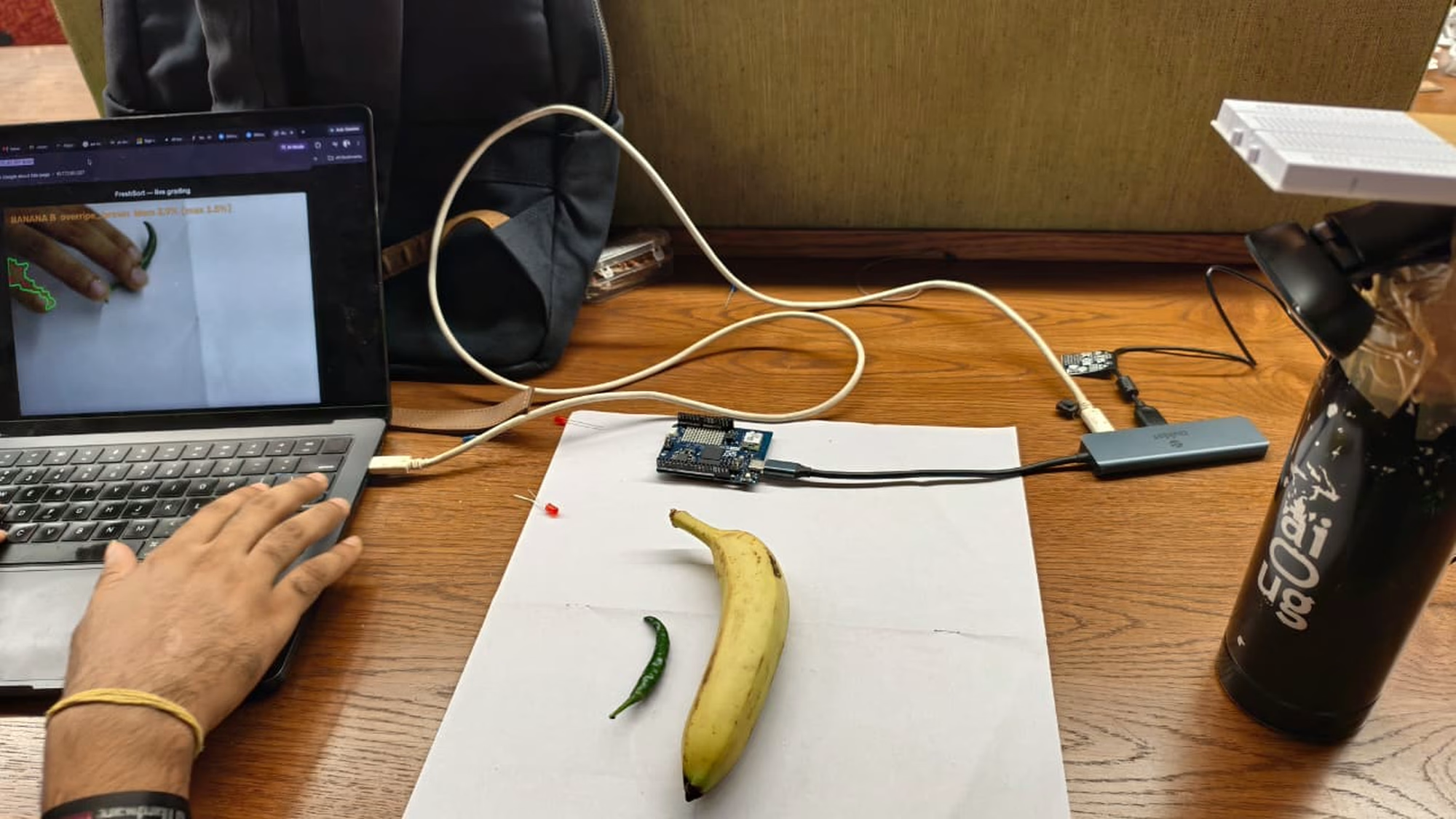
What they built: FreshSort is a produce-grading station built on the Arduino UNO Q. A Logitech C270 looks at one fruit at a time on a white tray; the UNO Q's Linux side white-balances the frame against the paper background, then grades it on three axes — ripeness (hue-band classification mapped to the industry 5-stage color scale), total blemish area (%), and largest single blemish (%). The verdict fires over the built-in Bridge to the microcontroller side: LED matrix shows ✓ or ✗, speaker beeps accept/reject. Every fruit gets a photo-stamped CSV log row. It grades bananas AND green chilies — it auto-detects which produce it's looking at and switches grading rulebooks. Everything — vision, grading, logging — runs locally on the board. No cloud, no GPU server, no model training: it's a calibrated instrument, tuned live today against frames from this very desk.
What it solves: This is built for Fresh Produce vendors, farmers and exporters. Yash runs a fresh-produce venture that supplied Gir Kesar mangoes to Blinkit/Hyperpure this season. Quick-commerce buyers reject entire lots above a 5% defect threshold and return them at the vendor's cost, and grading today is a human at a pack-house table: no record, no consistency, disputes at goods-receipt, and farmers eating the loss. The green chilies graded today were ordered from Zepto mid-buildathon. FreshSort gives pack-houses, FPOs, and q-commerce vendors three things: consistent buyer-spec grading, a physical accept/reject signal any line worker understands, and a photo-stamped log that is dispute-proof evidence at the buyer's gate and fair payment proof for the farmer. Built for the ₹4,000-board price point and offline operation that a rural pack-house actually needs.
-
Social Post: Social Post
-
Circuit Design: Circuit Link